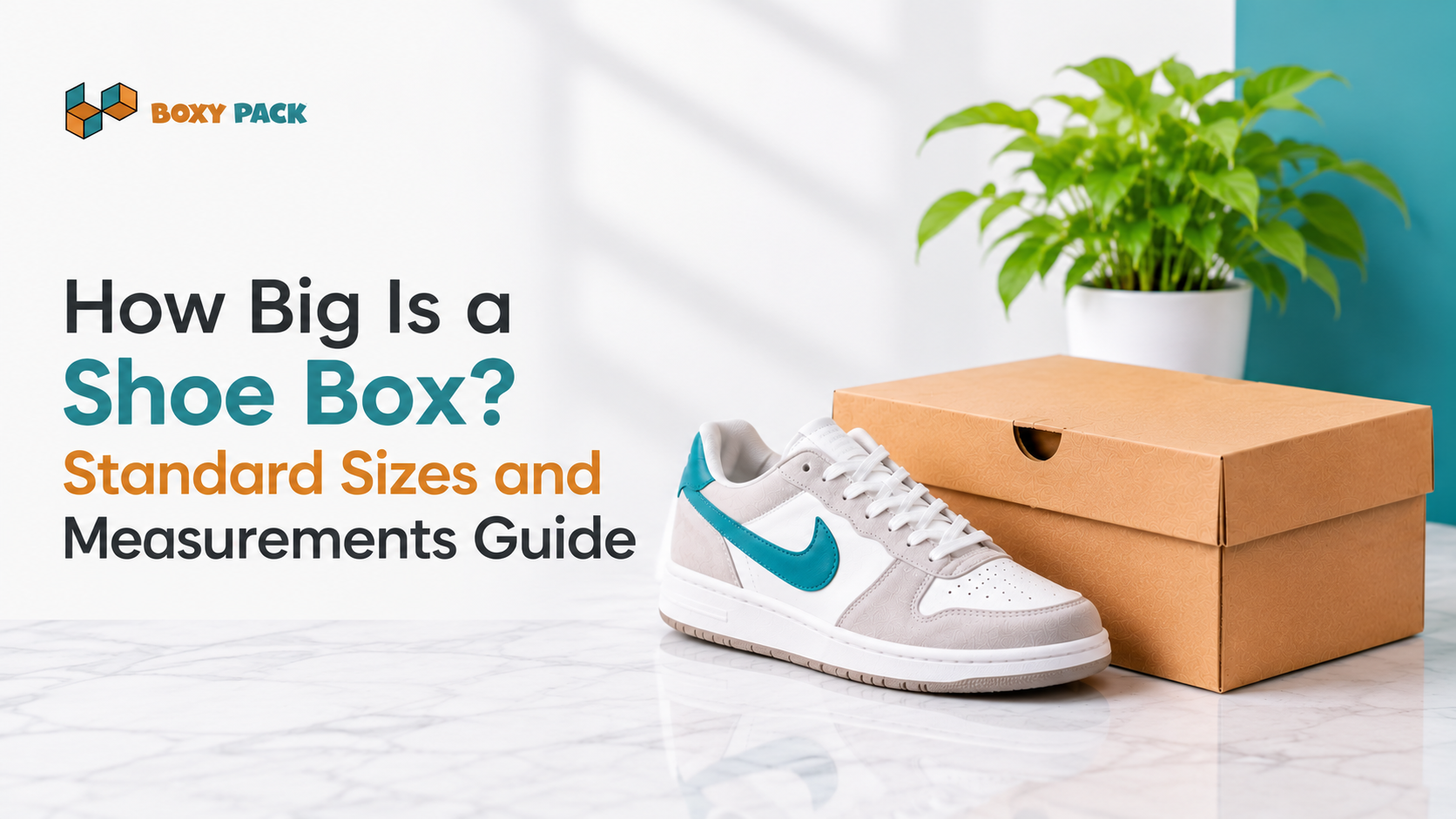
Pick a shoe box that is too small and the heel gets crushed, the toe box bends, and the shoes arrive looking worn before anyone has tried them on. Pick one that is far too large and the pair slides around, the box wastes shelf space, and shipping costs creep up. Knowing how big a shoe box is helps you avoid both problems, whether you are organizing a closet, selling shoes online, or planning packaging for a footwear line.
Accurate measurements matter for protection, storage, packaging, and shipping alike. Shoe box dimensions differ according to footwear size, style, and packaging requirements, so a single number rarely fits every pair. This guide walks through the typical sizes for men's, women's, children's, and sneaker boxes, explains how to measure and calculate a box, and covers materials, common mistakes, and safe storage.
What Determines the Standard Size of a Shoe Box?
There is no single universal shoe box size that suits every footwear category. Standard shoe box dimensions are approximate industry measurements, not fixed requirements, and they shift with the product inside. A slim dress shoe, a chunky trainer, and a pair of boots each ask for a different amount of space.
Manufacturers usually plan the box around the largest shoe size in a product range, so smaller sizes in the same style often share the same box. Retail footwear boxes are also different from shipping packaging. A retail box holds and presents the shoes, while a shipping carton adds room for cushioning and protection in transit.
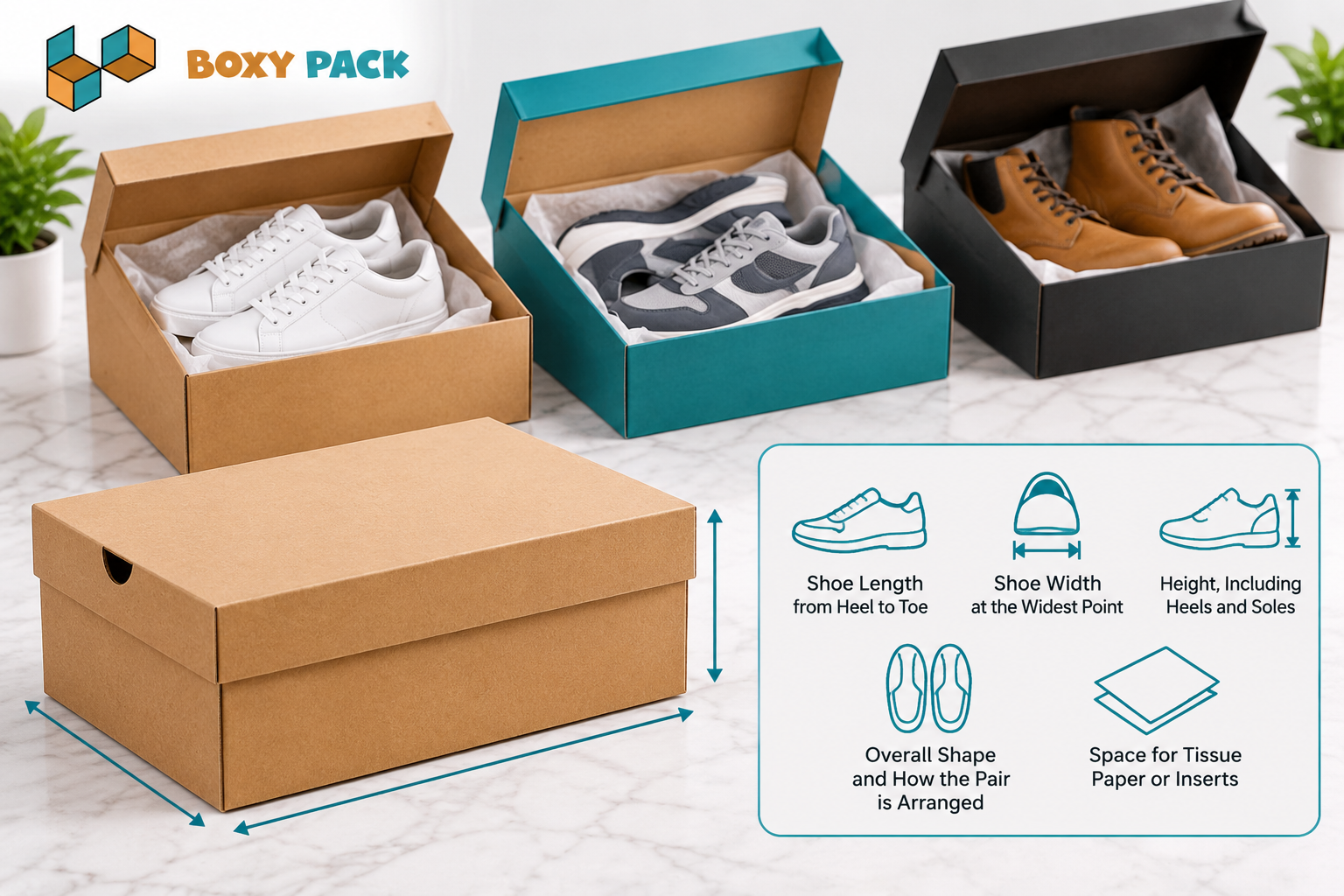
Several factors work together to set the final dimensions:
Shoe length from heel to toe
Shoe width at the widest point
Height, including heels, thick soles, and raised collars
Overall shape and how the pair is arranged inside
Space for tissue paper, inserts, or other protection
Why Footwear Measurements Influence Box Dimensions
Outsole length, sole thickness, shoe width, and upper height all decide how much room a pair needs. Bulky designs take more space than lightweight ones, even at the same shoe size. A padded running shoe, for example, needs more height than a flat canvas shoe.
For that reason, measuring the actual footwear is more reliable than relying only on a general size category. Two pairs labeled with the same size can still need boxes that differ by an inch or more.
Understanding the Difference Between Retail and Shipping Boxes
A standard retail box protects shoes on the shelf and gives the brand a place for labels and artwork. Stores and brands often order retail shoe boxes in a consistent size so a whole collection stacks neatly. Shipping boxes work differently. They provide extra room for protective materials and are built to handle rough treatment.
A shoe box and an outer shipping carton should not be treated as interchangeable. Mailing a pair in the retail box alone leaves it exposed to crushing and moisture.
How Packaging Construction Changes the Final Size
Cardboard thickness, folded edges, lids, and inserts all change the final dimensions. A thicker wall adds to the outside measurements and takes away from the usable space inside, so the external size can be noticeably larger than the interior.
Always check the packaging specifications before ordering, and confirm whether a listed size describes the inside or the outside of the box.
Average Shoe Box Measurements Across Common Sizes
The average shoe box size for adult footwear commonly falls within roughly 12 to 15 inches in length (about 30 to 38 cm), 7 to 10 inches in width (about 18 to 25 cm), and 4 to 6 inches in height (about 10 to 15 cm). These are planning ranges, not universal specifications. Actual dimensions depend on shoe size, shape, and manufacturer.
The table below gives a starting point for each footwear category.
Table: Average Shoe Box Size Chart
Footwear Category | Approximate Length | Approximate Width | Approximate Height |
Adult men's shoes | 13-15 in | 7-10 in | 4-6 in |
Adult women's shoes | 12-13.5 in | 7-8.5 in | 4-5 in |
Children's shoes | 8-10 in | 5-6.5 in | 3-4.5 in |
Adult sneakers | 12-14.5 in | 8-10 in | 4-6 in |
High heels | 12-13 in | 8-9 in | 4.5-5.5 in |
Boots | 14-16 in | 8-11 in | 6-8 in |
These are illustrative size ranges for planning and not guaranteed dimensions. Oversized shoes and specialized footwear may need larger boxes. Check the actual internal measurements before packaging production begins.
Men's Shoe Box Dimensions for Different Footwear Styles
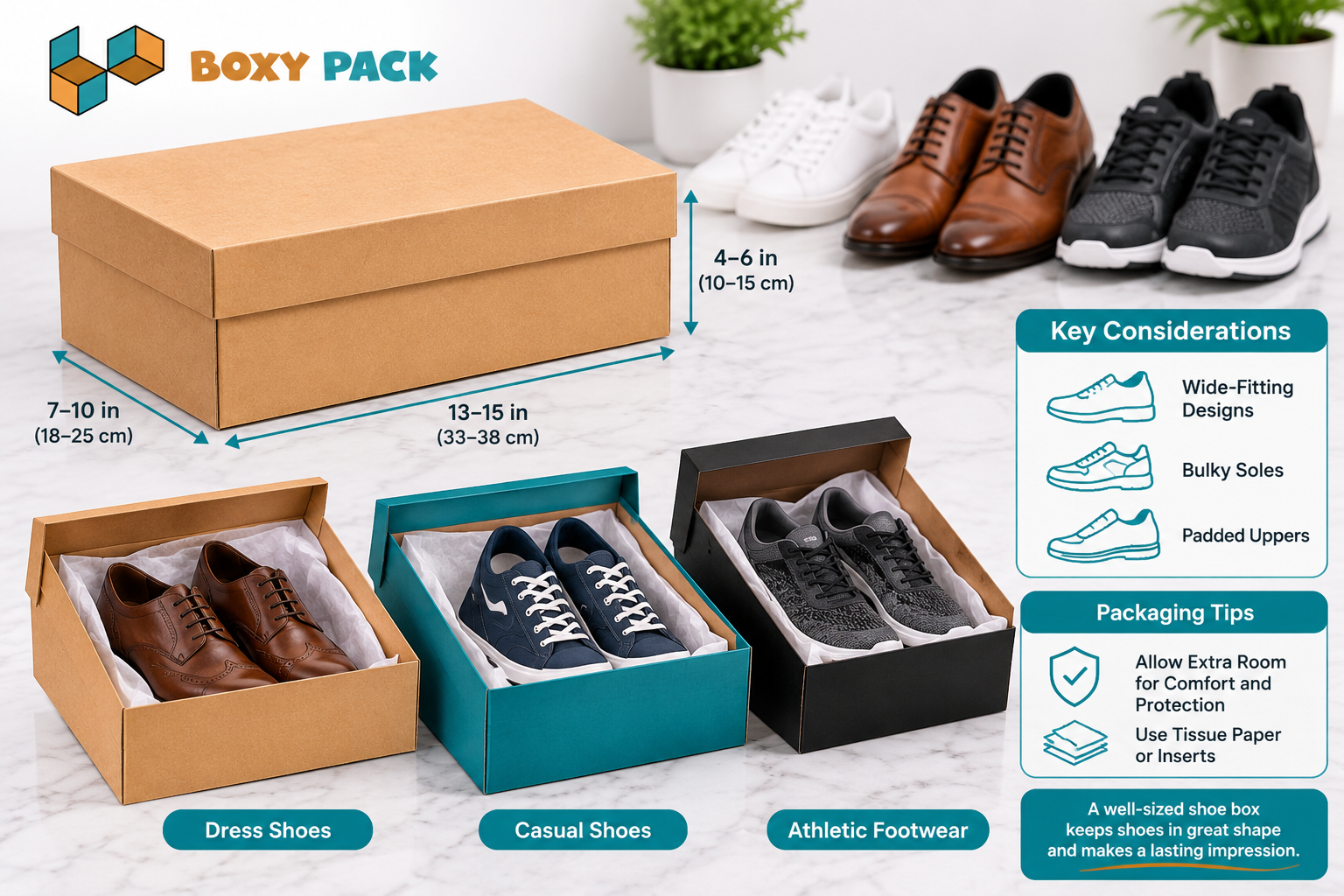
Men's shoe box dimensions tend to run larger than those for smaller adult footwear, mainly because men's shoes are often longer and wider. Shoe size, wide-fitting designs, and bulky soles all push the required box size up. Casual shoes, dress shoes, and athletic footwear each bring different packaging needs.
Men's and women's footwear boxes can overlap in size, so a larger women's pair may share a box with a smaller men's pair.
Typical Measurements for Standard Men's Shoes
Men's shoe box measurements commonly sit around 13 to 15 inches long, 7 to 10 inches wide, and 4 to 6 inches high. In centimeters, that is roughly 33 to 38 cm by 18 to 25 cm by 10 to 15 cm. Larger shoe sizes may need extra internal clearance, so treat these figures as a baseline.
Packaging Requirements for Large and Wide Men's Shoes
Wide-fitting shoes need additional width inside the box. Bulky soles, padded uppers, and oversized designs add to both width and height. Tight packaging can deform shoe materials, especially soft leather and padded collars, so a little extra room is worth planning for.
Choosing Boxes for Men's Dress and Casual Shoes
Slim dress shoes take up less space than everyday casual shoes, but their shape and decorative details still matter. Brogue patterns, raised stitching, and stiff soles can all affect how a pair sits. Suitable protective inserts or tissue paper help keep the shoes in shape and prevent scuffing.
Women's Shoe Box Sizes and Their Main Differences
Women's shoe box dimensions are typically a little smaller than men's, but they are not always smaller. Flats, sandals, heels, and boots each need different amounts of space. Heel height and decorative features can influence the final box measurements, and some designs need more room than a standard everyday shoe.
Standard Measurements for Everyday Women's Shoes
Everyday women's shoes commonly fit boxes of about 12 to 13.5 inches in length, 7 to 8.5 inches in width, and 4 to 5 inches in height. Matching the box to the actual footwear matters more than relying on a size label. Flats, loafers, and casual shoes usually sit comfortably in this range, while thicker platform soles may not.
Extra Space Requirements for High Heels and Sandals
Heel height and shoe shape change the packaging depth. Heel tips, straps, buckles, and decorative elements all need protection from pressure. A taller or specially shaped box may be appropriate when a heel is unusually high or a design has delicate details.
Comparing Women's Footwear Packaging Options
Everyday shoes, premium footwear, and delicate designs call for different packaging. Tissue paper, protective inserts, and sturdy cardboard help protect finer pieces, and brands often use custom tissue paper to add a branded touch while cushioning the pair. Standard packaging is usually enough for everyday shoes, while customized dimensions suit footwear with unusual shapes.
Children's Shoe Box Dimensions for Every Age Group
Children's footwear boxes are generally more compact because the shoes are smaller and lighter. Children's footwear box sizes vary by age and shoe-size category, but age alone cannot determine the exact dimensions. Two children of the same age may wear quite different sizes. When planning kids shoe box dimensions for a range, measure the largest shoe in the range.
Table: Children's Shoe Box Size Guide
Children's Footwear Category | Approximate Length | Approximate Width | Approximate Height |
Infant shoes | 7-8.5 in | 4-5 in | 2.5-3.5 in |
Toddler shoes | 8-9 in | 5-5.5 in | 3-4 in |
Small children's shoes | 8.5-10 in | 5-6 in | 3-4.5 in |
Older children's shoes | 9.5-11 in | 5.5-6.5 in | 3.5-4.5 in |
This table is an approximate planning guide. Age categories and footwear sizes can overlap, so use it to narrow down a range, then confirm with the actual shoes.
Smaller Packaging for Infant and Toddler Footwear
Infant and toddler shoes need compact boxes. Lightweight materials and simple inserts are usually enough to protect small footwear. Soft-soled shoes and small sneakers sit well in shallow boxes with a little tissue to keep them from sliding.
Box Measurements for Growing Children's Shoe Sizes
As children move into larger shoe sizes, footwear dimensions grow, and the box should too. Manufacturers should consider the largest shoe in a product range. Athletic shoes and school footwear may need slightly different dimensions because of thicker soles and sturdier construction.
Keeping Children's Shoes Secure During Storage
Tissue paper, dividers, and inserts help prevent movement and keep shoes from being pressed out of shape. Avoid excessive pressure, and choose sturdy packaging for repeated handling, since children's shoes are often taken out and put back many times.
Sneaker Box Measurements for Everyday and Athletic Shoes
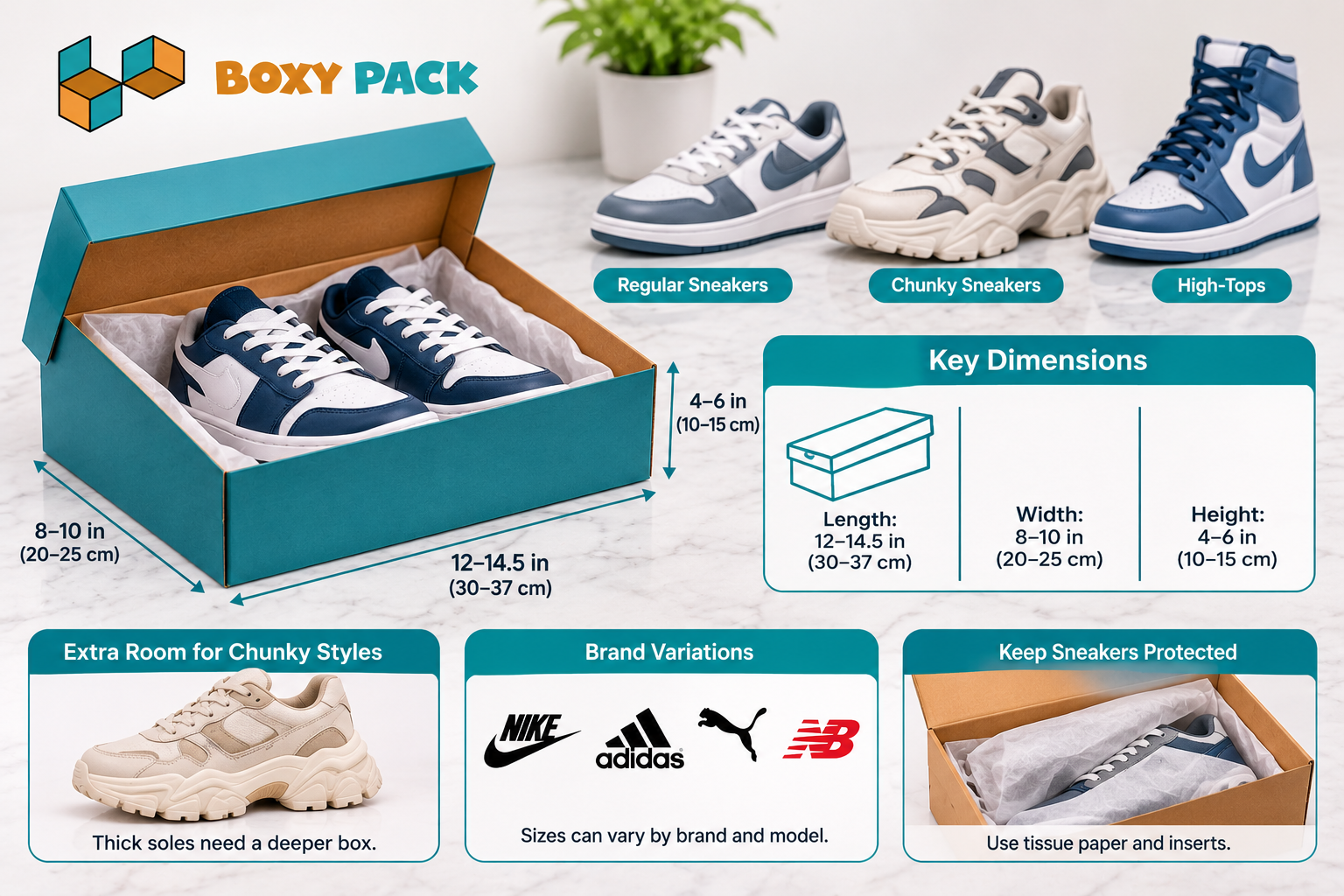
Sneaker box measurements often differ from traditional dress shoe packaging. Thick soles, padded collars, oversized uppers, and athletic construction all take up space. Two popular styles in the same shoe size can still need different packaging, so sneaker packaging dimensions are best planned around the specific model. Regular sneakers, chunky sneakers, and high-tops each show this clearly.
Typical Dimensions for Standard Sneaker Packaging
As planning ranges, standard sneaker boxes run about 12 to 14.5 inches in length, 8 to 10 inches in width, and 4 to 6 inches in height. These are useful starting points and not brand-specific guarantees. Larger sneaker sizes may need extra space in every direction.
Extra Room for Chunky Sneakers and High-Tops
Thick soles and raised collars increase the height and width a box needs. High-top sneakers require enough vertical clearance so the ankle area is not bent or compressed. Oversized athletic footwear may need a deeper box than the typical range suggests.
Brand and Model Variations in Sneaker Box Sizes
Different brands may use different packaging dimensions. Familiar names such as Nike, Adidas, Puma, and New Balance are good examples, but their boxes should not be assumed to share identical measurements. Collections, shoe sizes, and presentation requirements all influence the final size. Brands that sell athletic footwear often look into sports shoe packaging built around the shape of their own models.
Protecting Sneakers From Movement and Surface Damage
Tissue paper, cardboard inserts, and protective wrapping help keep sneakers looking new. Avoid excessive movement inside the box, because rubbing can scuff white soles and premium finishes. Premium sneakers deserve extra care during shipping and storage, with snug but not tight packaging.
How Boots and Specialty Shoes Need Larger Boxes
Boots and specialty footwear need different dimensions from ordinary shoe boxes. Shaft height, overall width, heel structure, and bulky construction all affect box selection. Ankle boots, knee-high boots, work boots, and other oversized footwear each have their own requirements, and forcing tall footwear into standard packaging can damage its shape.
Standard Box Requirements for Ankle and Work Boots
Ankle boots and heavier work shoes commonly need boxes of about 14 to 16 inches in length, 8 to 11 inches in width, and 6 to 8 inches in height. Heavier footwear may also need stronger cardboard construction. Bulky soles call for extra width and height.
Taller Packaging for Knee-High and Long Boots
Boot shaft height changes the required dimensions considerably. Knee-high boots often need long rectangular packaging with supports that keep the shaft upright. Without support, the shaft can bend, crease, or press against the box wall.
Special Packaging for High Heels and Unusual Designs
Platforms, oversized heels, and decorative components may not fit standard boxes. Custom inserts or specially designed packaging help these pairs stay secure. The goal is a secure fit that does not compress delicate footwear.
Understanding Shoe Box Length, Width, and Height
Three measurements describe a shoe box, and they are written in the order length × width × height. Shoe box length and width describe the horizontal footprint, while shoe box height in inches describes the vertical space. Each one plays a different role in whether footwear fits properly.
Measuring Length From One End to the Other
Length is measured along the longest horizontal side. The longest shoe or outsole measurement is the starting point when planning packaging. Extra clearance keeps the toe and heel from pressing against the box walls.
Measuring Width Across the Widest Part
Width is measured across the shorter horizontal side. Wide shoes, chunky soles, and side-by-side shoe arrangements all increase the required width. The actual internal width matters most for a secure fit.
Measuring the Vertical Height of a Shoe Box
Height is measured from the bottom of the box to the top. Footwear height and box height are not the same thing, because the box needs additional clearance for heels, thick soles, and high-top designs.
Internal and External Shoe Box Measurements Explained
Internal dimensions describe the usable space inside a box, while external dimensions describe the overall outside measurements. Cardboard shoe box dimensions change according to board thickness and construction. Buyers should use internal dimensions to check shoe fit, and external dimensions to plan shelves, shipping cartons, and storage arrangements. Folded edges, lids, and inserts all reduce usable space.
Table: Internal vs. External Shoe Box Dimensions
Measurement Type | What It Includes | Main Purpose |
Internal length | Usable space from end to end | Checking shoe fit |
Internal width | Usable space across the box | Accommodating shoe width |
Internal height | Usable vertical clearance | Protecting uppers and heels |
External length | Outside edge-to-edge measurement | Storage and shipping |
External width | Total outside width | Shelf and carton planning |
External height | Outside bottom-to-top measurement | Stacking and transport |
How Cardboard Thickness Changes Usable Space
Paperboard and corrugated cardboard differ in thickness, and that thickness changes the interior clearance. Two boxes with identical external dimensions can have different usable interiors. Reinforced corners and folded construction take up room too.
Why Internal Measurements Matter When Ordering Packaging
Incorrect internal measurements lead to packaging that is too tight or too loose. Suppliers should confirm whether quoted measurements are internal or external. For large orders, check physical samples before approving production.
How to Measure a Shoe Box Correctly at Home
Learning how to measure a shoe box takes only a few minutes and basic tools. The steps below work for an existing box and for checking shoes before choosing a new one. Record each measurement in inches and centimeters.
Gather the Right Tools Before Measuring
You need a measuring tape or ruler, a flat surface, and a notebook. A rigid ruler is useful for smaller boxes. Keep the box closed or assembled in its normal shape while measuring.
Record the Length, Width, and Height
Measure the longest side for length.
Measure the shorter horizontal side for width.
Measure vertically from the bottom to the top for height.
Write the numbers in length × width × height order.
Take every measurement from the same reference points so the readings stay consistent.
Measure the Actual Shoes Before Choosing a Box
Measure the longest shoe from heel to toe, then the widest part of the footwear, then the highest point, including heels or raised uppers. Arrange both shoes in their intended packaging position before checking the available space.
Check Clearance and Verify the Final Measurements
A small amount of additional space is necessary. Tissue paper, protective wrapping, and inserts all use some of it. Place the shoes inside a sample box before finalizing dimensions, and double-check every measurement to avoid ordering unsuitable boxes.
Calculating Shoe Box Volume for Storage and Shipping
A shoe box volume calculation shows how much space a box occupies, which helps with storage planning, warehouse organization, and picking a shipping carton. The method is simple multiplication of the three dimensions.
The Basic Formula for Calculating Box Volume
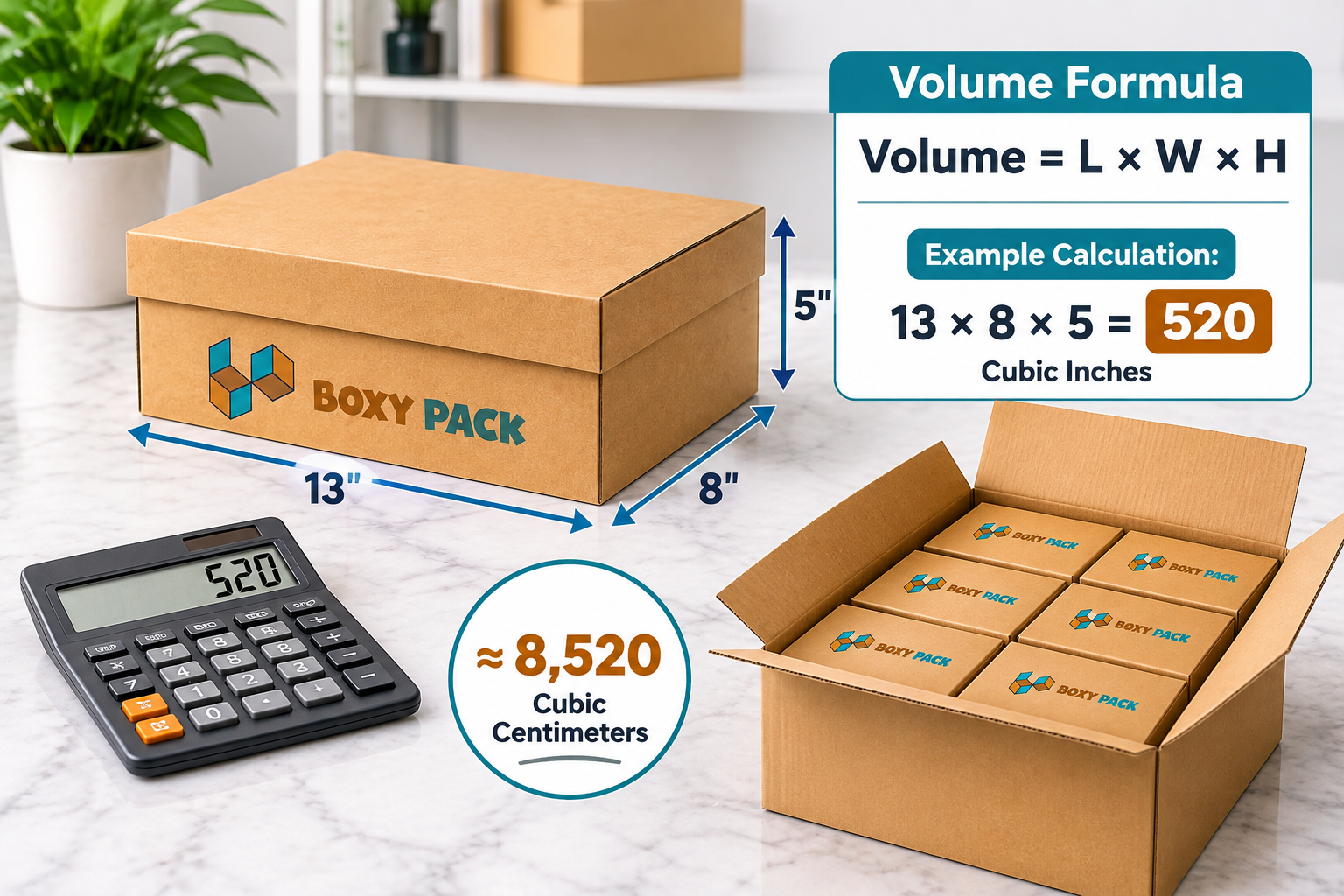
The formula is:
Volume = L × W × H
All three measurements must use the same unit. Inches give cubic inches, and centimeters give cubic centimeters.
A Practical Shoe Box Volume Example
Take a box measuring 13 × 8 × 5 inches. Multiplying gives 520 cubic inches, or about 8,520 cubic centimeters. The same calculation works for any shoe box once you have its dimensions. Keep in mind that volume describes the box's rectangular space and not the exact amount of usable footwear space.
Using Volume for Storage and Shipping Decisions
Box volume helps estimate shelf and warehouse requirements. It also helps when arranging several shoe boxes inside a larger shipping carton. External dimensions are the right ones to use here, because they show the space the box actually occupies.
Choosing the Right Shoe Box Material and Construction
Material affects strength, protection, and the final box dimensions. Cardboard, corrugated cardboard, kraft paperboard, and rigid packaging all suit different needs. Thicker materials cut into the usable interior, so the choice of material and the choice of size should be made together. Everyday retail footwear is usually well served by lighter materials, while heavier or premium shoes call for stronger construction.
Lightweight Cardboard for Everyday Shoe Packaging
Paperboard and standard cardboard are common for retail shoe boxes. They suit lightweight footwear and regular storage. Many brands source cardboard shoe boxes for this reason, because the material is light, printable, and easy to stack. Material thickness affects the overall construction, so check it against the size you need.
Corrugated Cardboard for Stronger Footwear Protection
Corrugated board adds structural support and suits heavier footwear and transportation. Board grade and flute construction influence the final dimensions, so confirm both before ordering.
Rigid Packaging for Premium and Luxury Footwear
Rigid shoe boxes have sturdier construction and a premium feel. Thicker walls can reduce available internal space, so the interior should be checked carefully. Lids, inserts, and presentation features add to the finished look.
Selecting Sustainable Materials Without Sacrificing Fit
Recyclable paper-based packaging is a popular choice. Material selection should consider durability as well as environmental impact. Test packaging strength and internal clearance before production.
Avoiding Common Mistakes When Selecting Shoe Box Sizes
Most box-size problems come from skipping measurement or assuming a size label tells the whole story. These are the mistakes worth avoiding:
Choosing packaging based only on shoe size labels. Measure the actual shoes, since the same size can differ across styles.
Confusing internal and external measurements. Use internal dimensions for fit and external ones for storage and shipping.
Ignoring shoe width and sole thickness. Chunky soles and wide fits need extra room.
Selecting boxes with insufficient vertical clearance. Heels and high-tops need more height than the average range suggests.
Leaving excessive empty space inside the packaging. Loose shoes shift and scuff, so keep the fit snug.
Forgetting about inserts, tissue paper, and protective wrapping. These use up space you may have counted on.
Ignoring material thickness when ordering custom boxes. Thick walls reduce the usable interior.
Using ordinary shoe boxes as shipping cartons without additional protection. Add an outer carton and cushioning.
Failing to test a sample before placing a large packaging order. A sample catches fit problems before they become costly.
Practical Tips for Storing and Shipping Shoe Boxes Safely
The right dimensions make storage tidier and shipping safer. Consistent box sizes stack well and use shelf and warehouse space efficiently. Good packaging protects footwear from pressure, dust, and movement. The correct outer shipping carton is often larger than the original retail box, because it has to hold cushioning as well.
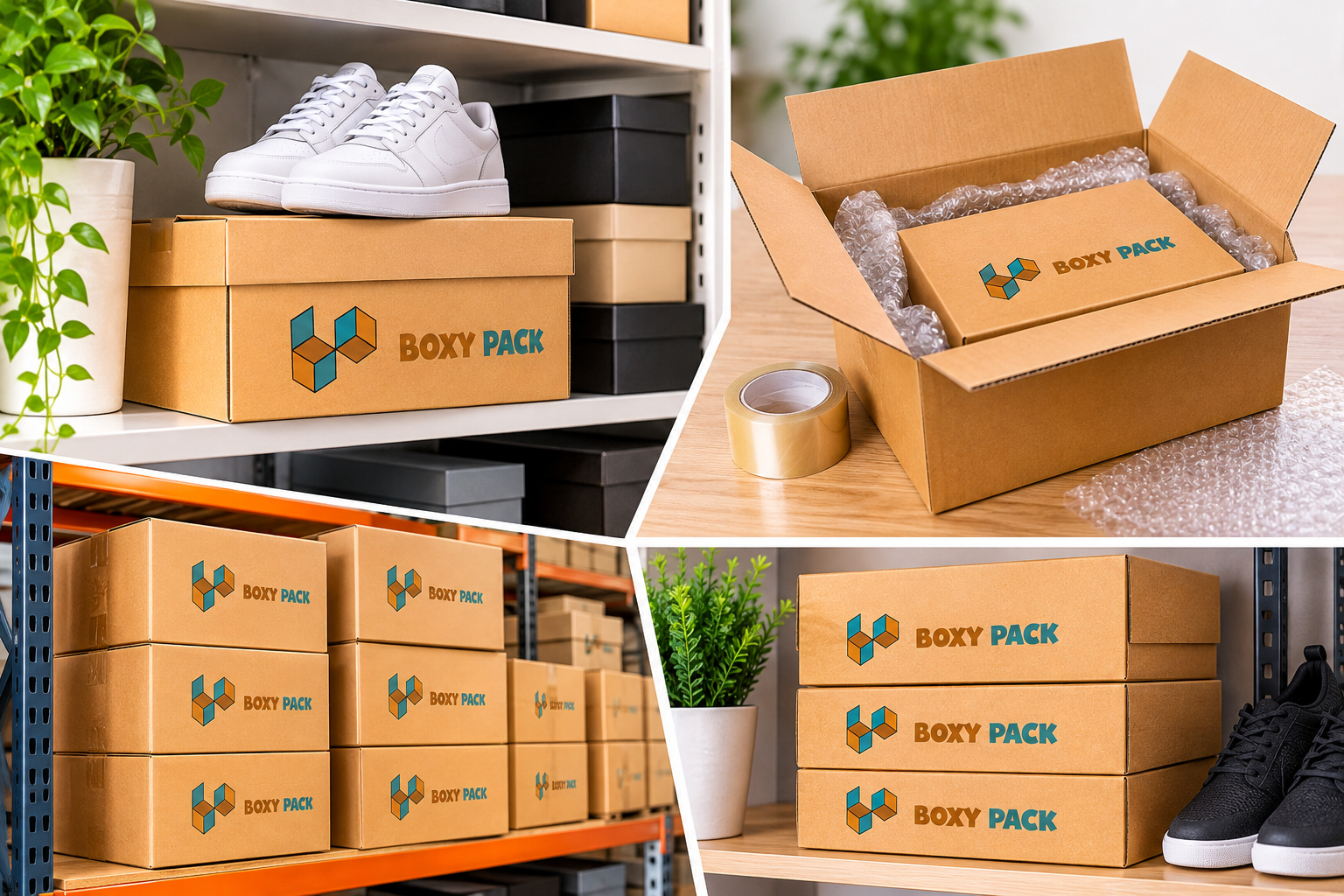
Organizing Shoe Boxes for Efficient Home Storage
Consistent box dimensions simplify shelf organization. Stack and arrange footwear by category or size so each pair is easy to find. Keep boxes away from excess moisture and direct sunlight.
Preparing Shoe Boxes for Safe Shipping
Choose an outer shipping carton with room for the retail box and cushioning, and consider custom shipping boxes when you ship the same style regularly. Cushioning materials reduce movement, and heavier footwear may need stronger shipping packaging. Measure the final packed carton instead of relying only on retail box dimensions.
Maintaining Shoe Box Shape During Long-Term Storage
Stack boxes sensibly to prevent unnecessary pressure, and avoid placing heavy weight on delicate packaging. Keep footwear clean and dry before storing it. Replace damaged or weakened boxes so they continue to protect the shoes.
Final Thoughts on Finding the Right Shoe Box Size
The right shoe box depends on the footwear type, the shoe size, and what the packaging has to do. Approximate standard measurements are useful starting points, but measuring the actual footwear gives far more reliable results. Internal and external dimensions also serve different purposes, and correct clearance keeps shoes protected without wasting space.
Before choosing a box, measure your shoes, compare available packaging, and check material thickness. A short test with a sample box often saves a large order from going wrong. If you are ready to move from measuring to buying, explore suitable cardboard shoe box packaging options from Boxy Pack that match your footwear and your storage or shipping plans.
Frequently Asked Questions About Shoe Box Sizes
Shoe box dimensions can vary by footwear category, brand, and packaging construction. These answers cover additional questions that come up when choosing or ordering boxes. Always confirm measurements against the shoes and the specific box you plan to use.
Can two different shoe sizes fit inside the same shoe box?
Often yes, if the sizes are close. Boxes are usually built around the largest size in a range, so smaller sizes in the same style commonly share one box.
What is the difference between shoe box dimensions and shoe measurements?
Shoe measurements describe the footwear itself, such as heel-to-toe length. Box dimensions describe the packaging and include extra clearance, wall thickness, and space for inserts.
Do shoe boxes have standard measurements across all footwear brands?
No. Brands use different sizes depending on their styles and shoe ranges, so boxes from different brands may not match even for the same shoe size.
How much extra room should a custom shoe box provide?
A small amount, enough for easy placement and any tissue or inserts. Too little squeezes the shoes, while too much lets them shift, so test with a sample.
Can a regular shoe box be used for mailing shoes?
It can be placed inside a larger shipping carton, but the retail box alone offers limited protection in transit. Add an outer carton and cushioning.
What is the best cardboard thickness for a shoe box?
It depends on the shoes. Lightweight footwear is often fine in standard paperboard, while heavier shoes and boots benefit from thicker or corrugated board.
How many standard shoe boxes can fit inside a larger shipping carton?
That depends on the external size of both. Divide the carton's inside dimensions by the shoe box's outside dimensions along each side, then multiply the whole numbers together.
Ready to Get Started?
Discover our custom packaging solutions and bring your brand to life with premium boxes.