Bath bombs are fragile, sensitive to moisture, and bought largely with the eyes. A cracked edge, a crushed corner, or a box that lets the product rattle around can ruin the impression before the bath bomb ever touches water. Bath bomb boxes solve this by holding the product securely while showing off the scent, colors, and brand behind it.
The box has to do several jobs at once. It protects the product, presents the scent and ingredients, and communicates the brand identity and overall quality. Those choices affect retail presentation, gifting, ecommerce shipping, and the customer's first impression. Choosing the right box involves more than picking an attractive design. Size, material, inserts, customization, moisture protection, printing, sustainability, wholesale purchasing, and shipping all matter, and this guide will help you build packaging around the actual bath bomb and where it will be sold.
What Makes Bath Bomb Boxes Effective for Packaging
Effective bath bomb packaging balances protection with presentation. A box that protects well but looks dull gives customers little reason to pick it up, while one that looks great but cannot hold the product will lead to damage and complaints. The best bath bomb packaging boxes manage both.
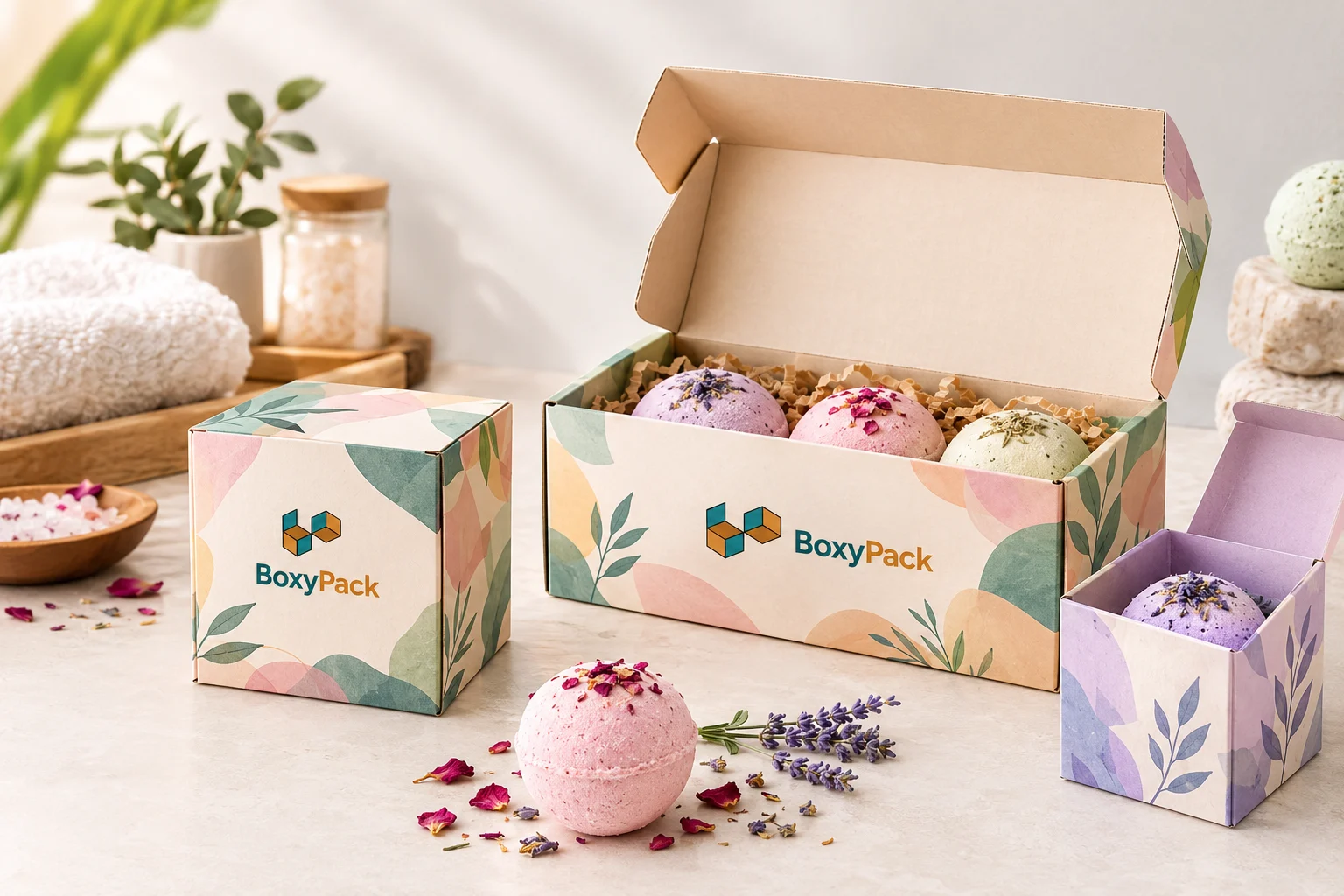
Fit comes first. The box should hold the bath bomb snugly so it cannot shift, and the structure should be strong enough to resist crushing during handling. Moisture is another concern, since humidity can affect the product, so the material and any inner wrapping should be chosen with that in mind. Brands that sell bath and body products often look at bathroom essentials packaging as a starting point, since it addresses the same combination of presentation and practicality.
Appearance and usability complete the picture. Clear branding, a readable scent name, and an attractive finish help the product stand out on a shelf or on screen. The box should also be easy to open, close, and stack. When protection, fit, visual appeal, and usability work together, bath bomb packaging supports both the product and the brand behind it.
How to Plan Bath Bomb Packaging Before Ordering
Good packaging starts before any design work. Defining what the box needs to do reduces sizing errors, product damage, excess packaging, and inconsistent presentation. Gather information about your products and how they will be sold. The steps below cover the planning questions for bath bomb boxes and custom bath bomb boxes.
Measure the Bath Bomb Before Choosing Packaging
Diameter, height, shape, weight, and product variations all influence the internal dimensions the box needs. Measure each type you sell, since a round bath bomb and a molded shape will not fit the same box. Accurate numbers are the foundation for every later decision.
Decide How Much Protection the Product Needs
Individually wrapped bath bombs, fragile shapes, layered products, and heavier items each need a different level of protection. Detailed or delicate shapes may need additional cushioning, while sturdy products may be fine with a simple fit. Match protection to the actual fragility of what you sell.
Check Whether Moisture Protection Is Necessary
Bath bombs can be affected by humidity, so packaging material and internal protection should be selected with this in mind. Consider whether the product will be wrapped, sealed, or stored in humid conditions. Choosing materials and inner protection accordingly helps the product stay in good condition.
Match Packaging to the Selling Environment
Retail shelves, e-commerce orders, craft markets, subscriptions, and gift sales each place different demands on a box. A shelf box prioritizes presentation, while a shipped product needs more protection. Plan the packaging around where most of your bath bombs will actually be sold.
Set Branding Requirements Before Production
Logos, colors, typography, product information, and scent identification should be planned early. Deciding these elements before production avoids layout problems and reprints. A clear brand direction also keeps your range consistent.
Determine Single-Unit or Multi-Pack Requirements
Single bath bombs, sets, collections, and seasonal bundles all influence box dimensions and structure. A multi-pack may need dividers or inserts that a single-unit box does not. Decide which formats you need so the specifications cover each one.
Test the Complete Package Before Ordering
Test the fit, closure, protection, appearance, handling, and shipping performance with a sample. Pack it with a real bath bomb and check how it holds up. Testing before committing to larger quantities prevents costly corrections.
Choosing Bath Bomb Packaging Materials That Perform
Material choice affects strength, appearance, moisture resistance, and sustainability. Bath bomb packaging materials need to protect a product that is relatively heavy for its size and sensitive to humidity, while also printing well and presenting the brand. Understanding the main options makes it easier to choose.
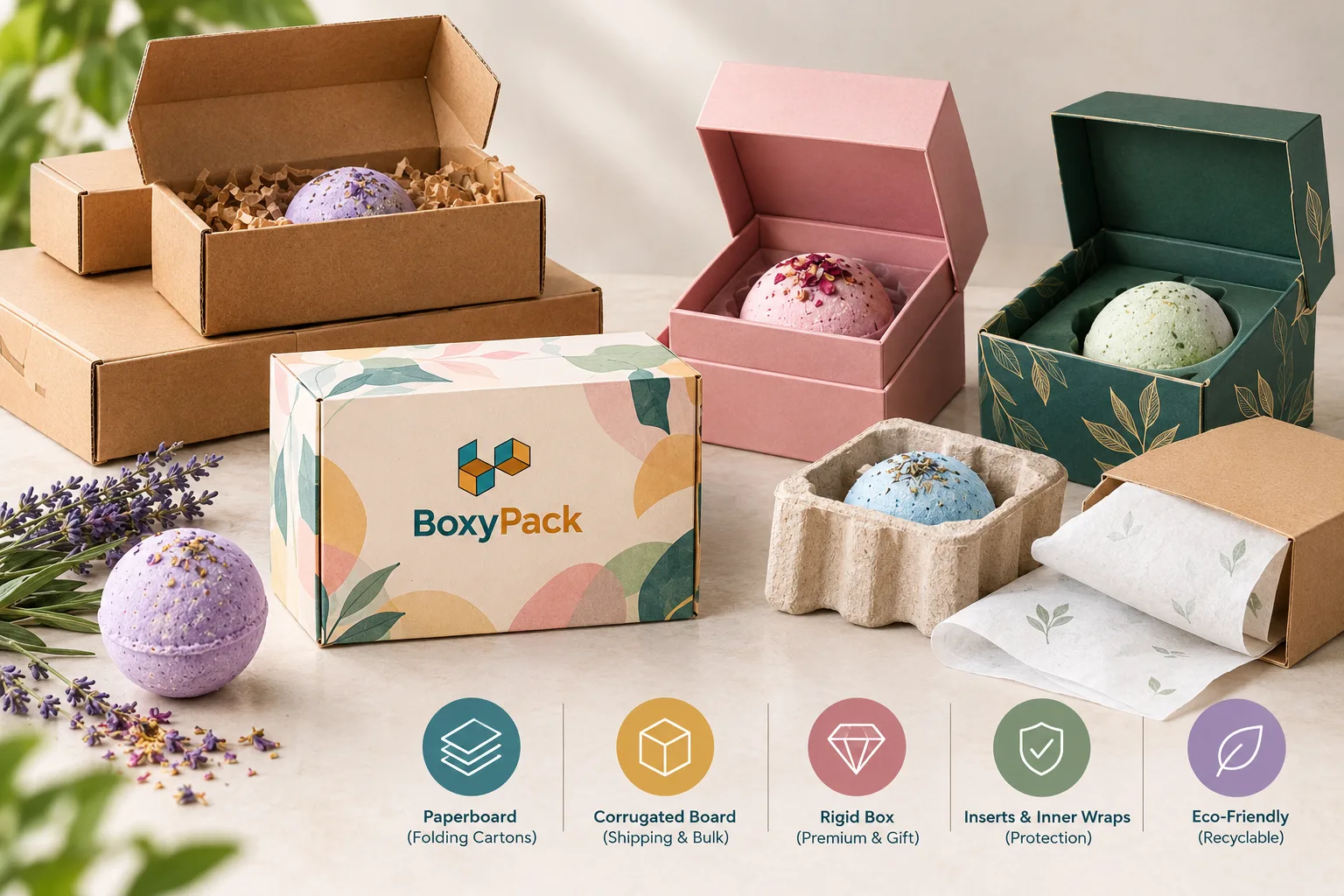
Paperboard is the common choice for folding cartons, since it prints cleanly and suits retail presentation. Corrugated board adds strength and cushioning, which makes it a good fit for shipping and for packing multiple products together. For premium and gift-oriented lines, rigid box packaging provides a sturdy structure that holds its shape and feels substantial in the hand. Inserts and inner wraps add further protection, and they can help manage moisture exposure.
Protective bath bomb boxes depend on matching the material to the product's weight, fragility, and handling conditions. Eco-friendly bath bomb boxes can be built from recyclable board with minimal coatings, though coatings that add moisture resistance may affect recyclability, so it helps to weigh the trade-off. These are the main factors to consider when choosing materials:
Product weight: Heavier bath bombs need sturdier board and structure.
Moisture exposure: Consider humidity during storage, display, and shipping.
Printing quality: Board type and surface finish affect how clearly logos and colors reproduce.
Protection level: Fragile or detailed shapes may need inserts and thicker materials.
Sustainability: Choose recyclable materials and limit unnecessary coatings.
Storage and handling: Materials that resist crushing are easier to store and ship.
Bath Bomb Box Styles for Retail, Gifts, and Shipping
Different box styles suit different selling situations. Choosing the right one depends on whether the product will sit on a shelf, be given as a gift, or travel through the mail. The table below compares common structures for bath bomb gift boxes, retail bath bomb boxes, and bath bomb shipping boxes.
Box Style | Best Use | Protection | Presentation | Key Consideration |
Folding carton | Retail and everyday products | Moderate | High | Flexible printing |
Rigid box | Luxury and gifting | Strong | Premium | Higher material complexity |
Mailer box | Direct-to-consumer shipping | Strong | High | Combines branding and shipping |
Corrugated box | Ecommerce and multiple products | Very strong | Moderate | Prioritizes transit protection |
Display box | Retail counters and shelves | Moderate | Very high | Designed for product visibility |
Folding cartons are versatile and cost-conscious for everyday retail, and they print well. Rigid boxes suit luxury bath bomb boxes and gift sets, where the opening experience is part of the product. Many brands pair these with custom gift boxes for seasonal collections and special occasions. Mailer and corrugated boxes handle the demands of online orders, and display boxes help products stand out on counters and shelves.
Many bath bomb businesses use more than one style. A folding carton might serve the retail line, while a corrugated carton protects online orders. Choosing the style that fits each channel keeps packaging effective without overspending on features you do not need.
Designing Bath Bomb Boxes for Stronger Branding
Box design should make the product recognizable before the lid is opened. Good bath bomb box design communicates the brand, the scent, and the quality at a glance, using a clear layout rather than a crowded one. Logos, colors, typography, scent identification, graphics, finishes, and product information all play a part.
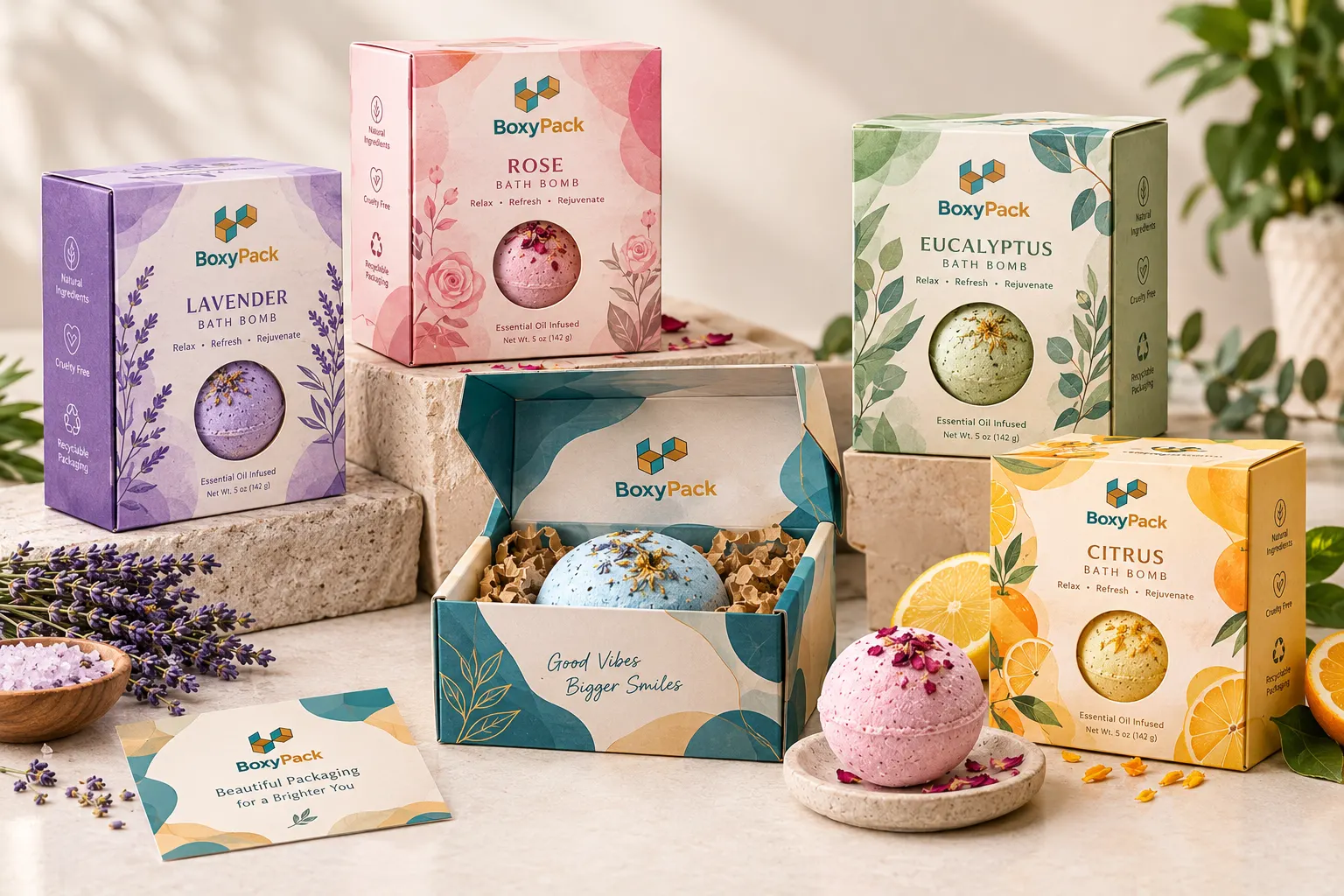
The brand name and logo should be easy to find, and bath bomb boxes with logo placement planned in advance look more confident and professional. Colors can suggest the scent or mood of the product, while a limited palette keeps the range cohesive. Typography should stay readable at shelf distance, with the scent name given clear emphasis so customers can find what they want quickly.
Finishes can add a premium quality to printed bath bomb boxes. Matte coatings, spot gloss, and embossing work best when used on a few key elements instead of everywhere. Product information, ingredients, and usage notes belong on the box too, and they need a clear place so they do not compete with the branding. Brands without in-house design support often work with an experienced packaging designer to turn a brand concept into print-ready artwork. Consistent colors, fonts, and layouts across every product make branded bath bomb packaging easy to recognize and easy to shop.
Bath Bomb Boxes: Pros and Cons to Consider
Dedicated boxes offer clear benefits, but they also require some planning. Understanding both sides helps you decide how to approach packaging for your products. Bath bomb boxes can improve protection, presentation, and branding, while custom designs add steps that standard boxes do not.
Custom bath bomb boxes tend to pay off when your products have distinctive shapes or when presentation is central to the brand. Brands that buy bath bomb boxes bulk should also weigh storage and forecasting. The lists below summarize the main points.
Pros
Provides a defined protective structure around the product
Creates a stronger retail presentation
Allows logos and branded artwork
Supports consistent product presentation across collections
Makes gift packaging more polished
Can accommodate inserts and protective components
Offers opportunities for custom sizing and printing
Cons
Incorrect sizing can leave products moving inside the box.
Some materials may be vulnerable to moisture.
Custom designs require more planning.
Multiple product sizes may require multiple box dimensions.
Bulk orders require adequate storage space.
Excess packaging can increase material use.
Poorly selected structures may not withstand shipping conditions.
How to Get the Right Size and Fit for Bath Bombs
Size is one of the most important practical decisions in packaging. A box that is too large allows movement and looks poorly fitted, while one that is too small can crush the product or make it hard to remove. The four steps below explain how to size bath bomb packaging boxes correctly. Following them keeps the fit consistent when you order in volume.
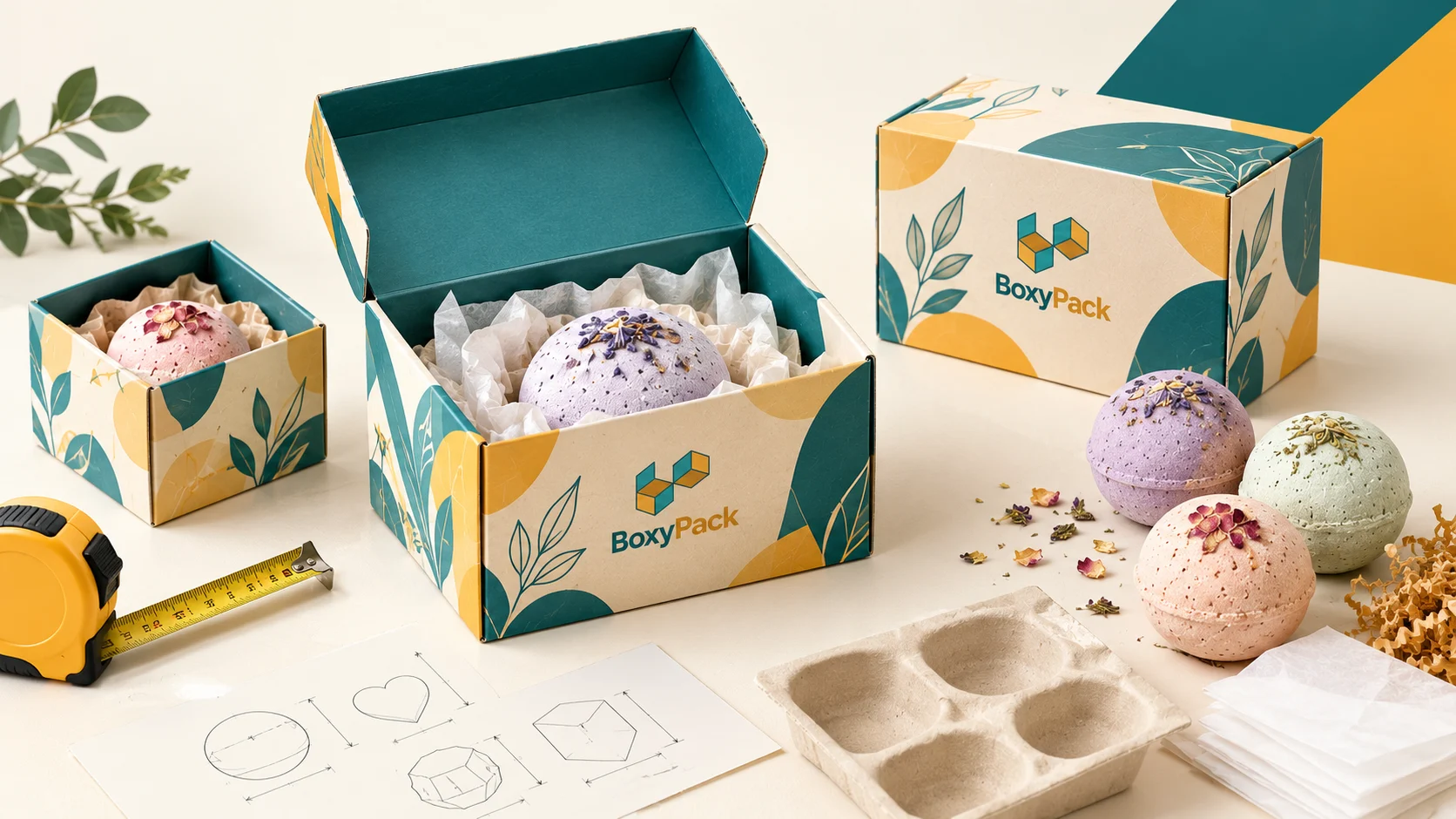
Measure Product Dimensions and Shape
Measure round, square, heart-shaped, molded, and unusually shaped bath bombs at their widest points. Shapes with protruding details may need extra clearance. Record the measurements for every product you plan to package.
Leave Room for Wrapping and Inserts
The final packaged dimensions, not just the bare bath bomb, should determine the internal box size. Wrapping, film, and inserts all add to the space needed. Include them in your measurements so the box does not end up too tight.
Avoid Excess Space Around the Product
Unnecessary empty space reduces stability and makes the package look poorly fitted. A close fit holds the product in place and reduces the need for filler. Aim for a snug fit that still allows the product to be removed easily.
Test Fit With the Finished Bath Bomb
Use a physical sample to confirm closure, movement, presentation, and protection before bulk production. Test with the finished, wrapped product, since it will behave differently from a bare one. A small adjustment at this stage is far easier than a correction after a large run.
Adding Inserts and Protection to Bath Bomb Packaging
Internal components can make a real difference to how well a box protects its contents. Inserts, dividers, wraps, and cushioning keep bath bombs stable and reduce cracking, movement, and surface damage. They also contribute to presentation, since a neatly fitted insert makes the product look carefully packed.
The right approach depends on the product's shape and fragility. A round bath bomb may sit well in a simple molded or paper-based cradle, while a delicate or detailed shape may need more support on several sides. Multi-pack sets benefit from dividers that keep each piece separate. For gift sets, inserts also help arrange the products attractively when the box is opened, which supports bath bomb gift packaging.
Because inserts take up space, they should be planned together with the box dimensions. These are practical protective approaches to consider:
Molded or paper-based inserts that cradle the product in place
Dividers that separate multiple bath bombs in a set
Inner wraps or film that help with moisture protection
Cushioning layers for fragile or highly detailed shapes
Tissue or paper fill to reduce movement without adding bulk.
Snug box dimensions that limit shifting without crushing the product
Making Wholesale Bath Bomb Boxes Work for Your Brand
Buying at scale can bring consistency and efficiency, but only if the boxes are right for the product. A poor decision is repeated across a whole order. Careful planning avoids ordering unsuitable boxes in large quantities. The four steps below cover the practical side of bath bomb boxes wholesale and bath bomb boxes bulk buying.
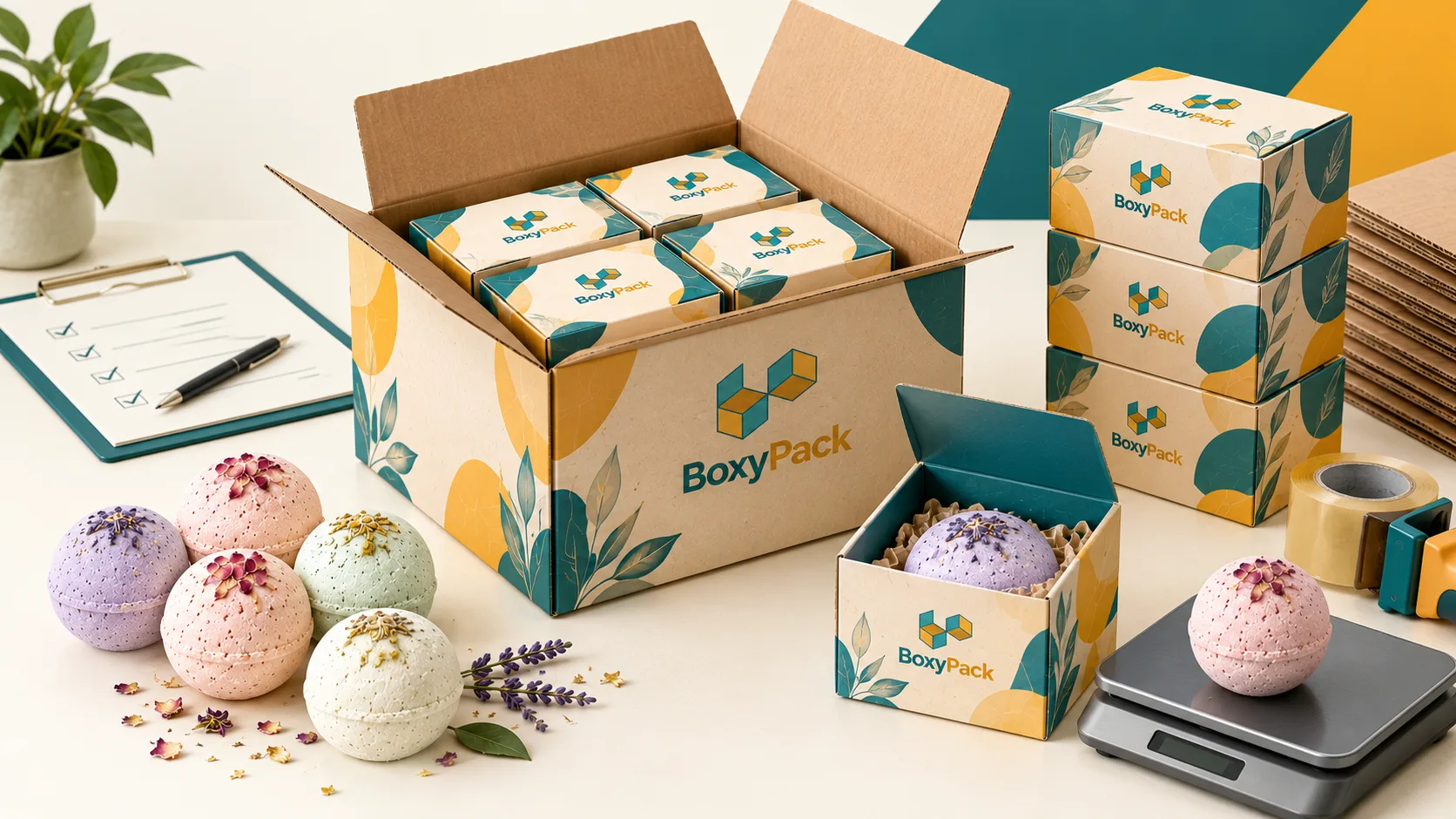
Estimate Quantities From Sales and Production
Production volume, seasonal demand, product launches, and SKU counts should all influence your quantities. Order enough to avoid interruptions without tying up cash and space in excess stock. Revisit the numbers regularly as your sales grow.
Compare Quality Before Placing Bulk Orders
Check material consistency, printing quality, dimensions, structural strength, closures, and finishing. Quality that varies from batch to batch creates an uneven product line. Reliable consistency matters most when you rely on custom product boxes across many orders.
Request Samples Before Full Production
Samples confirm product fit, appearance, protection, and overall usability. Test them with real products and handle them the way a customer or carrier would. A sample is the most reliable way to catch problems before they are repeated across a full run.
Plan Storage for Bulk Packaging Inventory
Boxes and packaging components should be stored where they will not be crushed, exposed to moisture, or contaminated. Keep them flat where possible and off the floor in a clean, dry area. Good storage keeps your packaging in usable condition until it is needed.
Creating Eco-Friendly and Gift-Ready Box Options
Sustainability and gifting can work together in bath bomb packaging. The goal is a box that looks appealing and feels special without using more material than necessary. Eco-friendly bath bomb boxes start with the choice of material, but they also depend on sizing, structure, and the components added around the product.
Recyclable boards and recycled content are common starting points, and natural options such as recyclable kraft boxes give bath and body products an earthy, handmade look. These materials can still carry clear printed branding. Right-sizing helps as well, because a box that fits the product closely uses less material and needs less filler.
Gift-ready presentation does not need to rely on excess packaging. A well-designed box with a clean interior, a neat insert, and a simple finishing touch such as tissue or a printed card can feel premium without adding bulk. Reusable elements, such as a box sturdy enough to keep for storage, add value that customers appreciate. Plastic windows, heavy laminations, and mixed materials can complicate recycling, so each element should earn its place. Thoughtful bath bomb packaging ideas focus on a good fit, quality materials, and one or two considered details instead of many decorative extras. Any environmental claims should stay accurate and specific to what the box is actually made from.
Final Thoughts on Bath Bomb Boxes and Packaging
The best bath bomb boxes protect the product, present it attractively, and work in the environment where it will be sold. Fit, material, protection, branding, customization, shipping, and sustainability all affect each other, so it helps to plan them together. A snug structure keeps the product safe, while clear branding and a considered finish help it stand out.
Good bath bomb packaging comes from understanding the actual product. The shape, weight, and fragility of the bath bomb guide the size and structure, and the sales channel guides the style. Moisture protection, inserts, and testing add reliability, while Boxy Pack can help make wholesale packaging choices more practical. Custom bath bomb boxes tend to work best when each choice has a clear reason behind it.
Before selecting a final box, take time to evaluate your bath bomb dimensions, packaging goals, branding, and sales channels. With those requirements clear, you can explore bath bomb box options at Boxy Pack that combine reliable protection with the attractive presentation your products deserve.
FAQs About Bath Bomb Boxes and Packaging
Choosing bath bomb boxes involves more than appearance and requires attention to sizing, material, protection, branding, and shipping. Every product and sales channel is different, so the right answers depend on your situation. These questions address common packaging concerns buyers have before selecting or ordering boxes.
Which box style works best for fragile or highly detailed bath bombs?
Rigid boxes and mailer boxes with fitted inserts tend to protect fragile shapes well, since they offer strong structure and support on several sides. For shipped orders, a corrugated outer carton adds further protection. The best choice depends on how delicate the shape is and how the product will be handled.
How can bath bomb packaging prevent moisture-related problems?
Use inner wraps or sealed packaging for the product itself, and choose box materials that suit the conditions where the product will be stored and displayed. Keep packaging in a clean, dry area before use. Avoid unnecessary gaps that let humid air move freely around the product.
What should I check before ordering custom bath bomb boxes?
Confirm the product dimensions, wrapping, insert needs, and quantity, and review the artwork proof carefully. Test a sample with a finished bath bomb to check fit, closure, and protection. Make sure the box suits where the product will be sold.
How many bath bomb boxes should I order for a new product line?
Base the quantity on expected sales, production volume, and the number of product variations. A new line is usually best started with a moderate order, so you can confirm demand and fit before ordering more. Order extra only if the design is settled and you have storage space.
Which materials make bath bomb packaging more recyclable?
Paperboard, kraft, and corrugated board are widely recyclable, especially when they use minimal coatings. Paper-based inserts are generally easier to recycle than plastic ones. Check that any coating or window does not interfere with recycling in your area.
How can I make bath bomb boxes look more premium without overpackaging?
Focus on a clean layout, a limited color palette, and one or two quality details such as embossing or a soft-touch finish. A well-fitted insert and a tidy interior also add to the premium feel. A snug fit and thoughtful design usually look better than extra layers.
What packaging features matter most for bath bombs sold online?
Strong protection and a secure fit matter most, since the product needs to survive shipping. Moisture protection, a sturdy outer carton, and inserts that prevent movement are also important. A branded interior adds to the unboxing experience without adding much weight.
Ready to Get Started?
Discover our custom packaging solutions and bring your brand to life with premium boxes.