
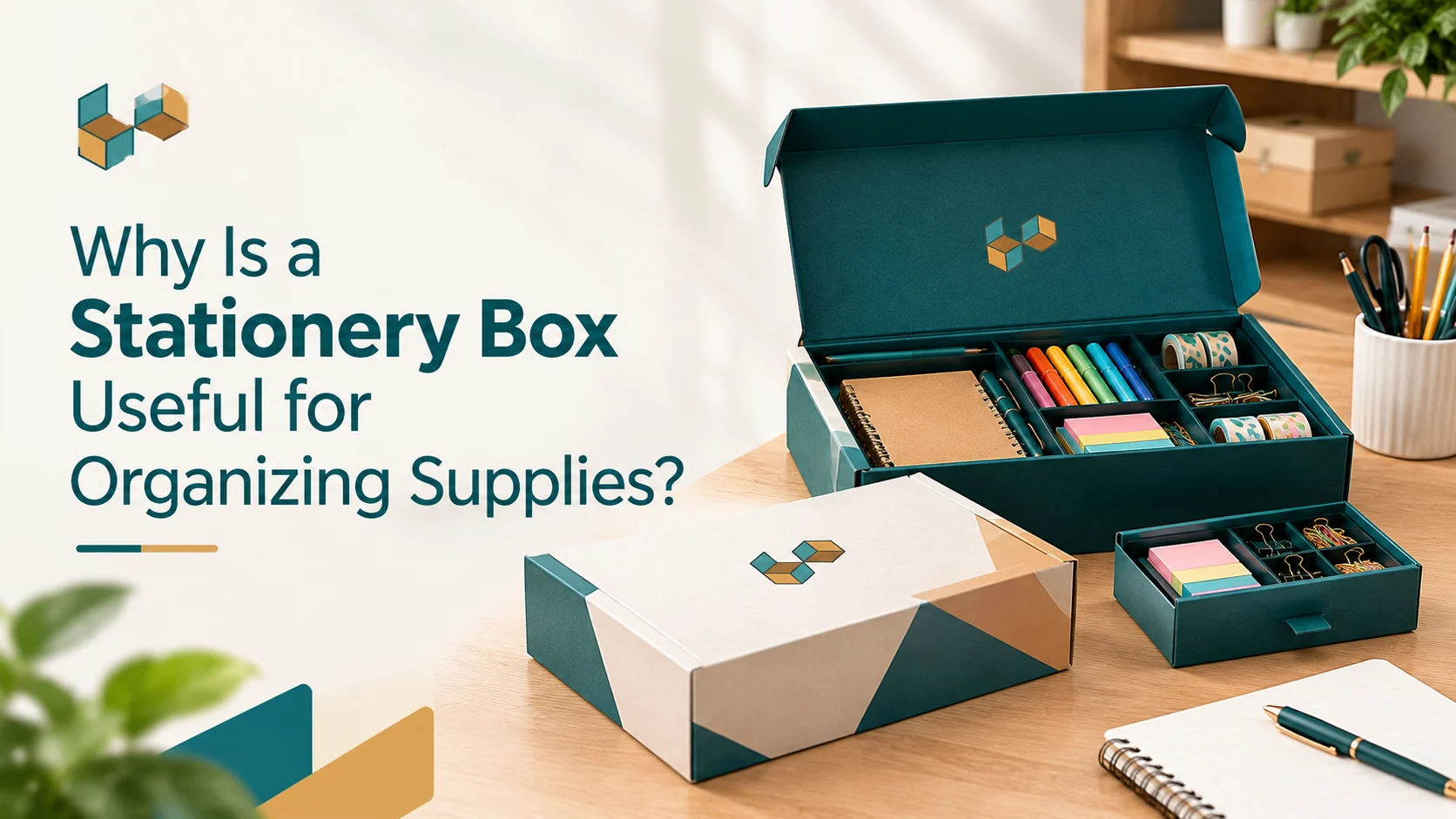
Loose pens, scattered notebooks, stray paper clips and half-used pads have a way of taking over a desk drawer within weeks. Once supplies lose their place, finding the right item usually means digging through a pile rather than reaching for it directly. A stationery box solves this by giving related supplies one organised place to sit, instead of letting them spread across drawers, bags or shelves. This kind of order matters just as much at home as it does in offices, classrooms, creative studios and stationery shops, where misplaced items slow people down far more often than they should.
How well a box actually solves this problem depends on a handful of practical factors: its size, internal layout, material and how easily it can be opened and closed during regular use. There is also a real difference between simple storage and packaging that has been built with a purpose in mind, since one is meant to hold items and the other is meant to organise, protect and sometimes present them. The sections below walk through how to choose the right size, material, structure and finish, along with when customisation and presentation genuinely add value rather than unnecessary cost.
How a Stationery Box Keeps Everyday Supplies Organised
A well-chosen stationery box gives loose items a consistent home, which is often the biggest single improvement over storing supplies loosely in a drawer. Sorting related items together, whether that means pens in one section or paper products in another, cuts down on the time spent searching and reduces the chance of items getting lost or damaged in the process. This kind of stationery packaging also protects contents from dust, bending and general wear that tends to build up when supplies are left exposed on an open shelf.
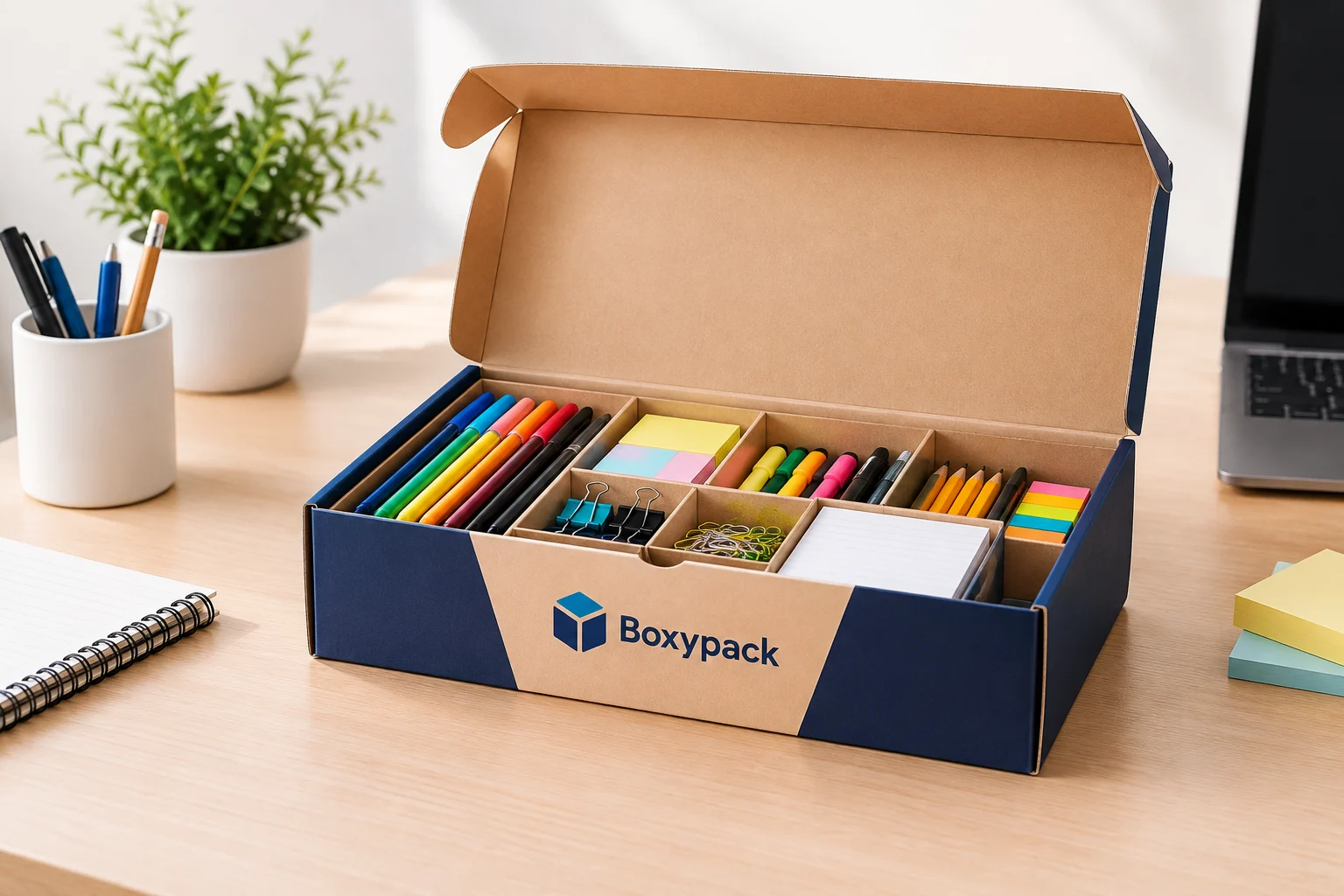
Beyond sorting, a box also manages space more efficiently than loose storage does. Office supply packaging that fits its contents closely leaves less wasted room in a drawer or cabinet, which matters more than it seems once several boxes need to be stored together. When a box is sized and structured around what it actually needs to hold, it turns a pile of separate items into something closer to a usable system.
How Box Design Can Improve Daily Supply Management
Appearance is only part of what makes a box work well day to day. The internal layout, how the lid or flap opens, and how easily contents can be seen all affect whether a box actually gets used consistently or ends up ignored after the first week. Stationery packaging boxes that account for these details tend to hold up better under regular use than ones chosen purely for looks.
Separate Frequently Used Items From Backup Supplies
Grouping daily-use items away from backup stock reduces the amount of searching needed during a normal day. Pens, pencils, markers and clips that get reached for often work best in a section that opens easily, while spare supplies or bulk stock can sit further back without slowing anyone down. This kind of separation is one of the simpler ways desk supply packaging can cut down on everyday clutter.
Match Compartments With Different Stationery Types
Separate compartments help keep mixed supplies from shifting into one another, which matters more for delicate items than it does for sturdier ones. Dividers or inserts are especially useful when a box holds a mix of writing tools, paper products and smaller accessories that would otherwise slide around and get disorganised every time the box is opened.
Which Stationery Box Size Fits Your Supplies Best
Choosing the right size starts with what the box actually needs to hold, rather than picking a size first and fitting contents into it afterwards. A box that is too large leaves items sliding around and wastes storage space, while one that is too small forces items to be squeezed in, which can bend paper products or damage writing tools over time. Paper product packaging in particular benefits from sizing that accounts for both the current contents and any items likely to be added later.
A few points worth checking before settling on a size:
Measure the largest item that needs to fit, not just the average one.
Leave a small amount of room for future additions rather than sizing too tightly.
Consider how many boxes will be stored together and whether stacking is likely.
Account for any dividers or inserts that will take up internal space
Writing product boxes sized this way tend to serve their purpose for much longer than ones chosen based on appearance alone.
Which Materials Make a Stationery Box Practical
Material choice affects strength, print quality and overall presentation, so it is worth matching to how the box will actually be used. Paperboard offers a lightweight, cost-effective option that suits everyday storage needs without adding unnecessary bulk. Rigid board holds its shape well and tends to suit boxes that will be opened and closed repeatedly, which makes it a reasonable choice for supplies used often. Kraft material gives a more natural, understated look, and a kraft box lid style works well for supplies that do not need a highly polished finish. Corrugated board adds extra strength for bulkier or heavier stationery sets.
A short comparison of common material traits:
Paperboard: lightweight and economical for everyday storage
Rigid board: holds shape well under repeated opening and closing.
Kraft: natural appearance suited to simpler, understated packaging
Corrugated: added strength for heavier or bulkier supply sets
Paper stationery boxes built from the right material for their contents tend to last noticeably longer than ones chosen on price alone.
How Custom Stationery Boxes Improve Supply Organisation
Standard packaging works fine for simple, uniform contents, but mixed or specific stationery sets often need something built around their exact shape and quantity. Custom stationery boxes make this possible by adjusting dimensions, internal layout and closures to match what is actually being stored, rather than forcing supplies to fit a generic size.
Build the Box Around the Exact Supply Set
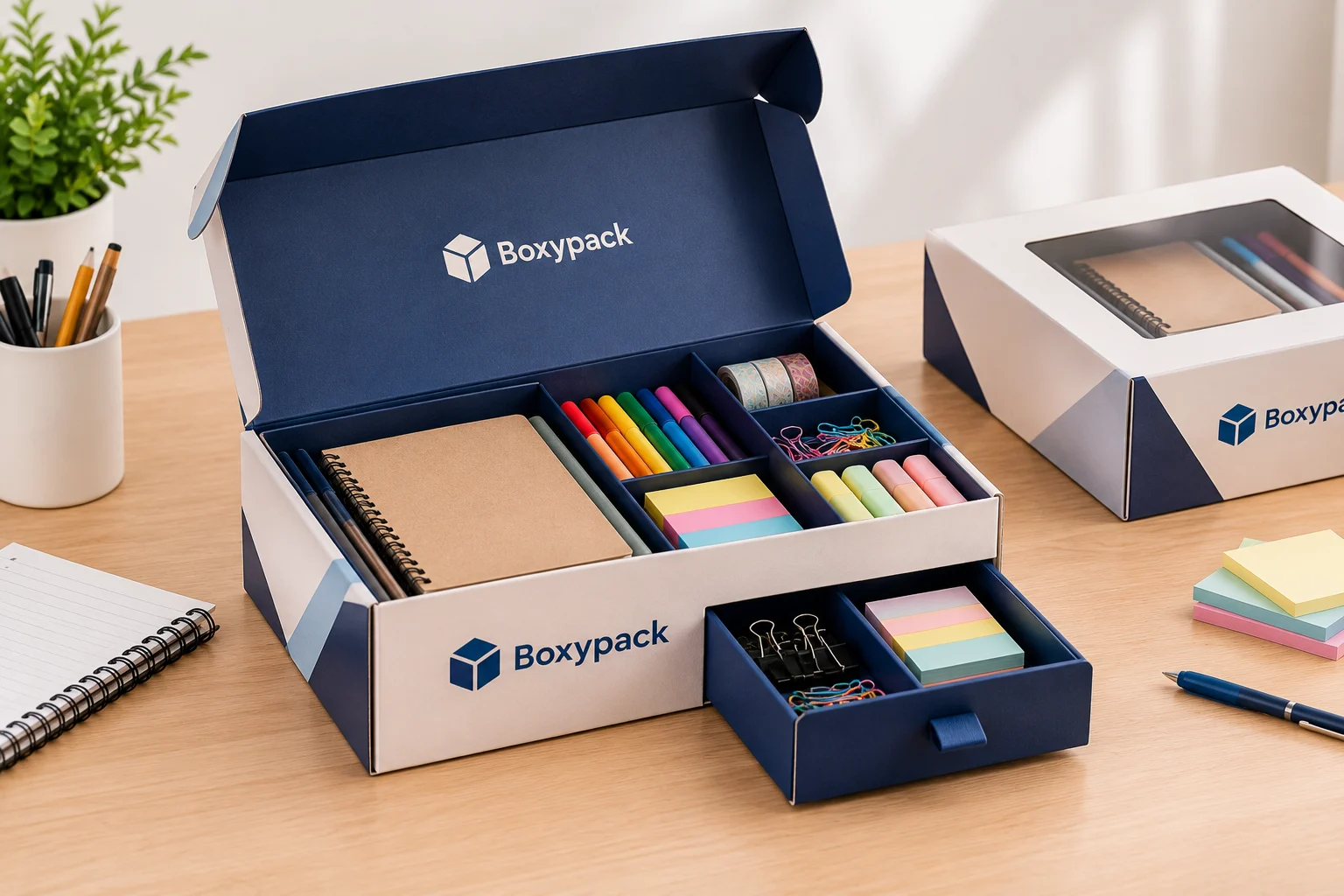
Dimensions should follow the real contents rather than a standard template. A box holding notebooks, writing tools and craft supplies together needs different internal space than one built for a single type of item, and custom paper packaging makes it possible to account for all of these differences in one structure.
Add Practical Features for Easier Handling
Inserts, dividers, drawer structures, windows and secure closures all add practical value when they solve a real handling problem. A window can help identify contents quickly, a drawer structure can make small items easier to reach, and a secure closure can keep contents in place during transport. These features work best when added because they solve a specific need, not simply to make a box look more complex.
How Personalisation Helps Identify Stationery Supplies
Adding a name, label, colour code or theme to a box makes it easier to identify at a glance, which matters more than it seems once several similar boxes are stored together. Personalised stationery boxes can use colour coding to separate categories, such as writing tools in one colour and paper products in another, which speeds up finding the right box without opening each one.
For offices and shared spaces, personalised office supplies also help establish ownership, reducing the chance of items getting mixed up between desks or departments. A logo, department name or simple colour system can turn a set of otherwise identical boxes into something that is instantly recognisable, which is useful both at home and in shared or branded environments.
How Box Styles Organise Pens, Paper and Desk Items
Different stationery groups tend to suit different box structures, and matching structure to contents usually makes daily use noticeably easier.
Use Rigid Boxes for Structured Stationery Sets
A rigid stationery box suits premium or carefully arranged sets that need to hold their shape through repeated use. This structure works well for supplies that are opened and closed often, since it resists warping better than lighter materials over time.
Choose Foldable Boxes When Storage Space Matters
Foldable designs help when storage space is limited or when boxes need to be flattened between uses. This structure tends to suit businesses managing multiple supply sets, since foldable boxes take up far less room when not in active use.
Use Drawer Styles for Easy Access to Small Items
Drawer structures let users reach specific items without disturbing everything else inside the box. This style works particularly well for small writing tools, clips and other desk items that get used frequently throughout the day.
Add Windows When Product Visibility Matters
A window lets contents stay visible while remaining enclosed and protected, which is especially useful for retail settings where customers want to see a product before buying it. Visibility through packaging often plays a direct role in whether a stationery product gets picked up off a shelf.
Consider Inserts for Mixed Stationery Collections
Inserts hold different items in planned positions, which keeps pens, markers, notebooks and creative tools from shifting into one another. This is particularly useful for gift sets or collections where presentation matters as much as protection.
Match the Structure With How Supplies Are Used
Items used daily generally need easier, faster access than supplies kept in reserve. Matching structure to actual behaviour, rather than to appearance alone, tends to produce packaging that stays useful well beyond the first few weeks.
When a Stationery Box Becomes Useful Gift Packaging
The line between storage and gifting often comes down to presentation rather than function. A box built to organise notebooks, pens or a small creative kit can just as easily serve as stationery gift boxes once the finish, colour and structure are adjusted for a more polished look. A two-piece rigid structure, for example, works well for gifting since the separate lid and base give a clean, considered opening experience that a simple fold-top box does not offer.
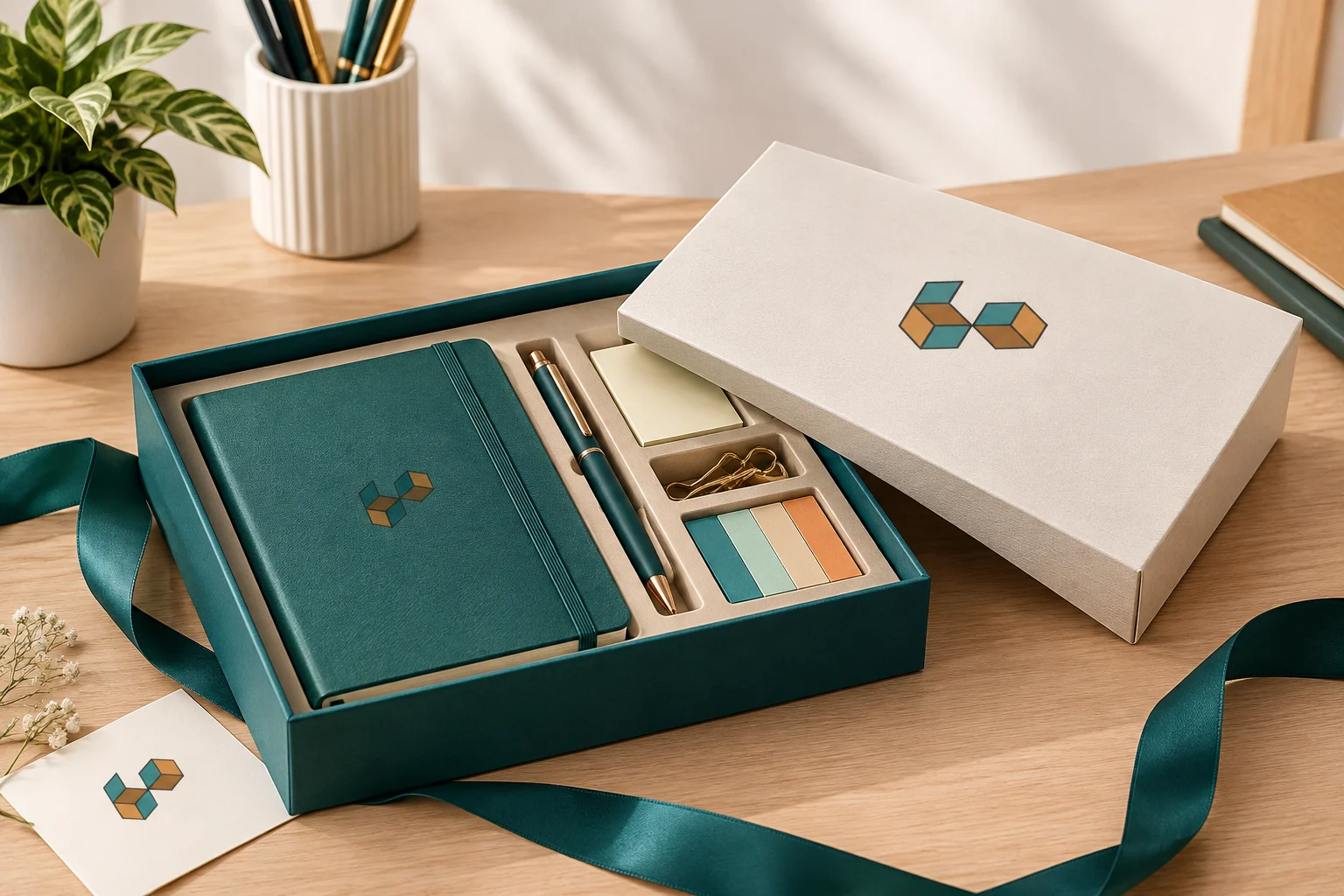
Journals, pen sets and curated stationery kits all benefit from this kind of presentation-focused packaging. Stationery gift packaging does not need a completely different structure from everyday storage boxes; it usually just needs a more deliberate finish and a layout that shows the contents well when the box is first opened.
How Premium Finishes Improve Stationery Box Presentation
A handful of finishing choices tend to have the biggest effect on how premium a box looks and feels.
Matte finishes create a soft, understated surface that suits minimal designs.
Gloss finishes add shine and work well with bold colours or artwork.
Soft-touch coatings give the box a smoother, more tactile feel.
Foil detailing highlights logos, names or small design elements
Embossing adds raised texture to specific parts of the design.
Textured papers give the box a more considered, higher-end feel.
Luxury stationery boxes tend to look most effective when one or two of these finishes are used deliberately rather than combined all at once. Decorative stationery boxes built this way usually read as more intentional than packaging that relies on heavy print alone.
How Branded Boxes Strengthen Stationery Product Identity
For stationery sold as a product rather than kept for personal use, packaging plays a direct role in how the brand is recognised. Consistent logos, colours and artwork across a product line help customers identify items quickly, even when they are stocked alongside similar products from other sellers. Branded stationery packaging that stays consistent across a catalogue also builds familiarity over time, which supports repeat purchases.
Product information printed clearly on the box, such as contents or usage details, adds a practical layer to this branding rather than just a decorative one. Branded paper products that combine clear information with consistent design tend to feel more trustworthy to buyers than packaging that changes noticeably between product lines.
Stationery Box Choices for Retail and Bulk Supply Needs
Packaging needs to shift once stationery is being sold rather than simply stored, since retail and bulk orders bring in factors that personal storage boxes do not need to account for.
Plan Packaging Around Retail Display Requirements
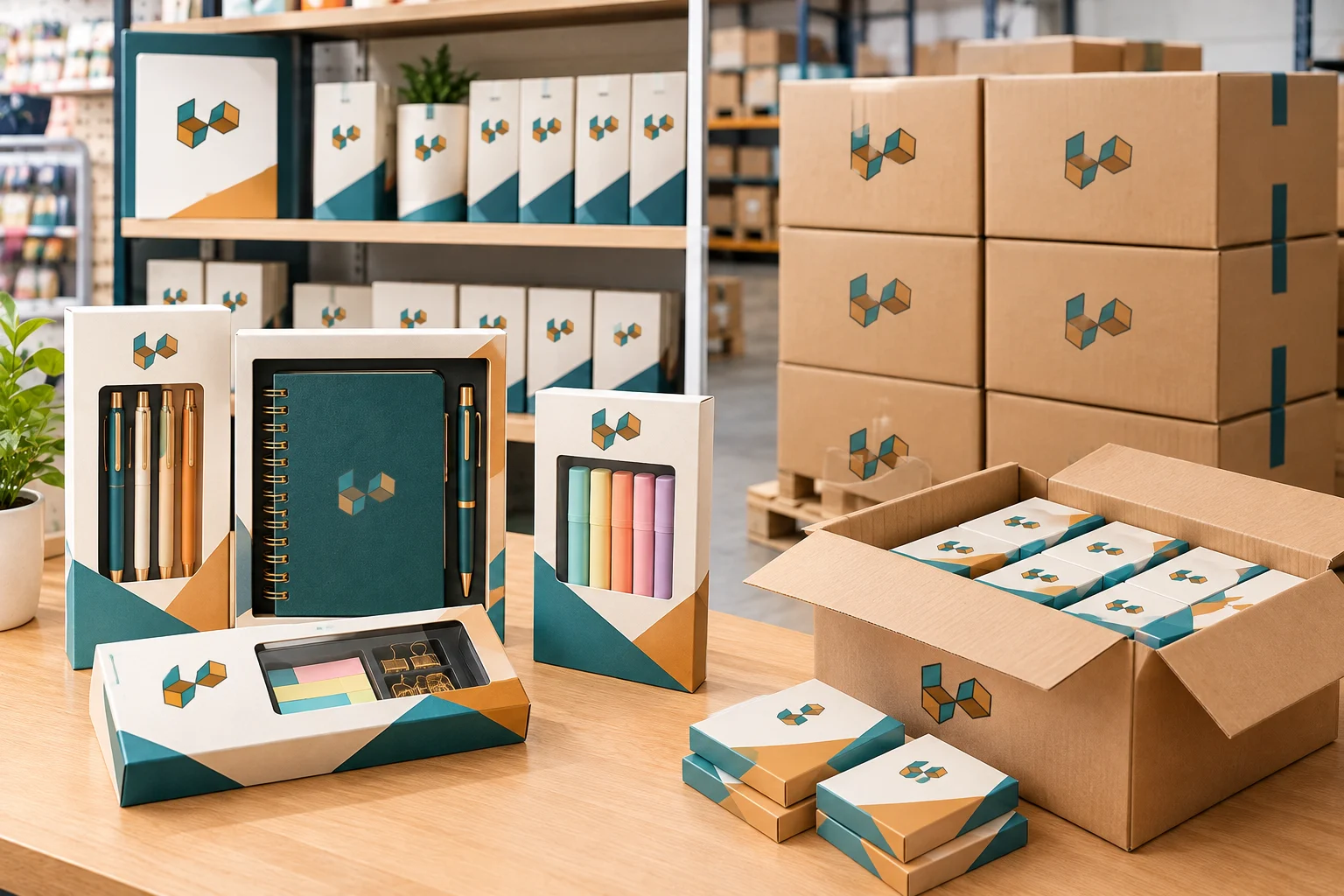
Shelf presence depends on visibility, consistent sizing and a design that stands out without looking cluttered. Retail stationery packaging that keeps a consistent size across a product line also makes shelf arrangement easier for retailers, which can influence whether a product gets a good position in-store.
Prepare Larger Orders for Consistent Supply
Repeated orders benefit from keeping dimensions and artwork consistent across production runs, since mismatched packaging between orders can create a disjointed look on shelves. Wholesale stationery boxes ordered with this consistency in mind also simplify storage and restocking for both the seller and the retailer.
How Stationery Boxes Protect Supplies From Common Damage
Beyond organisation, a stationery box plays a real protective role. Enclosed storage keeps out dust that builds up on open shelves, and a cardboard box lid style helps prevent paper products from bending or curling at the edges when stacked with other items. Structured packaging also reduces scratching on pens, markers and other writing tools that might otherwise knock against each other in a loose drawer.
Office supply packaging with a properly fitted structure additionally keeps contents from becoming disordered during transport or repeated handling, which matters for anyone moving supplies between a desk, bag or storage shelf regularly. Paper product packaging in particular benefits from this kind of protection, since paper items tend to show damage more visibly than sturdier supplies.
Custom Stationery Packaging Costs and Key Price Factors
Several factors combine to determine the final cost of a custom stationery order, which is why two seemingly similar boxes can end up priced quite differently.
Box size and the amount of material required
Material type, from standard paperboard to rigid or corrugated stock
Order quantity and whether it qualifies for bulk pricing
Printing complexity, including colour count and artwork detail
Finishing choices such as foil, embossing or soft-touch coatings
Inserts, dividers or drawer structures added for organisation.
Overall structural complexity of the box
Custom printed stationery boxes with simpler structures and standard materials tend to cost less than boxes with multiple finishes and custom inserts, so it helps to prioritise which features matter most before requesting a quote. Wholesale stationery boxes ordered in larger quantities also generally bring the per-unit cost down compared to smaller custom runs.
Stationery Box Types Compared for Different Uses
Box Type | Best Use | Main Strength | Consideration |
Rigid Box | Premium sets and gifting | Strong structure | Higher material use |
Foldable Box | Storage and flexible orders | Easy to store | Less rigid |
Drawer Box | Small organised supplies | Easy access | More complex structure |
Window Box | Retail presentation | Shows contents | Less enclosed surface |
Kraft Box | Eco-focused packaging | Natural appearance | Limited premium look |
Corrugated Box | Bulk or heavier supplies | Added strength | Less suited to luxury sets |
Comparing these structures side by side makes it easier to match a box type to its actual purpose, whether that purpose is daily storage, retail display, gifting or bulk supply handling.
How to Choose a Stationery Box Without Wasting Space
A short, practical workflow tends to produce better results than choosing a box based on appearance alone.
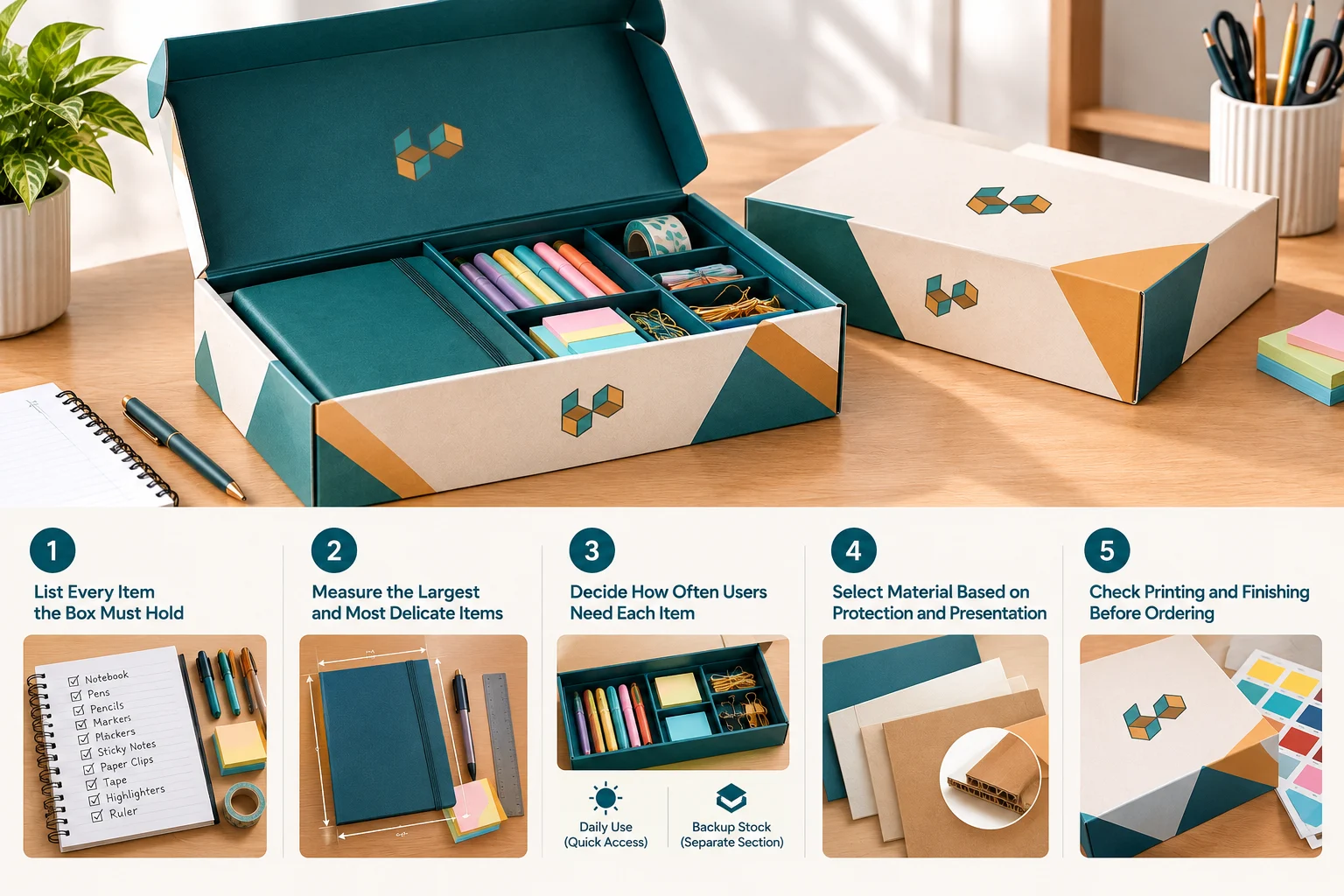
List Every Item the Box Must Hold
Start with a full list of current contents, along with any items likely to be added soon. This step gives a clearer picture of total volume before any dimensions are considered.
Measure the Largest and Most Delicate Items
Measuring the largest and most fragile pieces helps prevent a box that fits everything only if items are squeezed in. This step also protects paper products and writing tools that can bend or crack under pressure.
Decide How Often Users Need Each Item
Items used daily generally need faster, easier access than supplies kept as backup stock. This decision should guide whether a drawer, open-top or standard lid structure makes the most sense.
Select Material Based on Protection and Presentation
Balancing strength, appearance and budget usually means choosing a sturdier material for frequently handled items and a lighter one for supplies that stay mostly in storage. This choice connects directly back to whether the box will be used for everyday storage or retail presentation.
Check Printing and Finishing Before Ordering
Artwork, colour, finish and any printed product information should be reviewed together before production begins, since changes made late in the process tend to affect both cost and turnaround time.
Final Thoughts on Using a Stationery Box for Organisation
A stationery box does more than hold loose items together. When size, structure, material, and access are chosen around the actual contents, a box turns scattered pens, paper, and desk items into something genuinely easier to manage day-to-day. Boxy Pack offers packaging solutions that can be tailored to these practical needs, whether the box is meant for a home desk, a shared office, a gift set, or a retail shelf. In each case, organisation, protection, and presentation depend on the same underlying decisions about size and structure.
Custom stationery boxes make it possible to account for mixed contents, frequent use and specific presentation needs in a way that standard packaging often cannot. Stationery packaging built with these details in mind tends to stay useful well beyond the first few weeks of use, rather than becoming another source of clutter. Before placing an order, take the time to review your stationery contents, measure your dimensions and clarify your packaging goals, then request a custom quote to put the right box in place.
FAQs About Choosing the Right Stationery Box
Stationery boxes can serve quite different purposes depending on whether they are used for home storage, office organisation, gifting or retail sale. Box size, material, structure and customisation all play a role in which option actually fits a given need. The questions below cover some of the more common concerns that come up when comparing stationery packaging options.
What items are best stored inside a stationery box?
Pens, pencils, notebooks, paper products, clips and other small desk items are all well suited to stationery box storage, particularly when different types are separated into their own sections.
How do I measure stationery before choosing a box size?
Measure the largest and most fragile items in the collection first, then check that the box allows a small amount of extra room without leaving significant space.
Can a stationery box include dividers or custom inserts?
Yes, dividers and custom inserts can be added to hold different items in planned positions, which is especially useful for mixed collections of pens, notebooks and smaller accessories.
Which material is best for protecting paper stationery?
Rigid board or corrugated material generally offers better protection for paper products than lighter paperboard, particularly when items are stacked or transported regularly.
Are personalised stationery boxes useful for office supplies?
Yes, personalised details such as names, labels or colour coding make it easier to identify ownership and contents quickly in shared office spaces.
What makes stationery packaging look more premium?
Selective use of finishes such as soft-touch coatings, foil detailing or embossing tends to create a more premium look than combining several decorative effects at once.
Is custom stationery packaging worth the cost for retail products?
For retail products, custom packaging often supports better shelf presence and brand recognition, which can justify the added cost compared to standard packaging, particularly for products sold alongside similar items.
Ready to Get Started?
Discover our custom packaging solutions and bring your brand to life with premium boxes.