
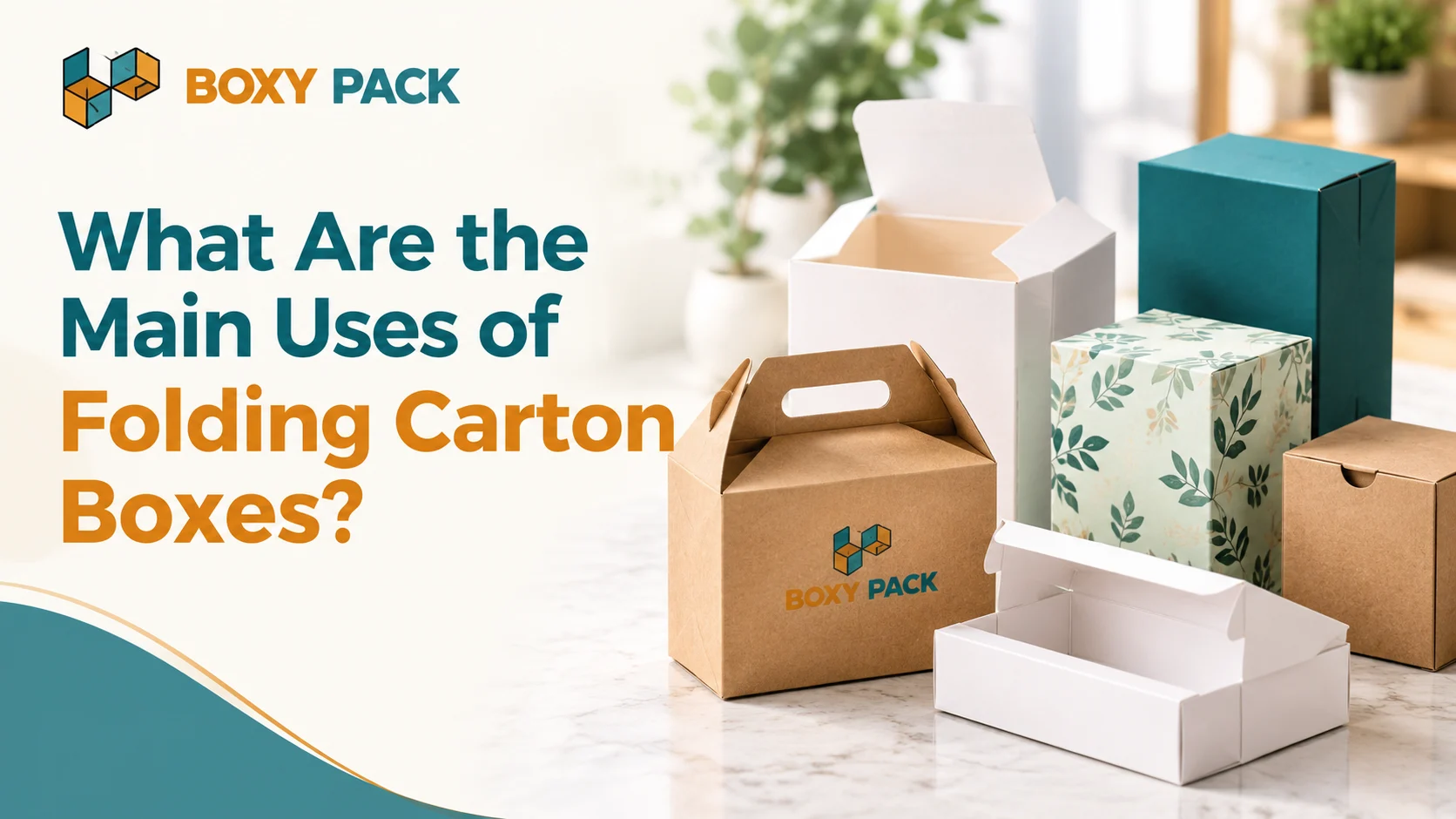
Choosing the right packaging is rarely simple. A box that protects a product well often adds too much weight or cost, while a lighter box can leave items exposed during handling or shipping. Folding carton boxes solve this balance for a wide range of goods. Built from paperboard and shipped flat before assembly, they give businesses a packaging option that supports storage, retail display, branding, and everyday product protection without the bulk of heavier materials. Because their structure and print surface can be adjusted to fit almost any item, folding cartons have become a practical choice across food, cosmetics, pharmaceuticals, and general consumer goods.
This article looks at what makes folding cartons different from other packaging types, how they are manufactured, and where they work best in retail settings. It also covers the range of products suited to folding carton packaging, the box styles available, printing and finishing options, cost factors, sustainability considerations, and how folding cartons compare with rigid boxes. Understanding these details makes it easier to see why folding cartons remain one of the most widely used packaging formats, starting with what actually sets them apart.
What Makes Folding Carton Boxes Different From Others
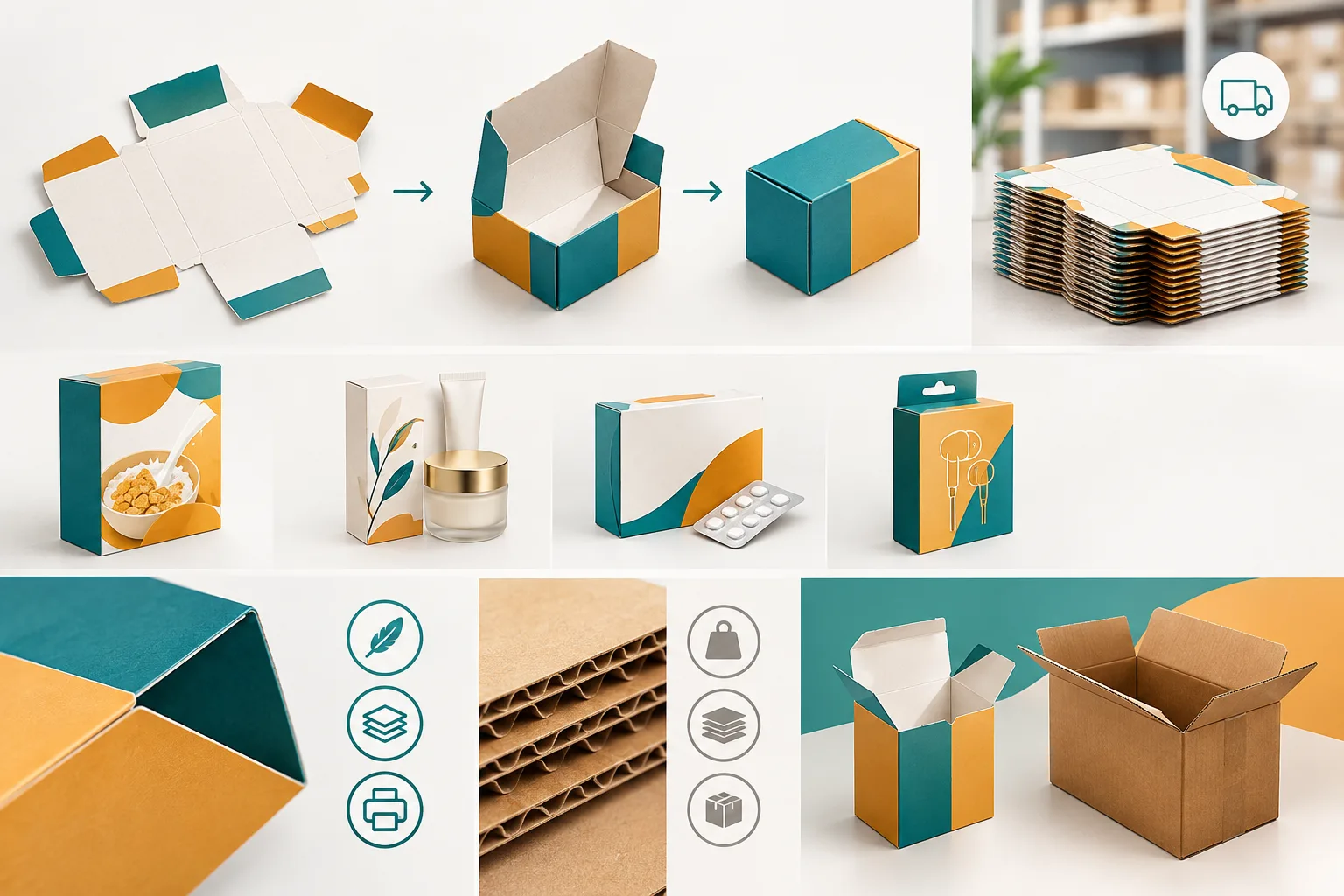
A folding carton is a box made from a single sheet of paperboard that is cut, scored, and folded into shape, then shipped flat until it is ready for use. This flat-shipping format is one of the biggest practical advantages of paperboard packaging, since it takes up far less space than a pre-formed box during transport and storage. Once needed, the carton is popped up and locked or glued into its final shape, ready to hold anything from a bar of soap to a set of electronics accessories.

The lightweight build of paperboard folding boxes is what makes them suitable for so many everyday products. A cereal box, a cosmetics carton, and a medicine pack may look different on the outside, but they often share the same basic folding carton construction underneath the print and finish.
It helps to separate this from a general cardboard box. Standard cardboard boxes, especially corrugated shipping boxes, are usually built for bulk transport and heavier loads, with a fluted layer sandwiched between liners for strength. Folding cartons use solid, single-layer paperboard instead. They are not designed to replace a shipping carton for heavy freight; they are designed to hold, present, and protect individual retail products, which is why their thinner, printable surface makes more sense for branding and shelf presentation than for warehouse-scale shipping.
How Folding Carton Boxes Are Made for Product Needs
Turning a flat sheet of paperboard into a finished carton involves several connected steps. Getting any one of them wrong, from board selection to final folding, can affect how well the box protects a product or how it looks on a shelf. Because folding cartons are usually seen up close by the end customer, small errors in dimensions or scoring are far more noticeable than they would be on a plain shipping box. The production process is where board strength, print clarity, and shelf presentation all come together.
Choosing Board, Size, and Structure for the Product
The starting point is the product itself. Its weight, shape, and handling needs determine how thick the board should be, how large each panel needs to cut, and how many folds and locking points the structure requires. A lightweight item like a tea sachet box needs far less board thickness than a carton meant to hold a glass jar or a stack of printed materials. Closure style also depends on the product: some items need a simple tuck flap, while others benefit from a locked base or a snap-fit bottom that can support more weight without collapsing.
Printing, Cutting, Folding, and Quality Checks
Once the structure is set, artwork is printed onto the paperboard sheet before it is die-cut into its outline, scored along the fold lines, and then folded and glued into its final flat or pre-glued form. Die-cutting and scoring accuracy matter because a fold line that is even slightly off can leave a carton that does not close properly or sits unevenly on a shelf. Before a full production run begins, proof checks confirm that colours, text, and final dimensions match what was approved, which helps avoid costly reprints later.
Where Folding Carton Boxes Work Best in Retail
Folding cartons are a natural fit for shelf-ready packaging because their printable surface doubles as a selling tool. A well-designed carton does more than hold a product together; it communicates brand identity, product details, and visual appeal the moment it is placed on a shelf or counter. This is one of the main reasons retail folding cartons remain a standard choice across supermarkets, pharmacies, and specialty stores.
Their usefulness extends beyond the shelf itself. Retail product packaging built from folding cartons works well for:
Everyday shelf stock in supermarkets, pharmacies, and convenience stores
Countertop displays near checkout areas
Ecommerce fulfilment, where a compact carton protects a product inside an outer shipping box
Product launches that need a distinct, branded first impression
Short-term promotional packaging tied to a season or campaign
Because folding cartons ship and store flat before assembly, businesses can also hold larger volumes of packaging in less warehouse space, only forming the cartons closer to the point of fulfilment or retail use.
Which Products Fit Folding Carton Packaging Best
Folding cartons are used across a wide range of industries, which is part of what makes them such a flexible packaging option. The right fit depends on the product's weight, shape, fragility, and where it will be sold. A lightweight cosmetic item and a boxed set of small electronics may both suit a folding carton, but the board thickness and closure style used for each will likely differ.
Food, Beauty, and Personal Care Products
Food product cartons are common for items like snack boxes, tea, baked goods, and dry ingredients, where the carton also carries nutritional information and branding. Cosmetic carton packaging follows a similar pattern for skincare, soaps, oils, and other personal care products, where shelf appeal and clear product information both matter for a shopper deciding between similar items.
Medicines, Electronics, Gifts, and Small Goods
Pharmaceutical cartons need to combine secure closures with space for dosage instructions, warnings, and batch information, since these products often fall under stricter packaging expectations. Folding cartons also suit small electronics accessories, gift sets, candles, and general household goods, provided the board and structure are matched to the item's weight and how it will be handled during shipping and retail display.
Why Folding Cartons Make Sense for Many Products
Beyond fitting a wide range of products, folding cartons offer practical advantages that explain their popularity. Their lightweight construction keeps shipping and material costs down compared with heavier packaging formats, while flat storage reduces the space needed before assembly. Assembly itself is usually quick, whether done by hand or on automated lines, which matters for businesses packing high volumes of product.
Lightweight packaging boxes also leave more room on the surface for useful content rather than just structural bulk. Some of the clearest benefits include:
Reduced shipping weight and cost compared with bulkier packaging
Flat storage that saves warehouse and transport space
Fast, straightforward assembly
Ample surface area for branding and product information
A cost-effective option for high-volume retail products
It is worth noting that folding cartons are not the right choice for every product. Very heavy items or products needing significant impact protection are usually better suited to sturdier packaging, since a folding carton's strength comes from its board and structure rather than added cushioning.
How Paperboard Choice Affects Carton Performance
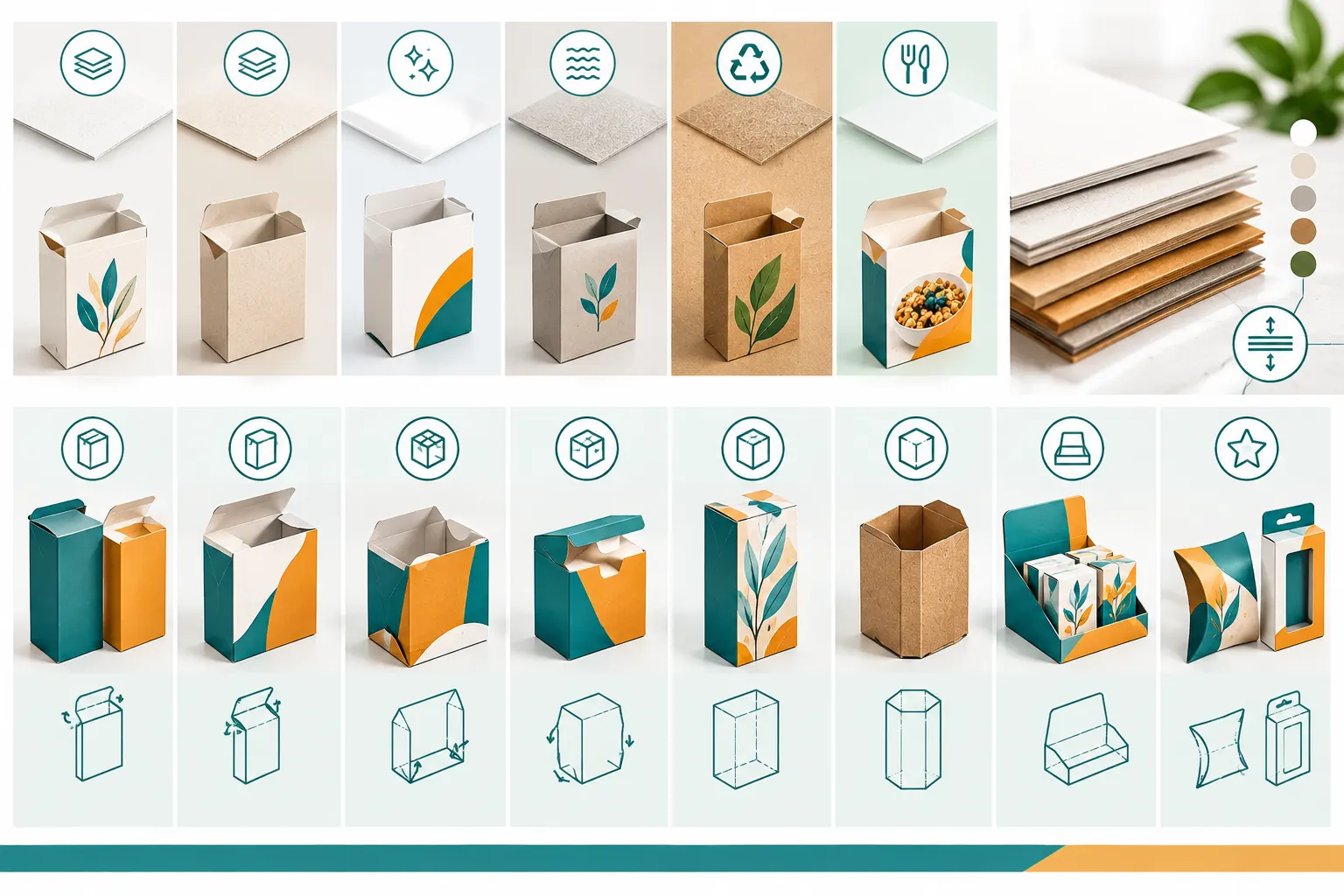
The type of paperboard used has a direct effect on how a carton performs and looks. Solid bleached or solid unbleached board offers a smooth, consistent surface that works well for high-quality printing, while coated board adds a layer that improves print sharpness and can offer some resistance to moisture. Uncoated board gives a more natural, matte finish that some brands prefer for a simpler look. Recycled stock and kraft-based options are common where a brand wants a visibly natural or eco-conscious appearance, and food-safe grades are used where the carton will have direct or indirect contact with food products.
Choosing board thickness is less about picking the strongest option available and more about matching it to the product. A heavier board adds cost and material without benefit if the product inside is light and well-supported by its own packaging. Sustainable carton packaging depends partly on this kind of right-sizing, since using only as much paperboard as the product needs reduces material waste without weakening the carton's function.
Which Folding Carton Styles Suit Different Products
Folding cartons come in several base structures, each suited to different products, weights, and assembly needs. Rather than treating these as a simple list to choose from, it helps to think about which structure actually matches how a product will be handled, displayed, and closed. The right style affects how quickly a carton can be assembled and how well it holds its shape on a shelf.
Straight Tuck and Reverse Tuck Cartons
Straight tuck cartons close with flaps that tuck in the same direction on both ends, while reverse tuck cartons alternate the flap direction for a slightly more secure, tamper-resistant close. Both styles are common for cosmetics, health products, and light food items, and they remain popular for tuck end cartons because they are quick to assemble and cost-efficient for high-volume packaging runs.
Auto-Bottom and Snap-Lock Carton Structures
Auto-bottom and snap-lock structures use a pre-glued base that locks into place with a simple push, giving the carton a stronger, more stable bottom than a basic tuck style. This makes them a better fit for products with more weight or an uneven shape, such as candles, glass containers, or bundled food items. Businesses looking for reliable auto bottom cartons often choose this structure specifically because it holds up better under retail handling than a folded tuck base.
Four-Corner and Six-Corner Folding Structures
Four-corner and six-corner cartons use glued corner seams that improve overall shape retention and rigidity compared with a basic folded box. This structure suits food and bakery packaging, clothing boxes, gift packaging, and other retail items where a firmer, more box-like shape is needed. For products that benefit from added structural stability, six corner cartons offer a practical middle ground between a simple tuck carton and a fully rigid box.
Tray and Display-Ready Folding Cartons
Open-top tray structures skip a top closure entirely, which makes them well suited to Product Display Packaging on retail counters, at food sampling stations, or for electronics and personal care items meant to be seen and picked up directly by shoppers. Retailers looking for display ready packaging often use tray-style cartons because they present a product clearly without extra material blocking the view.
Specialty Folding Cartons for Unique Products
Some products do not fit a standard structure at all. Pillow packs, header cartons with hanging tabs, and other made-to-fit designs are built around unusual product shapes, specific display requirements, or a brand's particular presentation goals. These specialty formats trade some manufacturing simplicity for a packaging shape that matches the product more precisely.
How Custom Folding Cartons Support Brand Identity
A folding carton is not just a container; for many brands, it is the first physical touchpoint a customer has with the product. Custom folding cartons let a business control size, shape, colour, artwork, and finishing details so that the packaging reflects the brand rather than looking generic. Logo placement, panel layout, and even the option to add a window cut-out all contribute to how a product is perceived before it is even opened.
Custom paperboard boxes work best when the design accounts for both the product's actual dimensions and the brand's visual style at the same time. A carton that fits the product loosely can look unfinished, while one that is too tight can make assembly and packing more difficult. Branded folding cartons that get this balance right tend to perform better on shelves because they look intentional rather than improvised. BoxyPack supports custom dimensions, materials, printing, colours, and finishes as part of its packaging process, which allows businesses to align the carton's structure with their brand from the start rather than adapting a brand around a standard box size.
What Printing Options Work Best on Folding Cartons
Printing is where a folding carton moves from functional packaging to an active part of a product's presentation. Exterior printing typically carries the brand's main visual identity, while interior printing and finishing choices add further detail and texture to the overall experience.
Full-Colour Printing for Strong Shelf Appeal
Full-colour exterior printing is usually where a carton makes its first impression. Strong artwork, clear logos, and well-placed product images help printed folding cartons stand out among competing products on a crowded shelf, and consistent use of colour and design across a product line supports faster shelf recognition for returning customers.
Interior Printing for Product and Brand Details
Interior printing is often overlooked but can add real value. Instructions, short brand messages, patterns, or a brief brand story on the inside panels can turn the moment a customer opens the carton into part of the overall brand experience, rather than treating the inside of the box as an afterthought.
Finishes That Change the Carton Look and Feel
Finishing options such as matte, gloss, soft-touch coatings, foil stamping, embossing, and spot UV all change how a carton looks and feels in hand. These finishes work best when chosen to support a specific brand impression, whether that is a premium soft-touch cosmetic box or a bright, glossy finish on a food product, rather than being added simply because they are available.
Product Information and Compliance Printing
Custom printed cartons often need to carry more than branding alone. Ingredient lists, usage instructions, warnings, and barcodes are common requirements, and regulated products such as food and pharmaceuticals may have specific rules about what information must appear and how clearly it needs to be presented on the packaging.
Proofing Artwork Before Final Production
Before a full print run begins, proofing artwork is a necessary step. Checking colour accuracy, final dimensions, text content, bleed areas, font sizing, and panel alignment at this stage helps catch errors while they are still easy to fix, rather than after thousands of cartons have already been printed.
How Folding Carton Costs Change With Custom Needs
There is no single fixed price for a folding carton, since cost depends on several factors working together rather than any one variable alone. Size and board type set a baseline, while structure, printing complexity, and finishing choices each add their own cost considerations. Order quantity plays a significant role as well, since larger production runs generally reduce the cost per unit due to how printing and die-cutting setup costs are spread across more cartons.
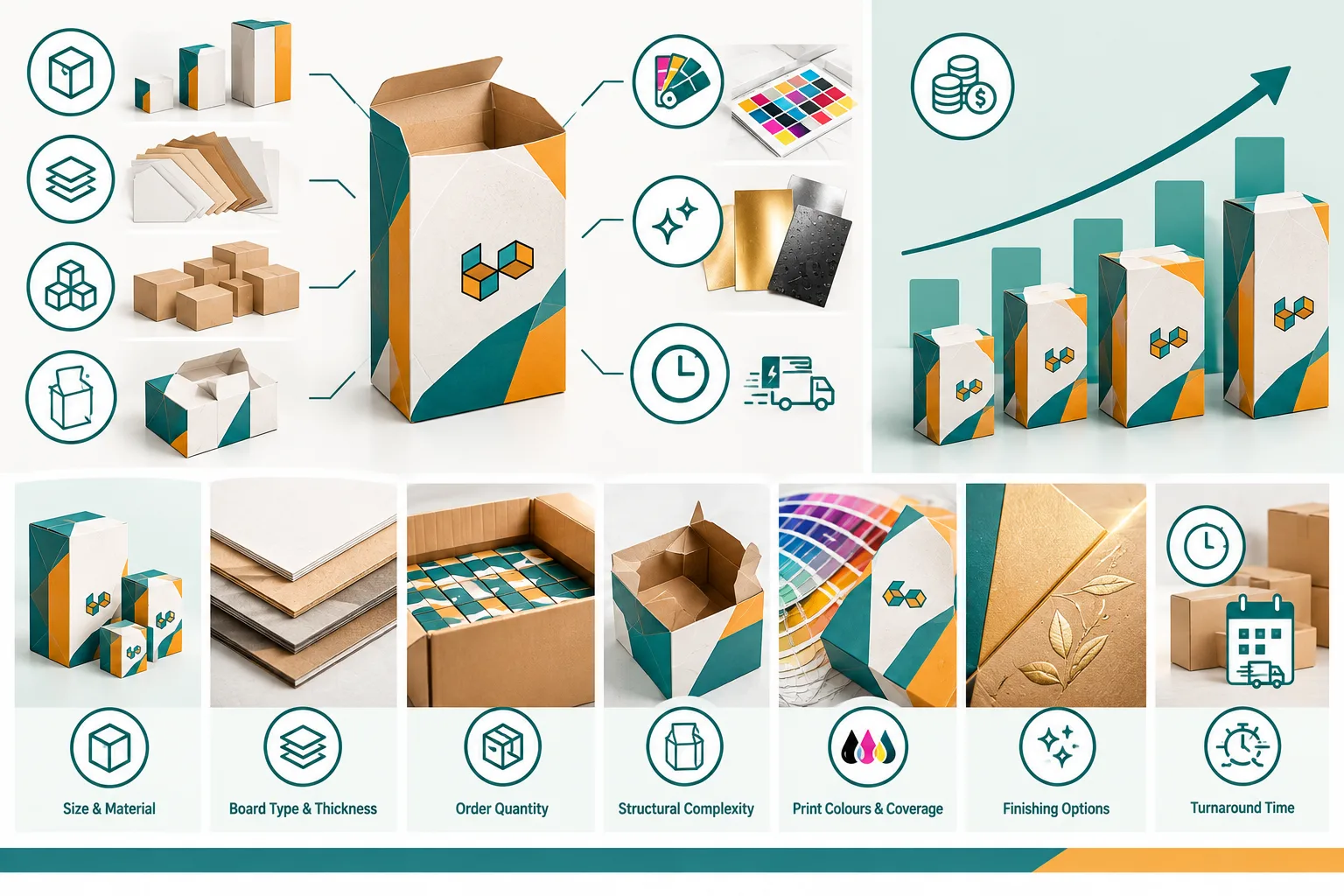
Common factors that influence a custom carton quote include:
Carton size and the amount of board material required
Paperboard type and thickness
Order quantity, since wholesale folding cartons typically bring a lower unit cost
Structural complexity, such as locking bases or specialty folds
Number of print colours and print coverage
Finishing choices like foil, embossing, or spot UV
Turnaround time requirements
Custom designs and specialty finishes generally increase production cost compared with a simpler, standard carton, which is why it helps to weigh how much of a finish or design detail actually supports the product versus adding cost without a clear return.
When Folding Cartons Are Better Than Rigid Boxes
Folding cartons and rigid box packaging both have a place in retail and product packaging, but they suit different goals. Rigid boxes are built from thicker, non-folding board and typically ship already formed, which gives them a naturally more substantial feel that suits premium or luxury presentation. Folding cartons, by comparison, ship flat, assemble quickly, and generally cost less to produce and transport, making them a practical choice for everyday retail volume.
Feature | Folding Carton Boxes | Rigid Boxes |
Structure | Folded paperboard | Thick fixed board |
Shipping | Lightweight and space efficient | More bulky |
Storage | Ships flat | Usually ships formed |
Retail use | Excellent | Excellent |
Premium feel | Flexible with finishes | Naturally more substantial |
Custom printing | Highly flexible | Highly flexible |
Cost | Often more economical | Usually higher |
Best fit | Retail and everyday products | Premium and luxury products |
Neither format is universally better. Rigid boxes make more sense when a product's positioning calls for a heavier, more premium unboxing experience, while folding cartons are usually the more practical choice for high-volume retail products where cost efficiency and shelf-ready presentation matter more than a rigid, formed structure.
How Sustainable Folding Carton Packaging Can Be
Paperboard is inherently more recyclable than many other packaging materials, but that does not mean every folding carton is automatically sustainable in practice. Recyclability depends on what else is involved in the carton, including any laminates, plastic coatings, or heavy ink coverage that can complicate recycling in some local systems. A plain, uncoated paperboard carton is generally easier to recycle than one with a glossy laminate or a plastic display window.
Businesses aiming for more sustainable carton packaging typically look at several areas together:
Using recycled fibre or responsibly sourced virgin paperboard
Avoiding unnecessary coatings or laminates where possible
Right-sizing the carton to reduce material use
Keeping board thickness matched to the product rather than oversized
Checking that inks and finishes used are compatible with local recycling processes
None of this guarantees a carton is sustainable on its own, but making these choices deliberately, rather than defaulting to the thickest or most heavily finished option, generally produces a more environmentally reasonable result.
What To Check Before Ordering Folding Carton Boxes
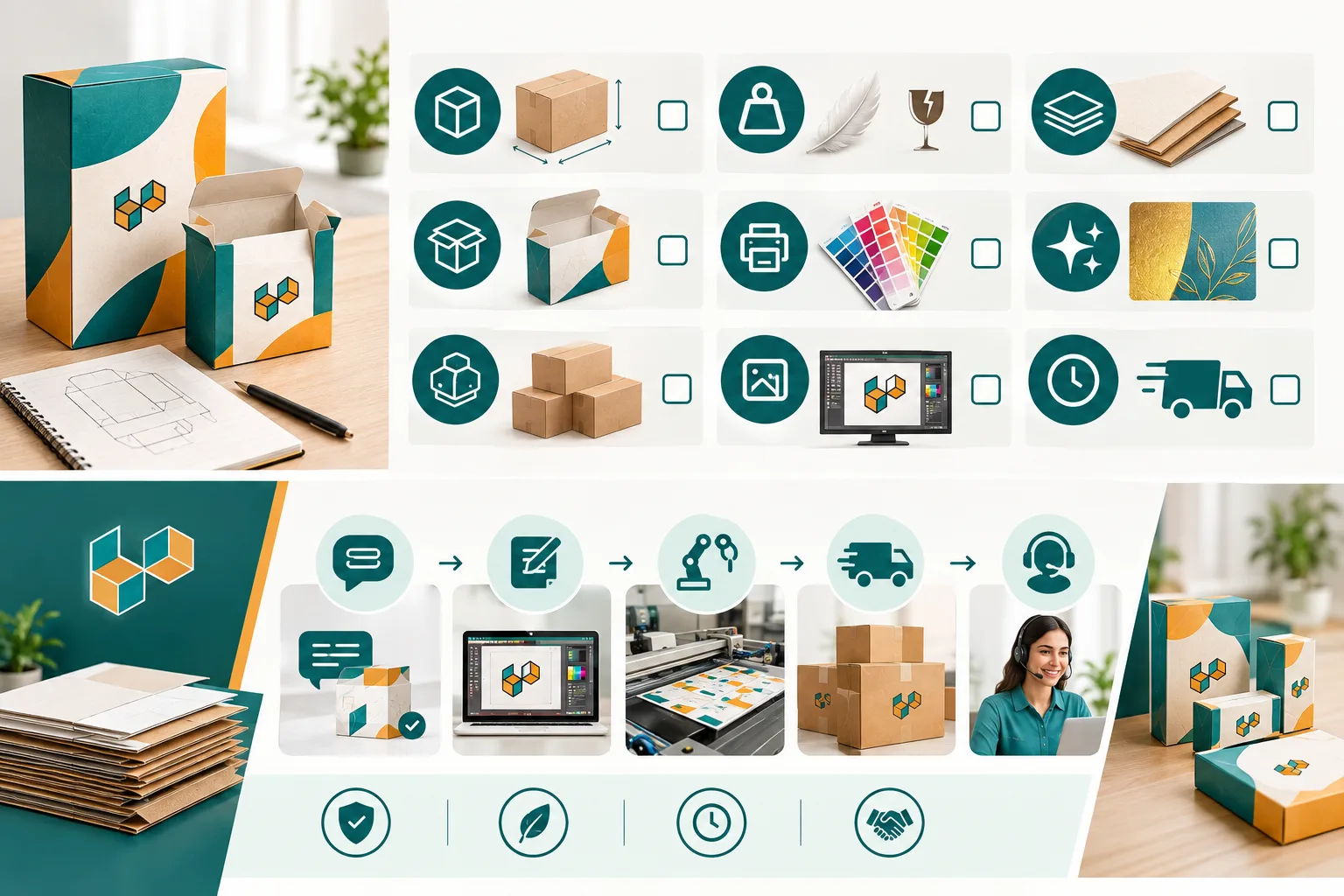
Getting a custom carton order right the first time saves both money and time. A short pre-order checklist can help avoid the most common mistakes:
Confirm exact product dimensions, including any packaging inserts
Note the product's weight and fragility
Decide on board type and thickness suited to the product
Choose a closure style appropriate to how the product will be handled
Finalise print requirements, including colours and required information
Select finishing options, if any
Confirm order quantity and expected reorder frequency
Prepare or approve final artwork files
Check turnaround time against your delivery deadline
Accurate product measurements matter more than they might seem. A carton that is even slightly undersized can make packing difficult or damage the product, while an oversized carton wastes material and can let the product shift during shipping. BoxyPack's ordering flow also considers dimensions, material, quantity, artwork, and turnaround when preparing custom packaging, which is worth keeping in mind when preparing your own order details in advance.
How BoxyPack Can Help With Custom Carton Packaging
Ordering custom folding cartons does not need to be complicated when the process is broken into clear stages. Consultation typically starts with understanding the product, its dimensions, and how it will be used or sold, which then informs material selection and structural choices. From there, artwork setup and proofing ensure the design is accurate before a full production run begins, followed by production itself and final delivery.
BoxyPack describes a four-stage process covering consultation, design setup, production, and delivery, which keeps custom printing, finishing choices, and flexible order quantities aligned with what a specific product actually needs. The goal at each stage is a carton that fits the product correctly, represents the brand clearly, and arrives within a workable timeframe, rather than a one-size-fits-all box adapted after the fact.
Final Thoughts on Choosing Folding Carton Boxes
Folding carton boxes serve a genuinely wide range of uses, from retail shelves and ecommerce fulfillment to food, cosmetics, pharmaceuticals, gifts, and other lightweight consumer goods. Their value comes from how adaptable the format is: the same basic folded paperboard structure can be adjusted in board thickness, closure style, size, and finish to suit almost any product that does not require heavy-duty protection.
Choosing the right folding carton comes down to matching structure, board, print, size, and finish to the specific product rather than picking a generic option and hoping it fits. Customisation and sustainability both play a role in that decision, and neither has to come at the expense of practicality or cost. If you are working through packaging options for a specific product, it is worth discussing your exact dimensions and requirements directly with Boxy Pack to find a folding carton solution that fits.
Folding Carton Boxes FAQs for Packaging Buyers
Folding cartons can suit many products and packaging needs. The right structure depends on the product, use, and brand goals. These questions cover common points buyers may still want to check.
What is the typical lifespan of folding carton packaging?
Folding cartons are generally built for a single-use retail cycle rather than long-term reuse. With standard paperboard and normal handling, they hold up well from production through shelf life and into the customer's hands, but they are not designed for repeated heavy use like a rigid box might be.
Can folding cartons protect fragile products during shipping?
Folding cartons offer moderate protection suited to light to medium-weight items, especially when paired with inserts or an outer shipping box for ecommerce orders. For genuinely fragile or heavy products, a sturdier structure such as a rigid box or added internal padding usually gives better protection than a folding carton alone.
What thickness of paperboard is best for folding cartons?
There is no single best thickness, since it depends on the product's weight and how much support the structure needs. Lighter items like cosmetics or small food packs typically use a thinner board, while heavier or bulkier products call for thicker stock to keep the carton stable.
Can folding carton boxes include windows or special cut-outs?
Yes, windows and custom cut-outs are common on folding cartons and can be added during the die-cutting stage. They are often used to let customers see the product directly, which works well for food items, gift sets, and cosmetics.
Are folding cartons suitable for food and pharmaceutical products?
Yes, folding cartons are widely used for both, provided the correct food-safe or compliant board grade is selected. Pharmaceutical cartons also need to account for required dosage information, warnings, and secure closures depending on local packaging regulations.
What is the minimum order quantity for custom folding cartons?
Minimum order quantities vary by manufacturer, board type, and structure, so there is no fixed number that applies across the board. It is best to confirm this directly with your packaging supplier based on your specific carton design and material choice.
How long does custom folding carton production usually take?
Production timelines depend on order complexity, quantity, and finishing requirements, so turnaround can range from a shorter window for simpler designs to longer lead times for more detailed custom work. Confirming your deadline early in the ordering process helps avoid delays.
Ready to Get Started?
Discover our custom packaging solutions and bring your brand to life with premium boxes.