
Packaging teams move fast until design work starts to drag. A small label change can start a full round of edits. A weak mockup can slow buyer trust. AI packaging workflows help teams test ideas before money gets burned. AI packaging workflows also help brands turn rough thoughts into clear visual paths.
This matters for custom cosmetic boxes and custom candle boxes. It also matters for luxury rigid boxes and folding carton boxes. The old packaging design process still has value. Yet smart tools now cut waste and guesswork, marking the new era of AI packaging for brands that want faster and smarter design workflows. Now let's see how the workflow works. We will cover ideas, tools, mockups, proof steps, and future trends.
Why Do Packaging Teams Need AI Today?
Packaging dates feel tighter with each launch. Brands now want samples fast. They also want clean proofs fast. That sounds fair until one box size changes again. Manual steps slow the whole team. AI packaging workflows help teams shape early ideas faster. They keep the design moving before print checks begin.
Packaging workflow automation can remove repeat tasks. It helps with mockup changes and layout checks. This is especially useful for AI design candle boxes, where small edits can affect every panel and speed up production. Designers still guide the brand's look. AI just cuts the slow desk work. Faster packaging helps products reach shelves sooner.
The Modern AI Packaging Workflow
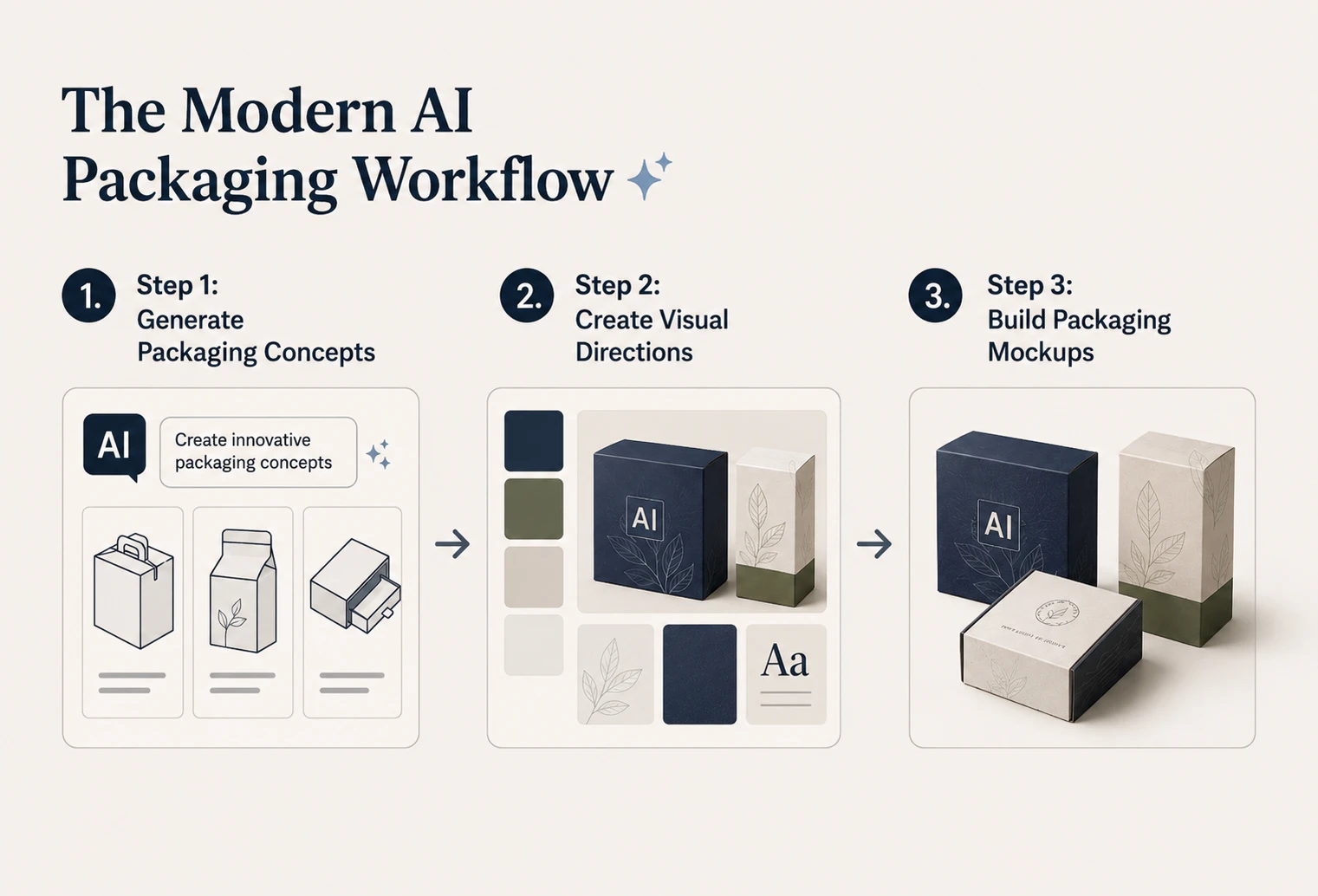
Step 1: Generate Packaging Concepts
AI packaging workflows can turn a rough brief into clear ideas fast. A team can test themes, shapes, and shelf cues early. AI can study market styles and common buyer signs. It also helps spot weak ideas before design time gets wasted.
Step 2: Create Visual Directions
Once the idea feels right, AI can build several visual routes. This helps the team compare color, mood, and layout choices. Brand style stays easier to manage across each route. You might notice fewer guess calls. That alone saves a few headaches.
Step 3: Build Packaging Mockups
Packaging mockups help teams see the box before print. AI can show how cardboard packaging or folding carton boxes may look. It also supports fast concept tests with clients. The designer still checks size, trim, and print limits. AI only makes the preview stage quicker.
Where AI Saves the Most Time
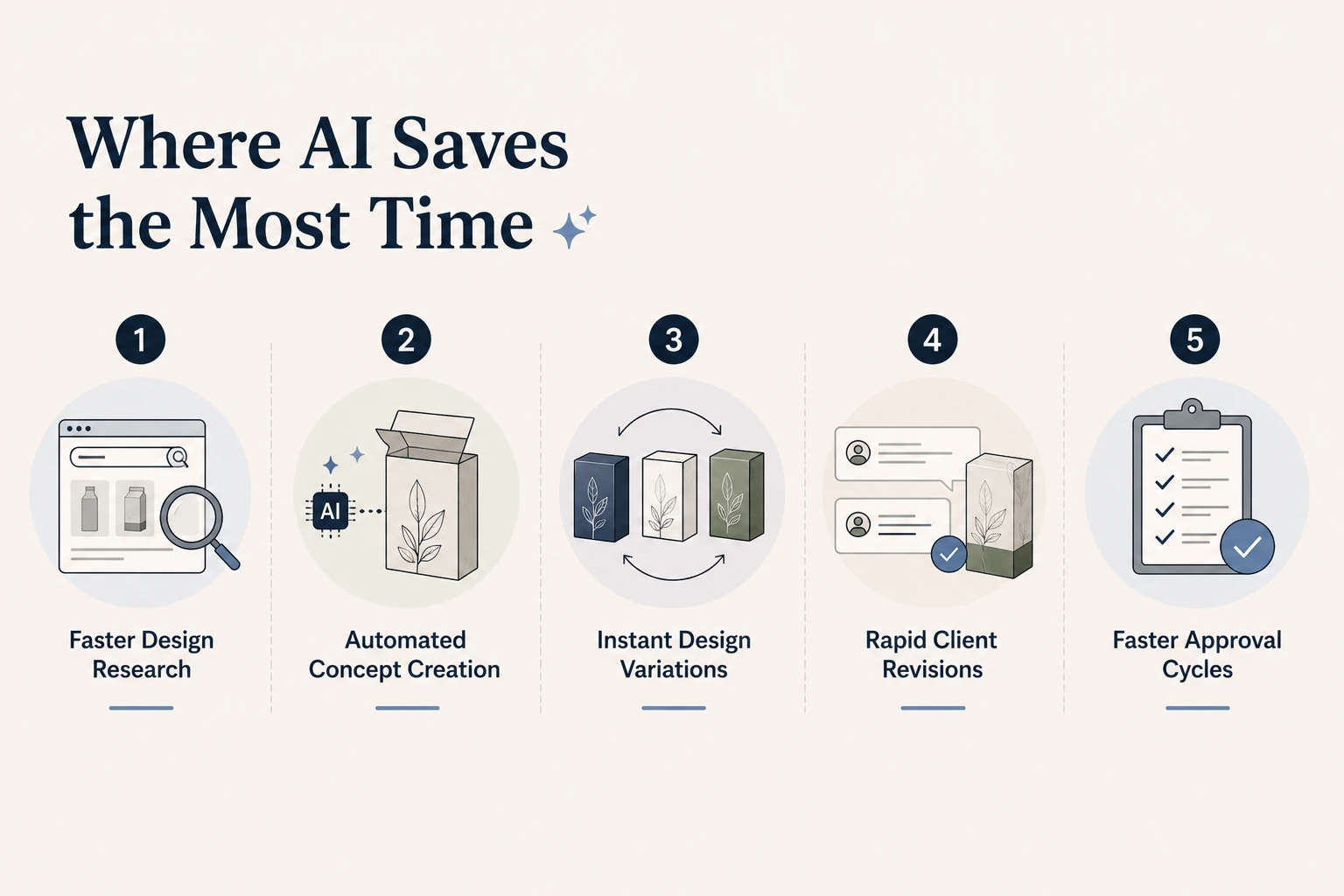
Faster Design Research
Most time is lost before design starts. Teams search trends by hand. They compare shelves and guess the buyer's taste. Packaging design AI helps sort ideas faster. It can show patterns from product types. This gives designers a cleaner place to start.
Automated Concept Creation
Early concepts often take too long. One rough brief can turn into many options. Packaging workflow automation helps build those first routes, making cardboard packaging solutions easier to develop with fewer revisions. It does not replace skill. It gives the team better choices before mood boards become a small weather report.
Instant Design Variations
Clients rarely approve the first look. Shocking news to no one. AI can create fast color and layout tests. This helps with folding carton boxes and custom corrugated boxes. Teams can compare options without rebuilding every file from scratch.
Rapid Client Revisions
Small edits can eat a full day. A logo shift can change the balance. A shade change can affect the shelf feel. AI helps test those changes fast. Designers still check brand fit and print sense. The client gets answers without a long wait.
Faster Approval Cycles
Approval slows when people cannot see the idea clearly. AI previews make choices easier. Teams can show cleaner routes before full proof work. This cuts back and forth. The result is a faster path from concept to print-ready review.
AI Workflows for Custom Packaging
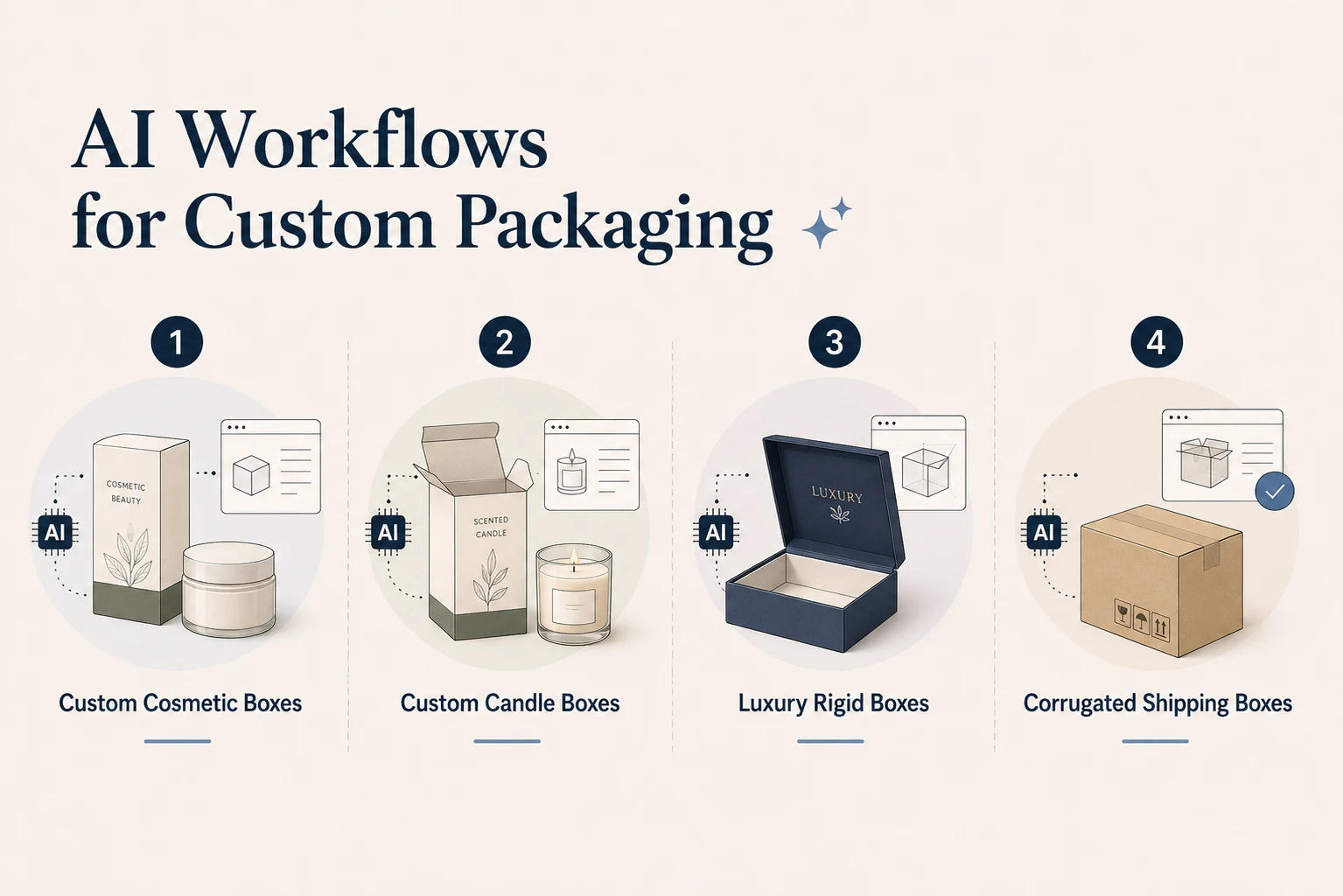
Custom Cosmetic Boxes
Custom cosmetic boxes need a clear shelf look. Beauty buyers notice color finish and small details fast. AI helps test soft tones, bold labels, and luxury cues for folding carton boxes before production begins. Teams can view beauty-focused ideas before proof of work starts. That saves time when the client wants seven shades of almost pink.
Custom Candle Boxes
Custom candle boxes often change by season. A winter scent needs a different mood from a summer gift set. AI can build warm, calm, or premium brand ideas fast. This helps teams test gift-ready looks without waiting on a full design round.
Luxury Rigid Boxes
Luxury rigid boxes need careful planning. The box must feel high-end before anyone opens it. AI can show finish tips for foil texture and insert layout. Designers still check real print limits. AI just helps clients see the premium route sooner.
Corrugated Shipping Boxes
Corrugated shipping boxes need strength and clear brand use. AI can help test size, layout, and simple print areas. This supports safer shipping and cleaner unbox steps. It also helps teams avoid weak art choices. Brown box chaos is real.
AI Turns Ideas Into Packaging Systems
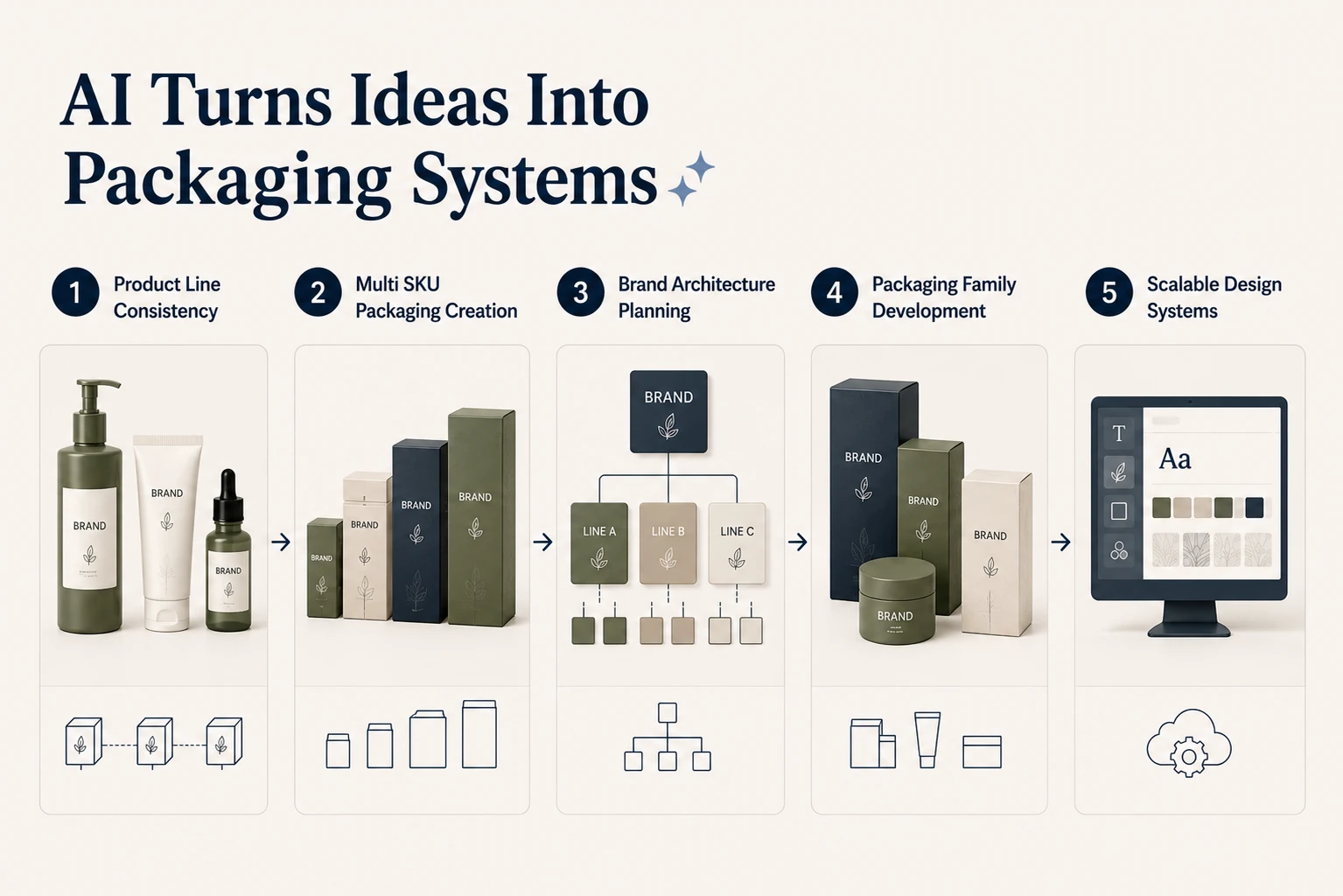
Product Line Consistency
Modern brands need more than one nice box. They need a clear family. Each product should feel linked at first glance. Product packaging design helps control that look. AI can test shared colors, shapes, and label rules before the range grows messy.
Multi SKU Packaging Creation
A brand may sell five scents or ten shades. Each one needs its own clear role. AI helps build multi-SKU routes faster. Teams can test names, color groups, and layout rules. That saves time when every item asks for special care.
Brand Architecture Planning
Good packaging branding helps buyers understand the range. The hero product should feel clear. The entry item should not look lost. AI can map these roles early. It helps teams avoid random box choices. Random looks brave until the shelf says no.
Packaging Family Development
A packaging family should feel planned. It should not look like cousins met once. AI can show how boxes work together. This helps with size changes and product lines. Teams can spot weak links before final art moves forward.
Scalable Design Systems
Brands grow faster when rules are clear. AI helps build simple design systems for future packs. This includes type, color, spacing, and image style. The team can add new items without starting over. That makes growth less painful.
Packaging Tasks AI Can Automate
Packaging automation is changing how teams handle design work. AI packaging workflows can take over repeat tasks before production starts. This helps designers focus on brand fit, print sense, and buyer appeal. The smart move is not replacing people. It is saving them from boring clicks that steal good hours.
Concept generation
Design variations
Packaging mockups
Copy suggestions
Layout exploration
Visual testing
Packaging presentations
Brand checks
Human Creativity Still Wins
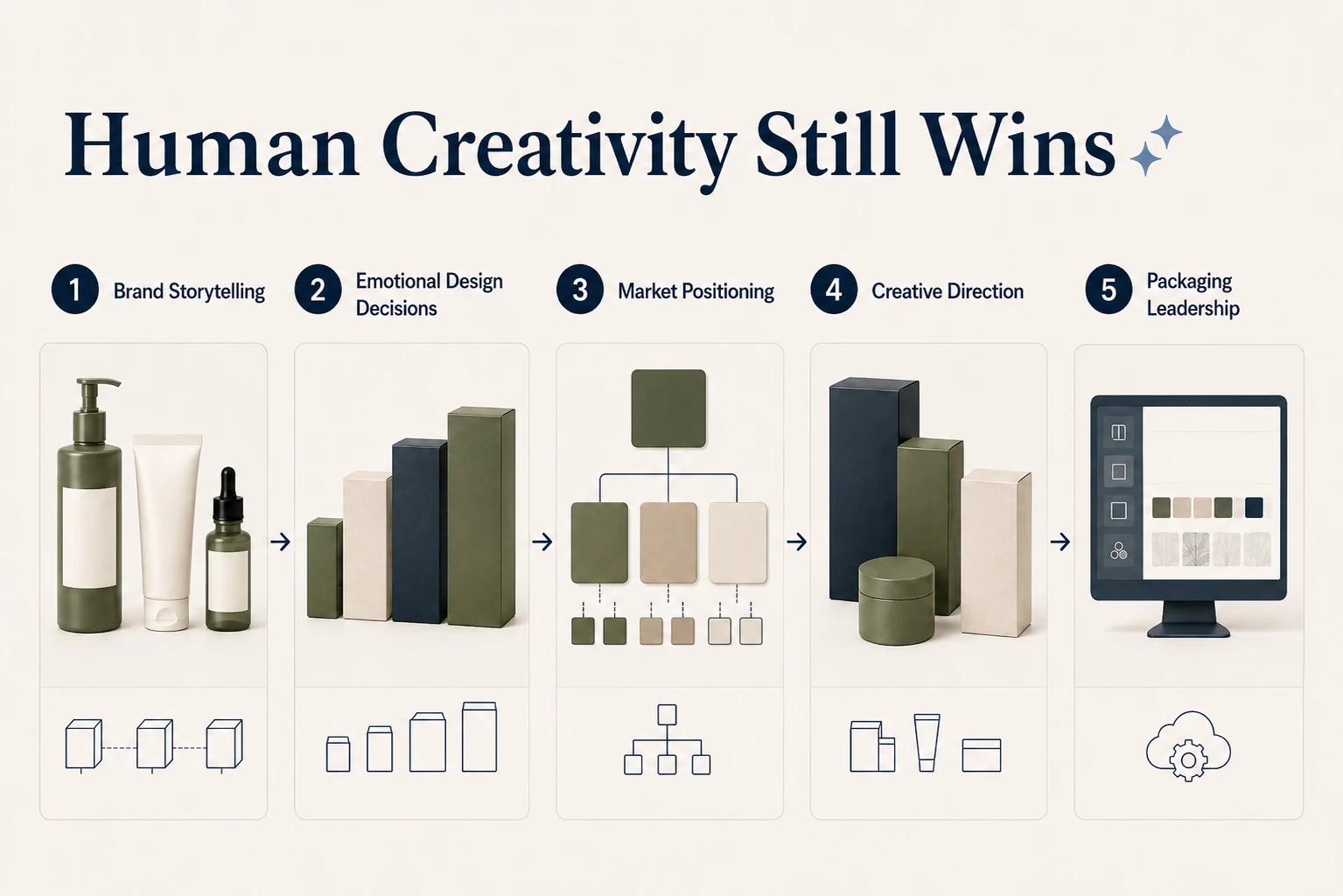
Brand Storytelling
AI can make options fast. It cannot know the full brand story. A skilled team shapes meaning, voice, and buyer trust.
Emotional Design Decisions
Good packaging makes people feel something. AI can show visual paths. Humans decide which path feels right.
Market Positioning
A box should match the market level. Cheapskates should not pretend to be royal. Premium should not look confused.
Creative Direction
The packaging design process still needs strong human calls. Designers guide style, tone, and shelf impact. AI only helps move faster.
Packaging Leadership
Real progress comes from people with taste and field sense. AI can support fresh ideas. Humans make smart choices.
AI Workflow Mistakes to Avoid
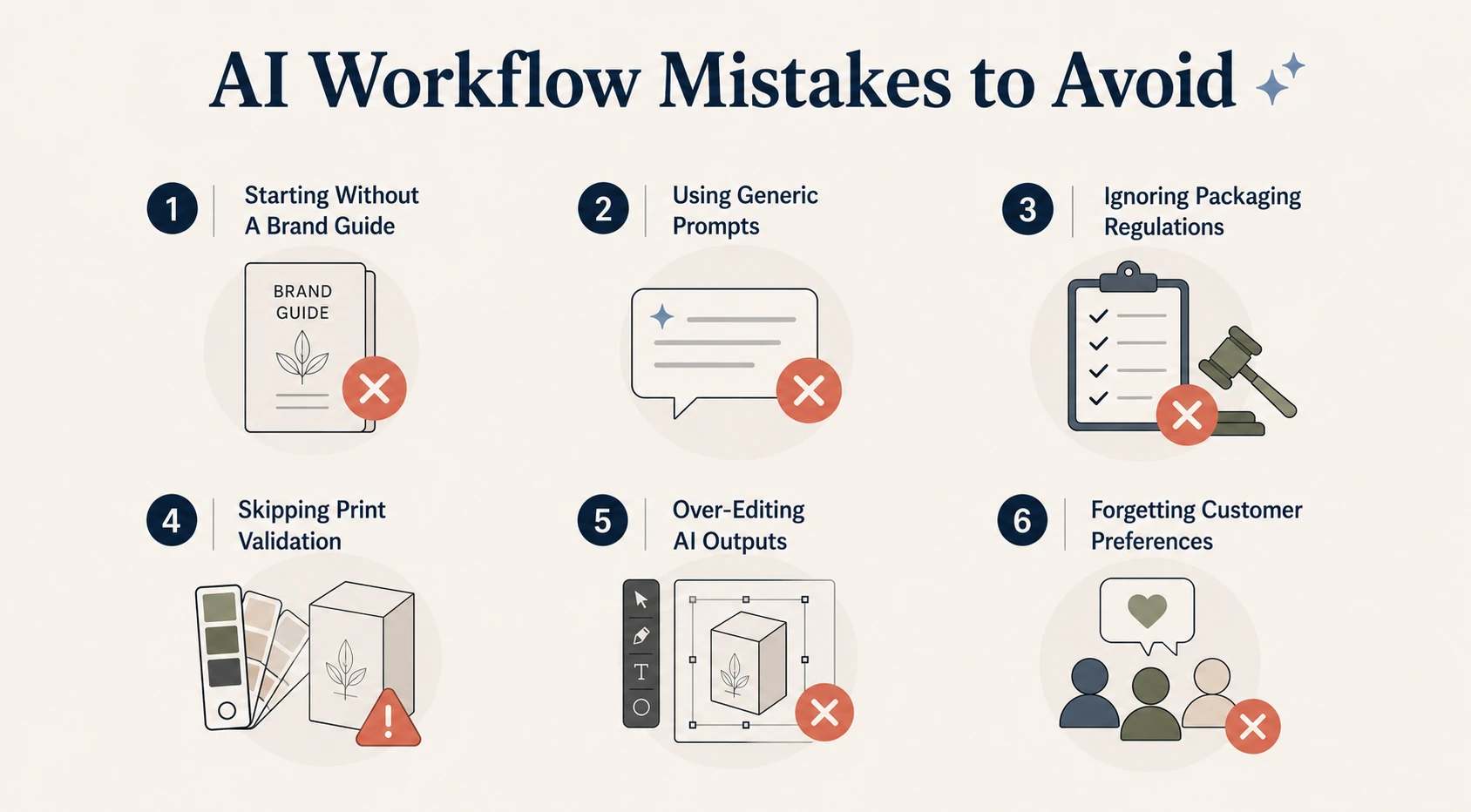
Starting Without A Brand Guide
AI needs clear rules before it helps. Without a guide, the work gets messy fast. Color type and tone can drift. AI packaging design works better when brand rules lead first.
Using Generic Prompts
Weak prompts create weak ideas. A prompt like make a box is not enough. Give the product type buyer needs and the shelf goal. AI needs direction, not vibes and hope.
Ignoring Packaging Regulations
Some packs need clear label rules. This is common in beauty food and health items. AI can miss small legal needs. Teams must check the packaging rules before printing.
Skipping Print Validation
A nice mockup can still fail in print. Check bleed folds, color mode, and dieline fit. AI can make the preview look great. Print machines do not care about charm.
Over-Editing AI Outputs
Too many edits can ruin a good path. Teams should pick the best idea early. Then they should refine with clear intent. Endless changes turn speed into soup.
Forgetting Customer Preferences
The final box must fit the buyer. AI may suggest looks that feel smart. Yet customers may want simple, clear, and familiar packs. Real feedback keeps the workflow useful.
Before vs After AI Packaging Workflows
Before AI
Before AI, the packaging process felt slow and heavy. Teams spent days shaping ideas. Then the clients asked for more choices. Revision rounds stretched the job again. Costs rose because each change needed fresh work. That made simple launches feel far harder than they should.
After AI
With product packaging AI, the first stage moves faster. Teams can test more ideas before design files begin. Reviews become clearer because people see visual routes sooner. Better previews also cut guesswork. The designer still leads the final call. AI only trims the slow parts.
Before AI | After AI |
Weeks of concept work | Concepts made in minutes |
Limited design options | More design routes |
Many revision rounds | Faster team reviews |
Slower approval steps | Better workflow speed |
Higher design costs | Fewer production delays |
The Future of Packaging Workflows
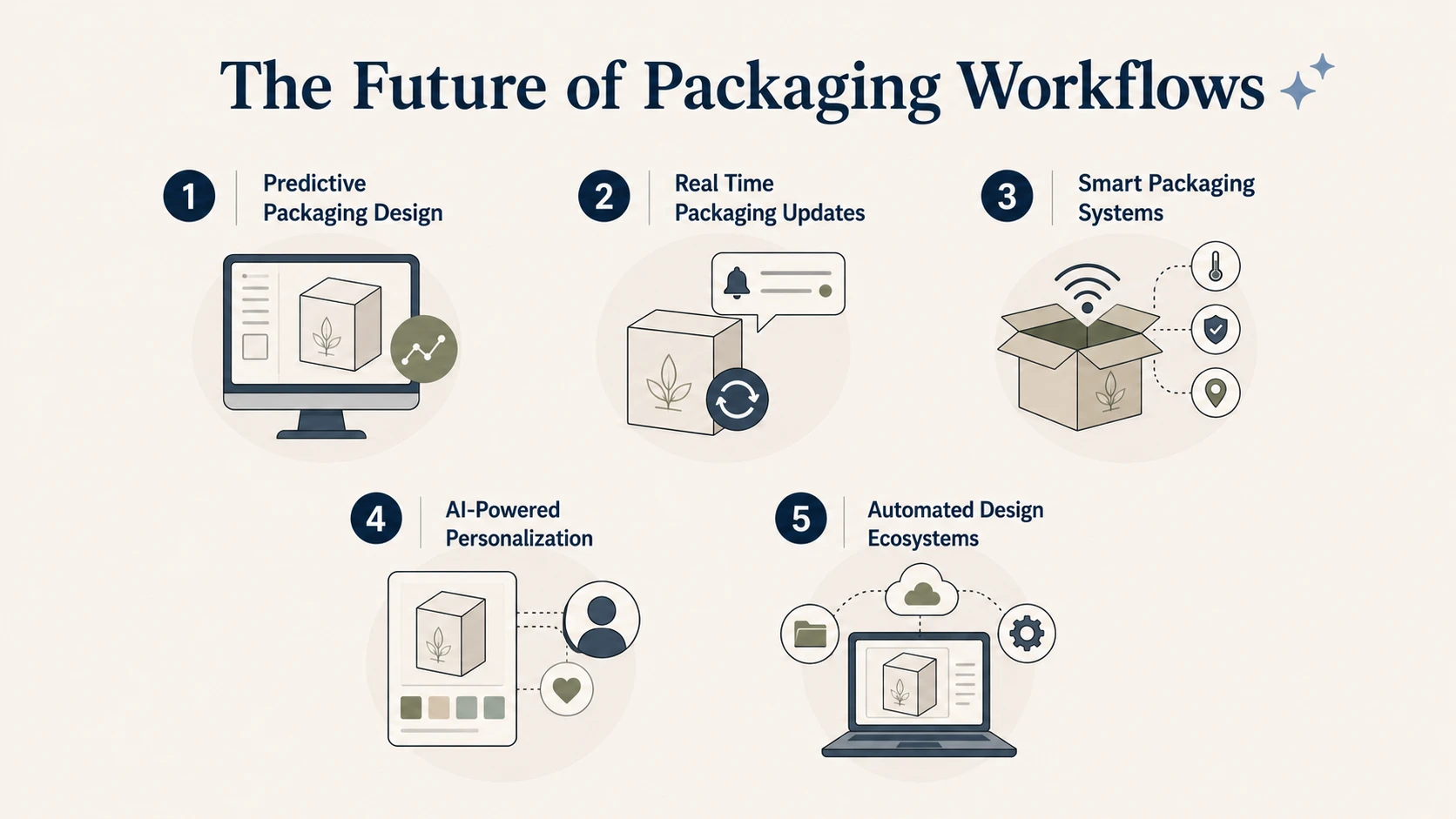
Predictive Packaging Design
Future teams will use data before design starts. This will shape stronger first ideas, especially when developing custom shipping boxes that need both durability and brand clarity. Packaging design trends will help teams see buyer shifts sooner. Designers can plan smarter packs with less guesswork.
Real Time Packaging Updates
Brands will update layouts faster during launch work. Teams may change copy size or visuals quickly. This helps when product details shift late. Because they always do. That part is almost a hobby now.
Smart Packaging Systems
Smart systems will connect design, supply, and sales needs. Teams can plan packs for many channels. This helps store web shops and gift sets feel aligned. The box becomes part of a larger plan.
AI-Powered Personalization
The future of packaging will feel more personal. Brands can test designs for buyer groups. A candle gift set may need a softer look. A bold beauty line may need stronger shelf cues.
Automated Design Ecosystems
Packaging teams are becoming AI-assisted studios. Tools will link concepts, mockups, proof files, and reviews. Even niche product packaging like an AI CBD gummies box can be explored faster through automated variations and layout testing. Humans will still guide taste and brand meaning. AI will handle the dull steps. Nobody will miss those.
Why Boxy Pack Uses AI-Enhanced Workflows
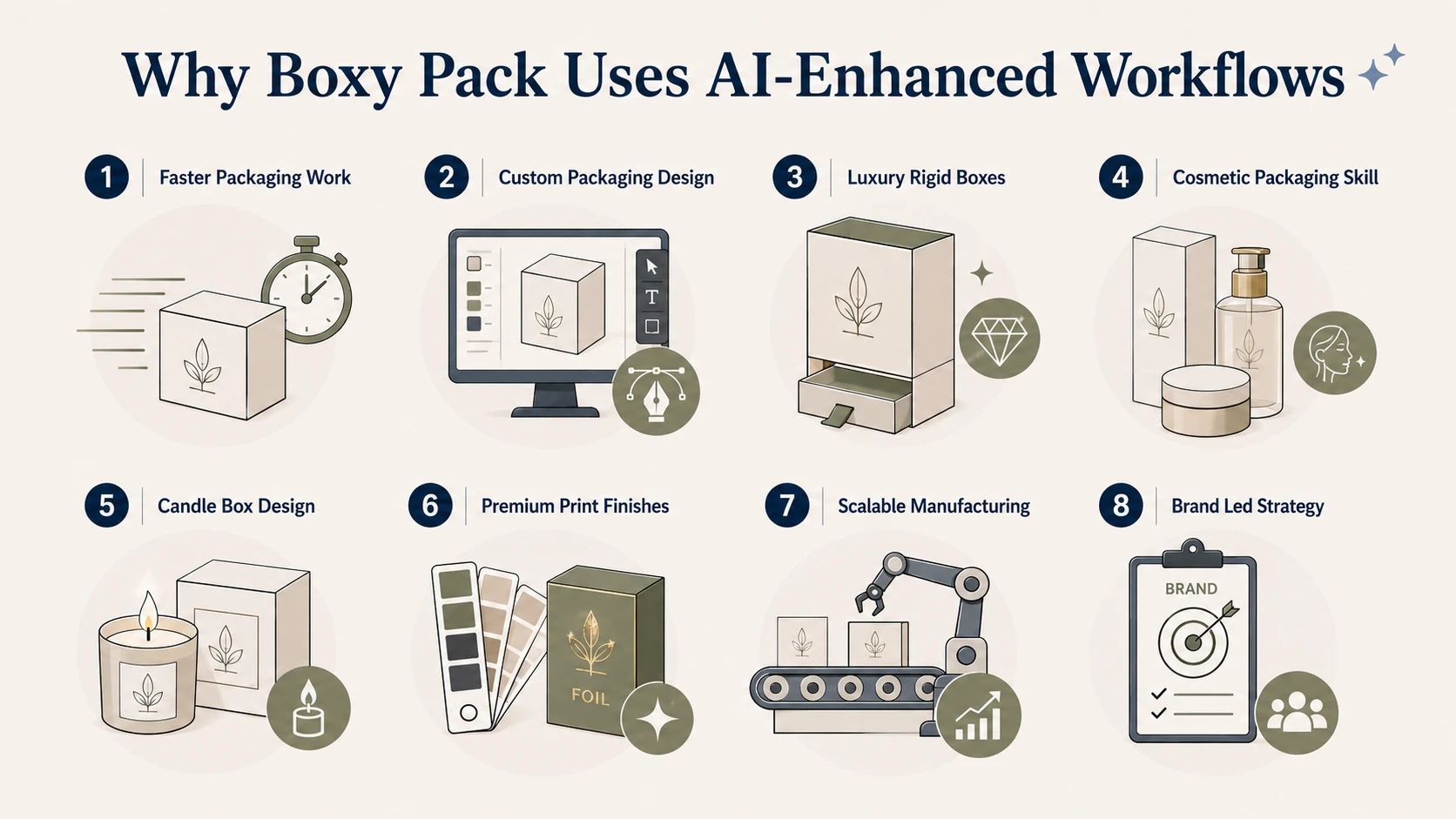
Faster Packaging Work
Boxy Pack uses product packaging AI to speed up early design work. Teams can test ideas sooner. That helps launches move without design delays.
Custom Packaging Design
Custom packaging design still needs real trade skills. AI helps shape routes fast. Boxy Pack then checks size, use, and brand fit.
Luxury Rigid Boxes
Luxury rigid boxes need a strong structure and a clean display. Even detailed formats like rigid party favor boxes benefit from early AI previews before production. Boxy Pack uses AI previews first. Then, real packaging skill guides the final build.
Cosmetic Packaging Skill
Beauty packaging needs a clear shelf charm. It also needs buyer trust. Boxy Pack tests colors, finishes, and visual balance before production work starts.
Candle Box Design
Candle brands often need seasonal looks. Boxy Pack uses AI to test moods fast, especially when developing folding cardboard candle boxes with different seasonal themes. Warm, calm, and premium routes become easier to compare.
Premium Print Finishes
AI can show finished ideas early. Foil spot gloss and texture need real checks. Boxy Pack helps match the look with print limits.
Scalable Manufacturing
Growing brands need repeatable box systems. Boxy Pack plans sizes, materials, and production needs. This makes future orders less messy.
Brand Led Strategy
AI gives speed. People give judgment. Boxy Pack blends both for smarter packaging choices. The goal is simple. Better boxes without slow guesswork.
Conclusion
This blog showed how faster packaging begins with better process design. Product helps AI packaging workflows teams move from ideas to mockups sooner. They also reduce slow review loops and unclear design choices. The main aim is simple. Build better concepts faster while keeping real packaging skills in control.
The key finding is clear. AI saves the most time before print starts. It supports research concepts, visual routes, and client reviews. This matters because brands now compete on speed and buyer experience, and platforms like Boxy Pack show how smart workflows are shaping custom packaging teams. In the future, smart workflows will shape custom packaging teams. The winners will mix AI speed with human taste.
FAQs
What is product packaging AI?
Product packaging AI helps teams create box ideas, test visuals, and speed up repeat design tasks before real print work begins, with fewer slow rounds.
Can AI design packaging from scratch?
Yes, AI can start the design path with concepts, layouts, and mockups. A packaging expert must still check the size, material, and print needs.
Does AI reduce packaging design costs?
Yes, it can cut time spent on research concepts and edits. That often lowers design costs before production, and fewer mistakes happen.
Which industries benefit most from AI packaging?
Cosmetics, candles, food, retail, luxury items, and online brands gain the most. They need faster design tests and clear visual choices.
Is AI replacing packaging designers?
No AI supports designers with faster ideas and repeat tasks. Real people still lead strategy, taste buyer insight, and final packaging decisions.
Ready to Get Started?
Discover our custom packaging solutions and bring your brand to life with premium boxes.