
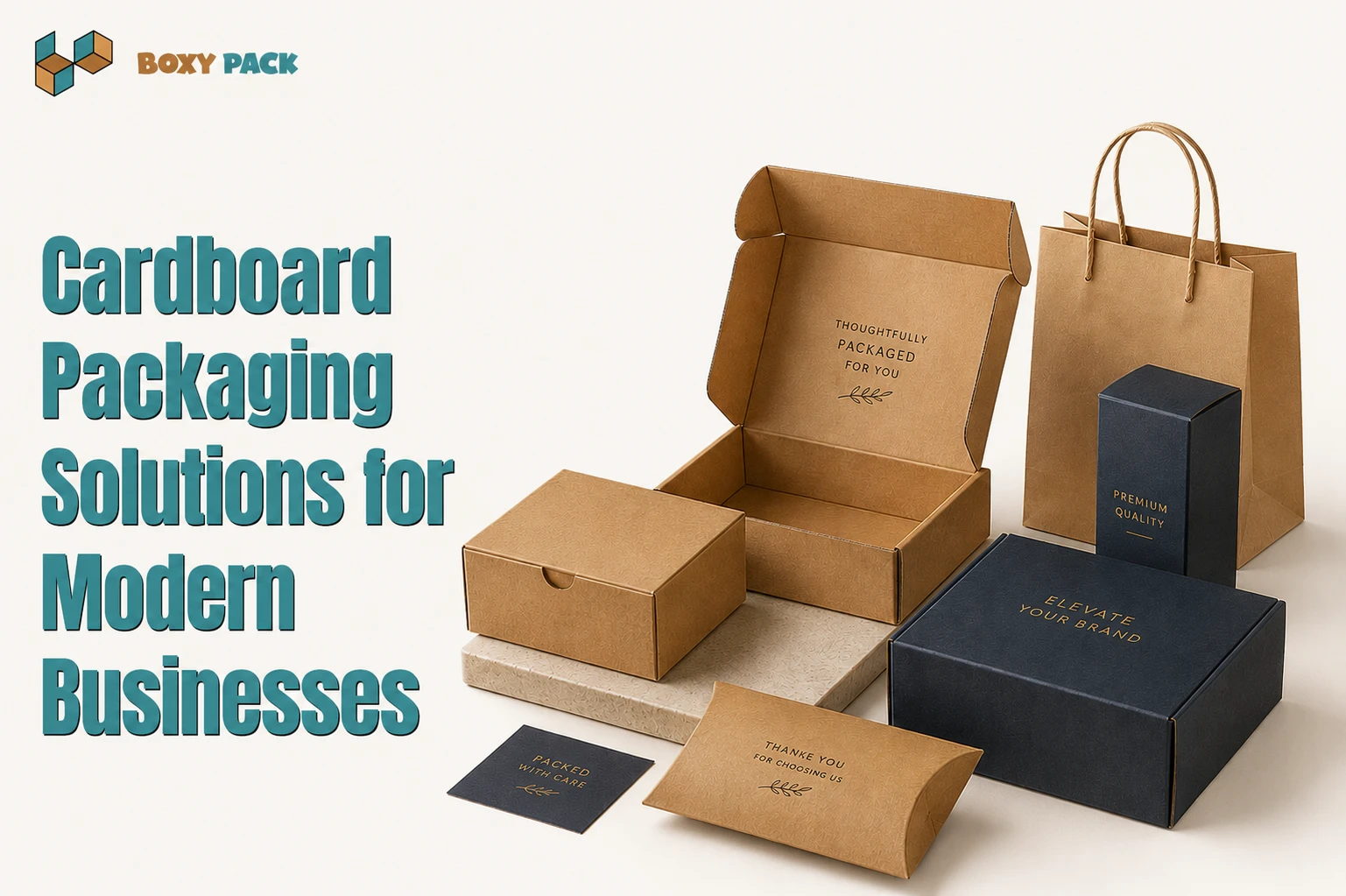
A damaged item can cost far more than its sale price. It can hurt trust and create more support work. Many firms still use boxes that are weak or too large. Poor packing can raise waste and slow each order. Cardboard packaging solutions fix these issues with a better fit and strength. They protect goods and help keep costs under control. That small choice matters daily.
Cardboard packaging solutions also help brands look clear and well-planned. The right box can cut waste and improve each shipment. It can also support a strong and well-known brand image. This guide covers box choice, cost control, and product care. It also explains green pack goals, buyer trust, and smart plans. You will see what works in real trade. Small changes can bring value.
Why Packaging Has Become a Business Asset
From Protection to Brand Experience
Packaging now shapes how buyers see a brand before using the item. Strong cardboard packaging solutions protect goods and create a clean first view. We often see buyers judge care from the box alone. A neat fit and clear design can turn plain delivery into a useful brand moment. That value lasts after shipping and may shape the next sale.
Modern Consumers Expect More
Modern buyers want boxes that are easy to open and simple to store. They also notice waste and expect better material use. Good business packaging solutions can meet these needs without making the pack feel cheap. A firm look and smart size can support trust while keeping each order easy. Premium looks also help simple goods feel more worth buying.
What Makes Cardboard the Preferred Choice
Lightweight Yet Durable
Cardboard packaging gives firms a useful mix of strength and low weight. It can guard goods during storage and shipping without adding much load. Lower weight may also cut freight costs. We often choose board grades based on item weight. This keeps the box strong without paying for more material than needed. Cardboard bookend box design also follows the same balance of strength and efficiency.
Flexible Across Industries
Cardboard product packaging works across food retail, beauty tech, and online sales. Each trade has different needs. Some goods need clean shelf appeal. Others need safe delivery. Cardboards can suit both. Its wide range of forms helps firms pack small goods, large goods, and odd shapes with less fuss.
Easy To Customize
Cardboard stays popular because it is simple to print, cut, fold, and size. Firms can add brand marks, product facts, and clear care steps. It is also easy to recycle in many areas. This mix of low-cost, useful design and less waste makes cardboard a sound choice for daily business use. It supports quick pack work at scale.
How Cardboard Packaging Supports Growth
Supporting New Product Lines
Custom cardboard packaging makes new product launches easier to manage. Each box can match the size and shape of new goods. This cuts empty space and avoids weak packing. We often start with a small box range. That keeps the setup simple while sales demand becomes clear.
Simplifying Inventory Management
Good packaging solutions can reduce the number of box types in stock. Shared sizes may work across several products. This helps teams order supplies with less guesswork. It also frees storage space and lowers waste. Clear labels make each box easy to find during busy pack times.
Adapting To Market Expansion
Growth often brings new stores, markets, and shipping routes. Custom cardboard packaging can change as these needs grow. Firms can add new sizes, prints, or board strength. They can also test changes before large runs. Flexible packaging solutions help the business expand without replacing the whole packing system. That keeps future changes practical and easier to control. Cardboard boxes guide helps teams apply these adjustments in real production.
Building Stronger Brands Through Packaging
Consistent Brand Presentation
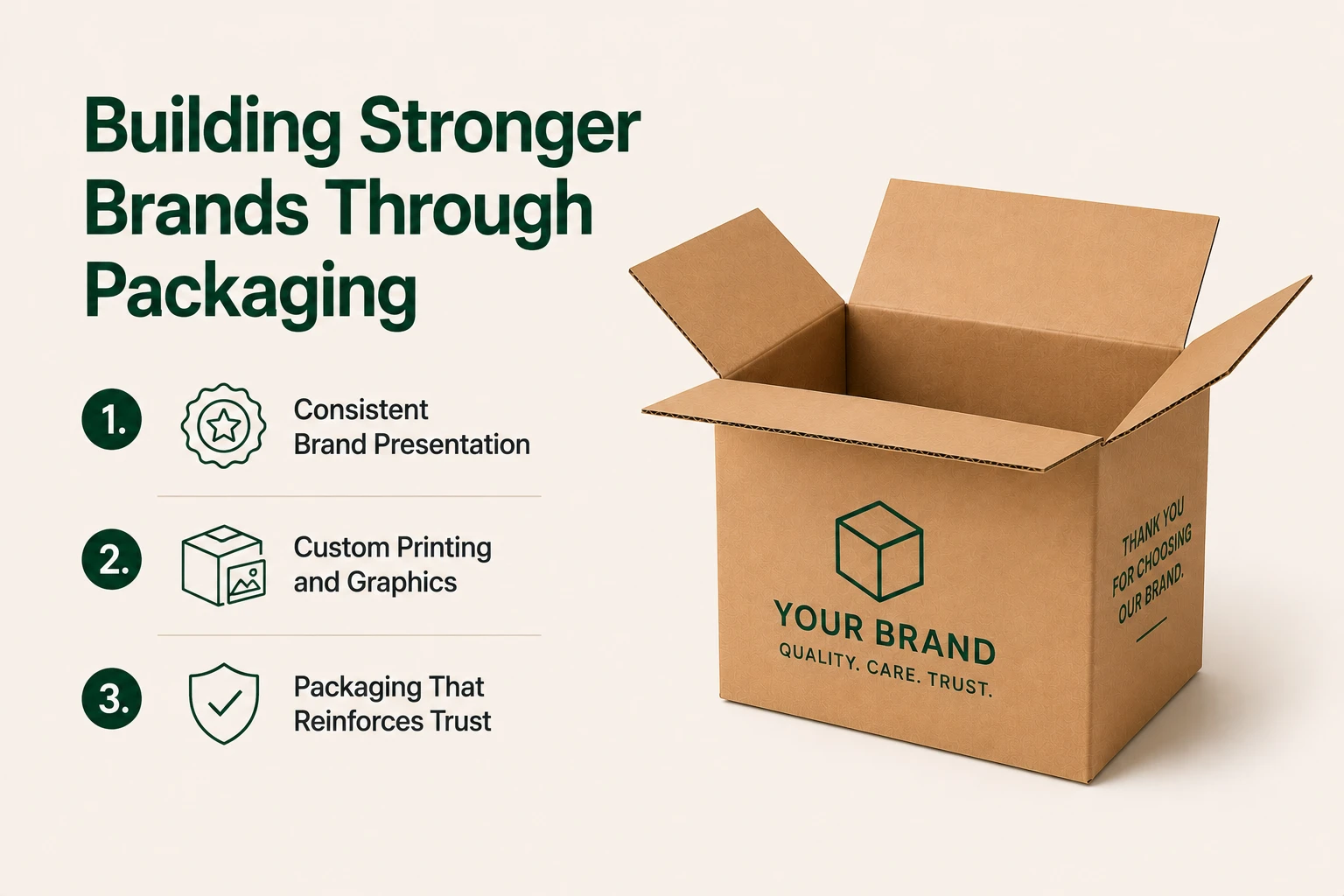
Branded packaging helps each order feel linked to the same business. Buyers notice colors, logos, and box styles before they touch the item. We keep key design parts fixed across product sizes. This makes the brand easier to recall. It also gives each order a clear and trusted look.
Custom Printing and Graphics
Custom printed cardboard boxes can show product facts, care steps, and brand details. Good print work should be clear and easy to read. Too much art can make the box look busy. Simple graphics often work better. They support the unboxing moment and may prompt buyers to share the order online.
Packaging That Reinforces Trust
A neat box shows care before the product is used. Strong seals, clean print, and a close fit can support buyer trust. Custom cardboard packaging may also reduce damage and poor reviews. Buyers remember a smooth delivery and clear details. That memory can support repeat sales and stronger brand ties.
The Cost Advantage Modern Businesses Need
Lower Material Costs
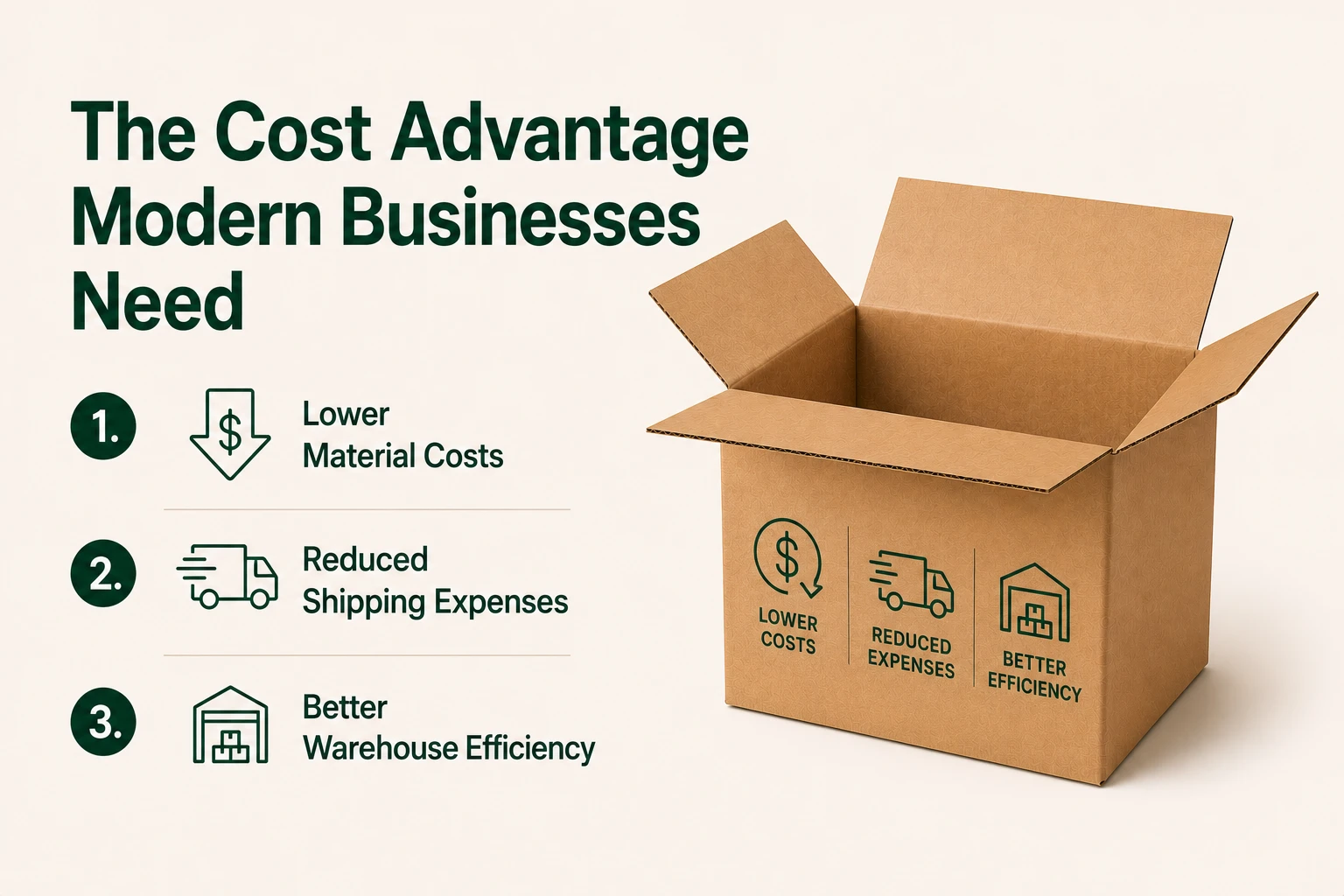
Cardboard packaging gives firms a mix of price and strength. It protects goods without forcing high costs. We match board grade with item weight. This avoids waste and keeps daily spend under control. The goal is simple. Use enough material for safety without paying for material the product never needs. Premium rigid boxes also follow this same principle of balancing protection with material efficiency.
Reduced Shipping Expenses
Smaller boxes can lower shipping costs and use less filler. Light packs may reduce load weight. Cost-effective packaging starts with item checks. A close fit improves space use and may reduce damage. A better box size helps teams load orders. It cuts wasted space in vans or freight loads.
Better Warehouse Efficiency
Flat boxes need less room before use. Shared sizes also make stock easier to track. Staff can find the right box faster. That saves time during busy order runs. Cardboard packaging stacks well in most work areas. Better space use can delay costly storage changes and protect profit over time.
Sustainable Packaging Is Now a Requirement
Recyclability and Circular Economy
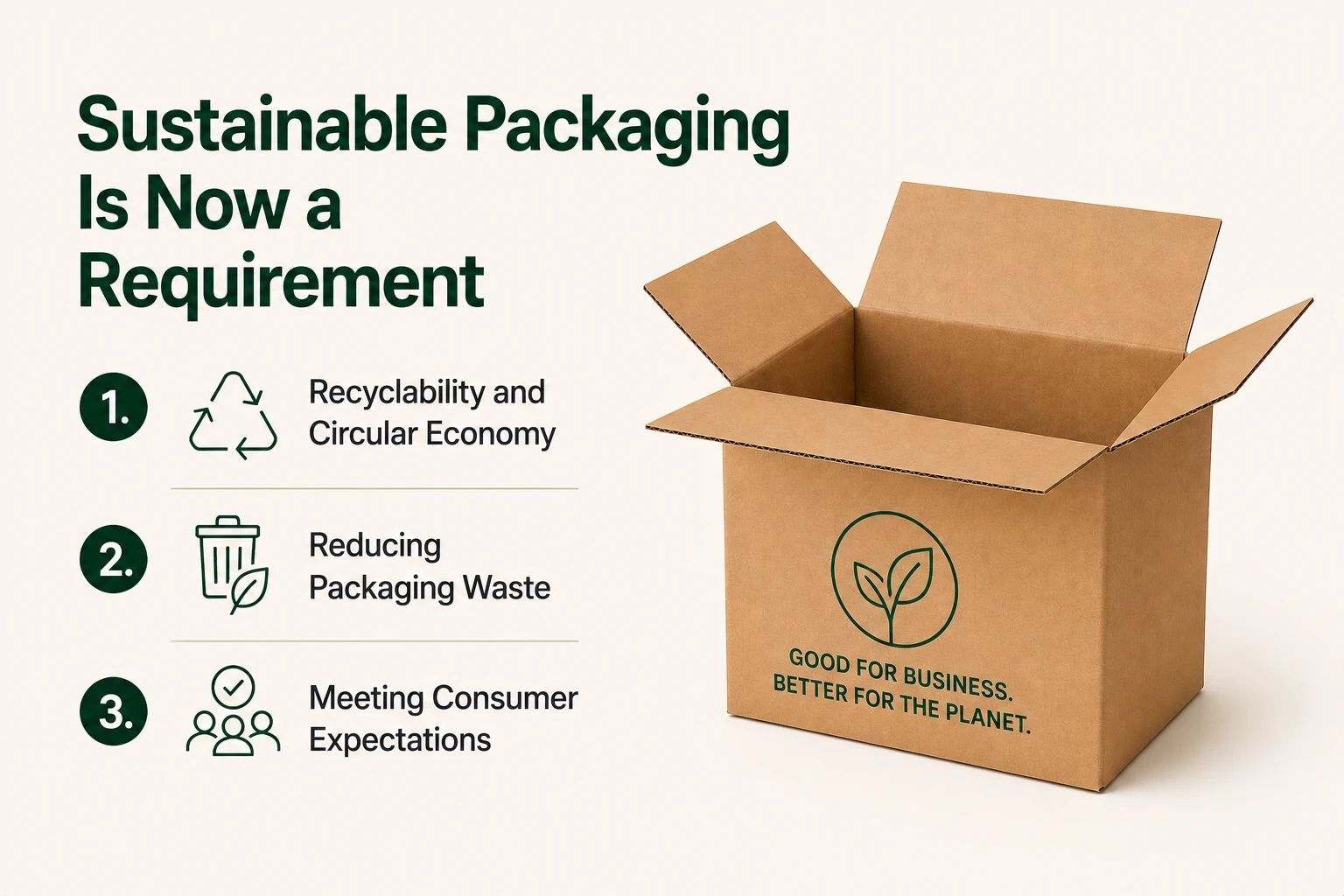
Recyclable packaging helps used boxes return as new goods. Cardboard fits this model since many local systems collect it. Clear labels help buyers sort each pack with less doubt. Firms should also avoid mixed parts that make recycling harder. Simple box plans support a more useful circular economy each year.
Reducing Packaging Waste
Waste often starts with boxes that are too large. A closer fit uses less board and less filler. We check item size before print work starts. This step cuts waste and keeps each order simple. It also lowers storage needs and stops firms from paying to ship empty space today.
Meeting Consumer Expectations
Buyers now expect brands to show care through daily choices. Sustainable packaging solutions can support trust when claims are clear and honest. Firms should explain the use and disposal of packaging in plain words. Recyclable packaging gives many businesses a practical path toward less waste. Real action matters more than green slogans.
E-Commerce Depends on Better Packaging
Protecting Products During Transit
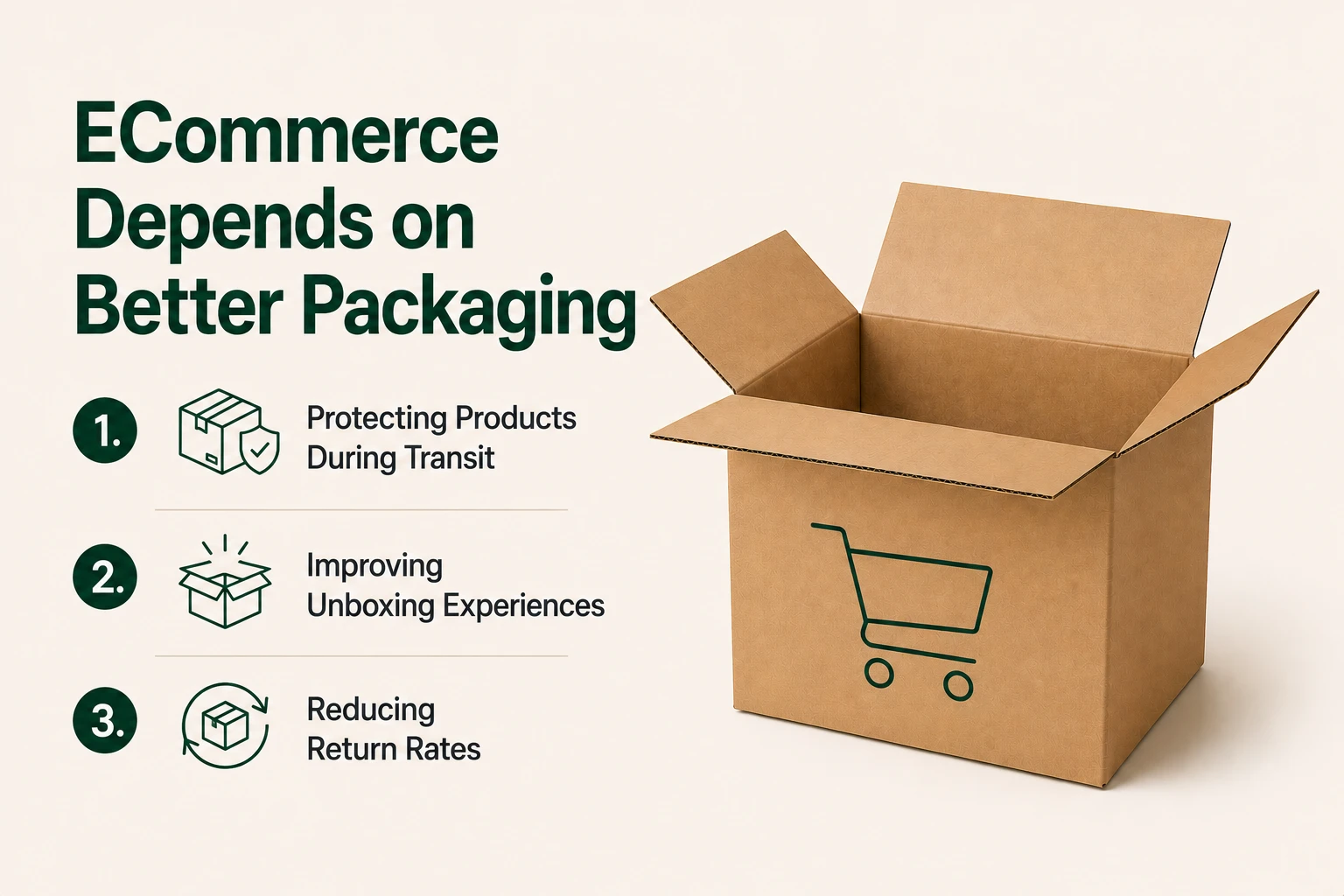
Ecommerce packaging must handle drops, pressure, and rough travel. A weak box can ruin a good sale. Cardboard mailer box shipping boxes should fit the item and limit movement. We often test packed goods before large order runs. This simple step finds weak points and helps prevent damage during each delivery.
Improving Unboxing Experiences
The box is often the first real contact with an online brand. Clean folds, simple print, and easy opening can build trust. Good ecommerce packaging should feel neat without wasting material. Buyers notice care right away. A calm unboxing moment can support reviews, repeat orders, and useful social posts.
Reducing Return Rates
Returns often start with poor fit, weak seals, or damaged goods. Strong cardboard shipping boxes lower these risks when used well. Teams should track damage reasons and update pack rules. Small changes can save time and support work. Better delivery results also protect margins and keep buyers from leaving each day.
Packaging Solutions for Different Industries
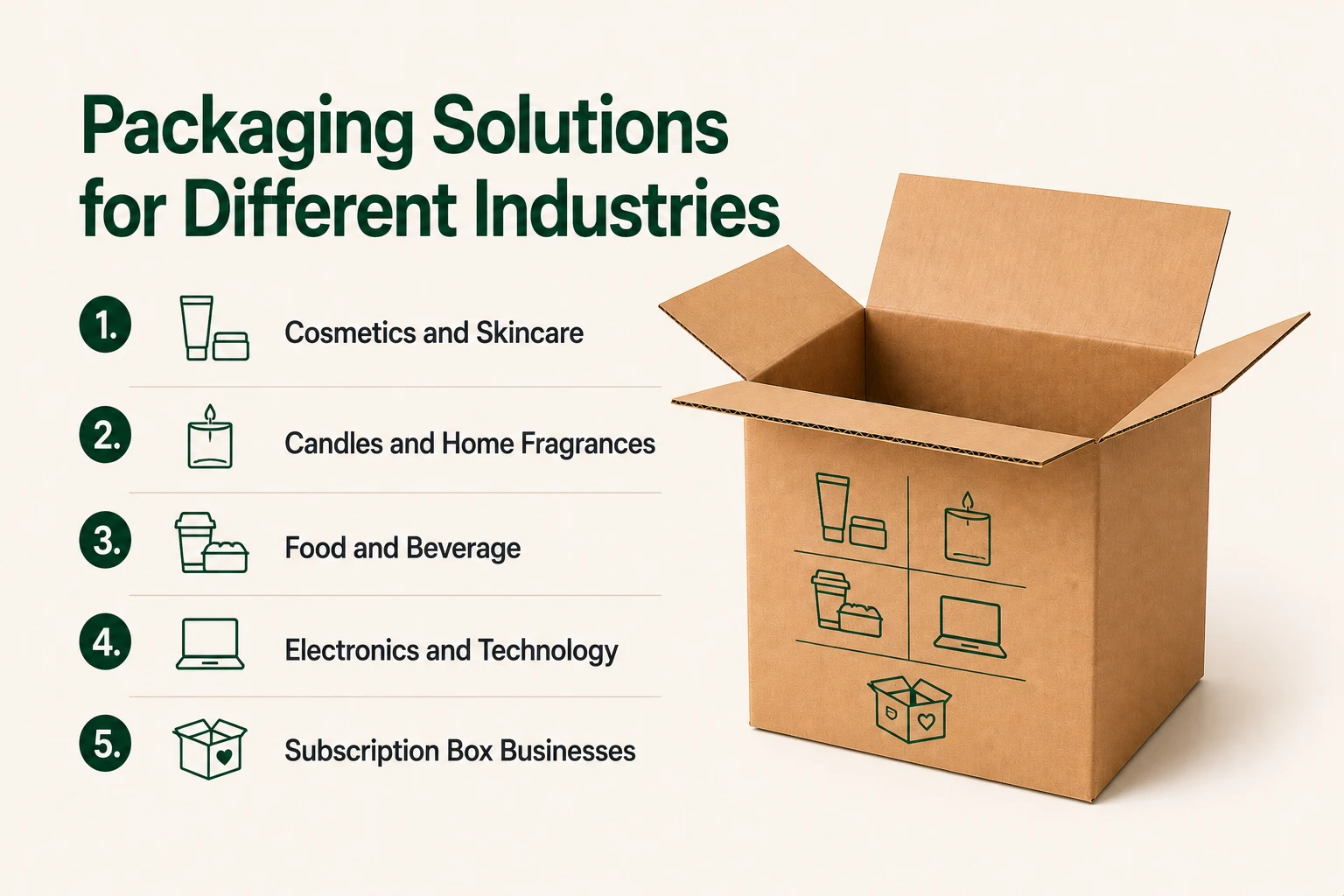
Cosmetics and Skincare
Beauty items need boxes that protect glass jars and soft tubes. Custom cardboard packaging can hold each item firmly. Inserts stop movement and keep labels neat. Clear print also guides buyers through product use.
Candles and Home Fragrances
Candles need firm walls and close-fitting inserts. Glass jars can crack during rough travel. Strong packaging for businesses should control movement and heat risk. Simple care notes help buyers handle each item safely.
Food and Beverage
Food packs need a clean board and a shape that suits the product. Boxes should support fast packing and easy storage. Clear dates and use steps reduce buyer doubt. The pack must also suit local food rules.
Electronics and Technology
Tech items need strong support around screens, cables, and small parts. Custom cardboard packaging can use trays and fitted dividers. These parts reduce movement during transit. Clear labels help buyers set up products with less stress.
Subscription Box Businesses
Subscription box packaging must feel fresh while staying easy to pack. A shared base size can control stock. New print themes can change the look each month. Smart subscription box packaging keeps the process simple as orders grow. This also makes stock checks faster and reduces mistakes during busy order days.
Features Businesses Should Prioritize
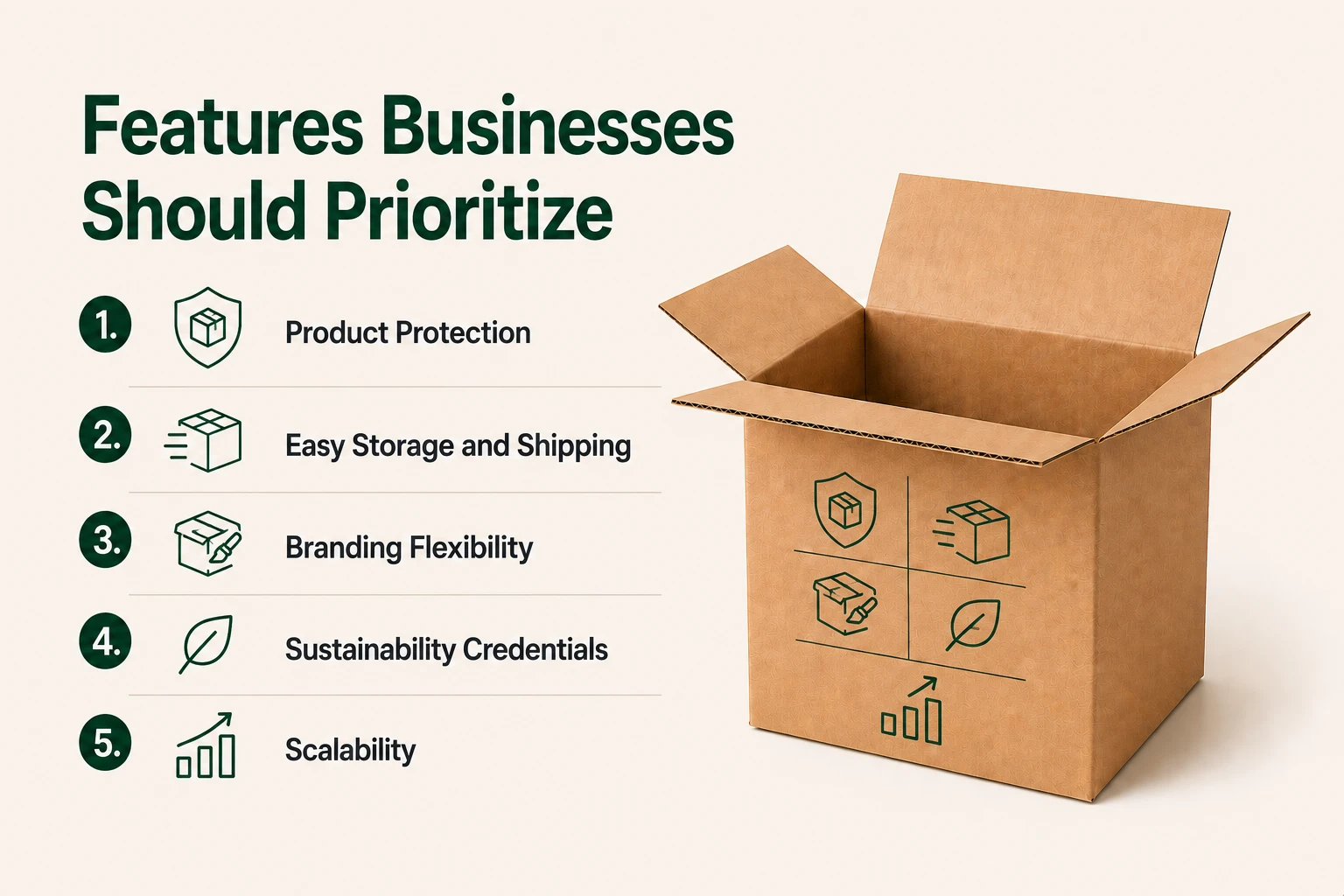
Product Protection
A sound packaging strategy starts with the risks each product faces. Boxes must resist pressure and limit movement. We test weak points before large orders begin. Strong cardboard packaging solutions help prevent damage and keep buyer trust intact.
Easy Storage and Shipping
Good boxes should store flat and build fast. They should also fit shelves and delivery loads well. Shared sizes can reduce stock needs. Clear labels help staff choose the right box during busy shifts. Less guesswork saves time.
Branding Flexibility
Packaging should support clear brand use across many products. Simple print areas make logos and care notes easy to see. Designs must work on small and large boxes. A steady look helps buyers recall the brand after delivery.
Sustainability Credentials
Buyers often check what happens after the box is opened. Firms should use clear recycling notes and avoid false green claims. Right-sized boxes also cut filler and waste. Honest choices add more trust than vague earth-friendly words.
Scalability
The best packaging can grow with sales and new product lines. Firms need sizes that work across more than one item. Small test runs can guide later orders. Flexible suppliers also help teams adjust volume without changing the full system. This keeps growth steady and avoids costly pack changes during busy seasons. Cardboard display box solutions also support this kind of scalable packaging strategy.
Common Packaging Challenges Businesses Face
Oversized Packaging
Large boxes seem safe, but create problems. Products move during transit and need extra filler. Teams waste shelf space and pay to ship empty space. Good business packaging solutions start with item checks. Better sizing improves packing speed and order control.
Weak Structural Design
Weak walls and poor folds can fail before delivery. Heavy goods may crush corners or split base panels. We test weight and travel risks before orders. Strong boards and firm joints improve packaging efficiency. The guessing box's strength becomes costly after damage begins.
Inconsistent Branding
Mixed colors and old logos can make one brand look like several firms. Buyers may question who packed the order. Clear print rules keep every box tied to one business. A guide helps teams use the logo style across each product line.
Excess Packaging Waste
Too much tape filler and board raises waste without adding real safety. Teams should track what each item needs. Right-sized packs use fewer parts and speed sorting. Better packaging efficiency makes disposal easier for buyers and keeps storage areas less crowded. CBD mylar bags also benefit from this approach by using minimal, efficient material design.
Rising Packaging Costs
Costs rise through poor sizing, rush orders, and too many box types. Firms should review use and damage data. Shared sizes can lower stock needs. Planned buying avoids panic orders. Smart business packaging solutions control costs without cutting the protection buyers expect.
Traditional Packaging vs Modern Cardboard Solutions
Cardboard packaging solutions offer stronger value across daily business needs. They support better branding and faster shipping. Custom packaging boxes also fit more products with less waste. Generic packs may seem simple. Yet they often limit growth and weaken the buyer experience.
Feature | Modern Cardboard Packaging | Traditional Generic Packaging |
Brand Customization | High | Limited |
Sustainability | Strong | Varies |
Shipping Efficiency | High | Moderate |
Customer Experience | Better | Basic |
Scalability | Excellent | Limited |
Cost Effectiveness | Strong | Moderate |
Packaging Trends Shaping Business Growth
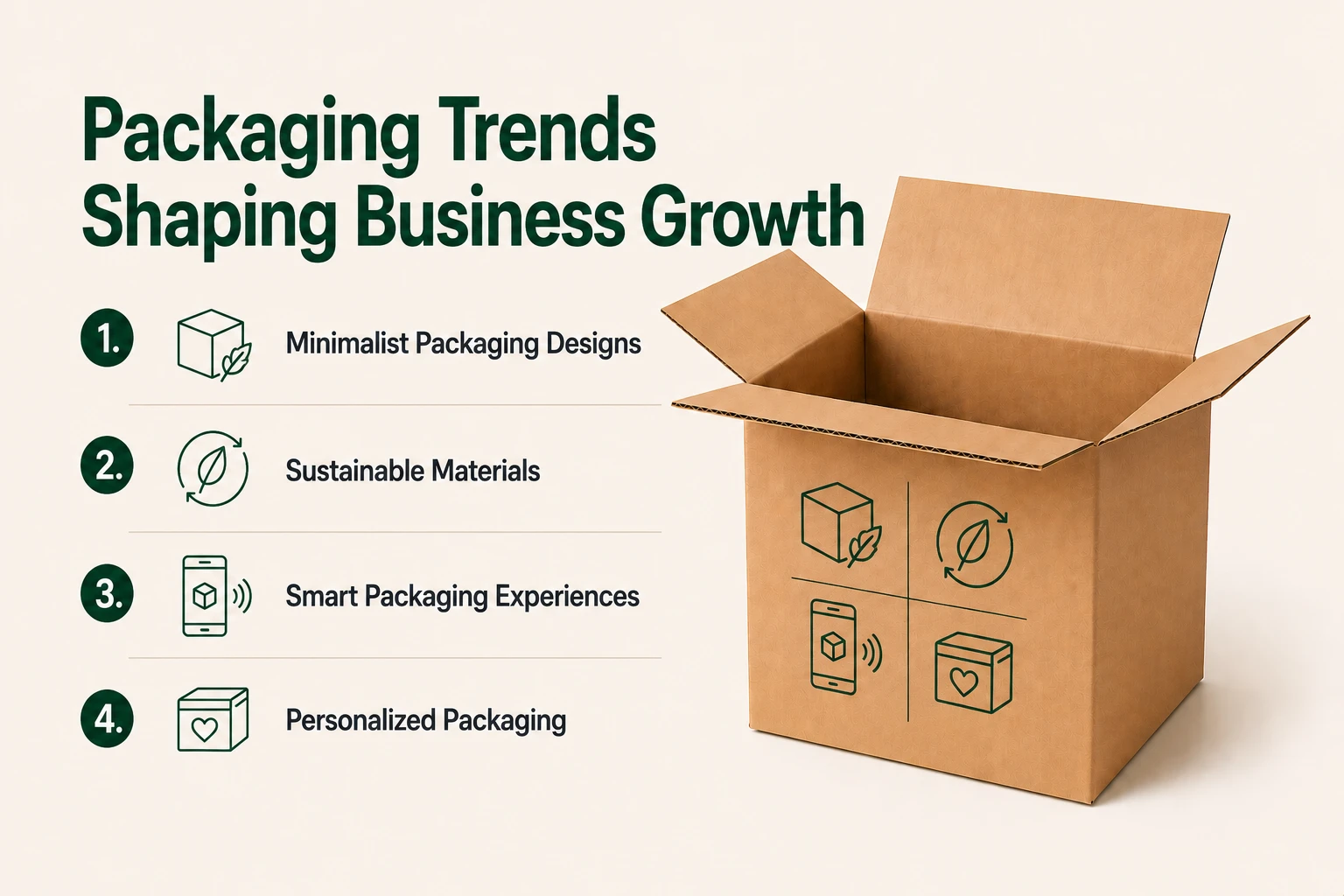
Minimalist Packaging Designs
Simple packs are easier for buyers to trust and use each day. Clear text and less print reduce noise around each product. Brands also save space by using smaller box forms. This packaging trend keeps shelves neat and makes key product facts easier to spot.
Sustainable Materials
More buyers check what a pack uses and where it goes. Reused boards and easy recycling can support that concern in daily use. Firms should avoid vague green claims and share clear disposal steps. Honest material choices often build more trust than bold green art.
Smart Packaging Experiences
Smart packs can link buyers with help guides or product facts. A small code may show care steps or brand stories. This form of packaging innovation adds value without adding more paper. The tool should stay useful and simple for every buyer after each sale.
Personalized Packaging
Personal packs can make common orders feel direct and thoughtful. Names, short notes, or local art may improve the opening moment. Brands should keep this plan easy to run at scale. Good custom work feels warm while keeping pack costs under control during busy sales.
Why Businesses Choose Boxy Pack
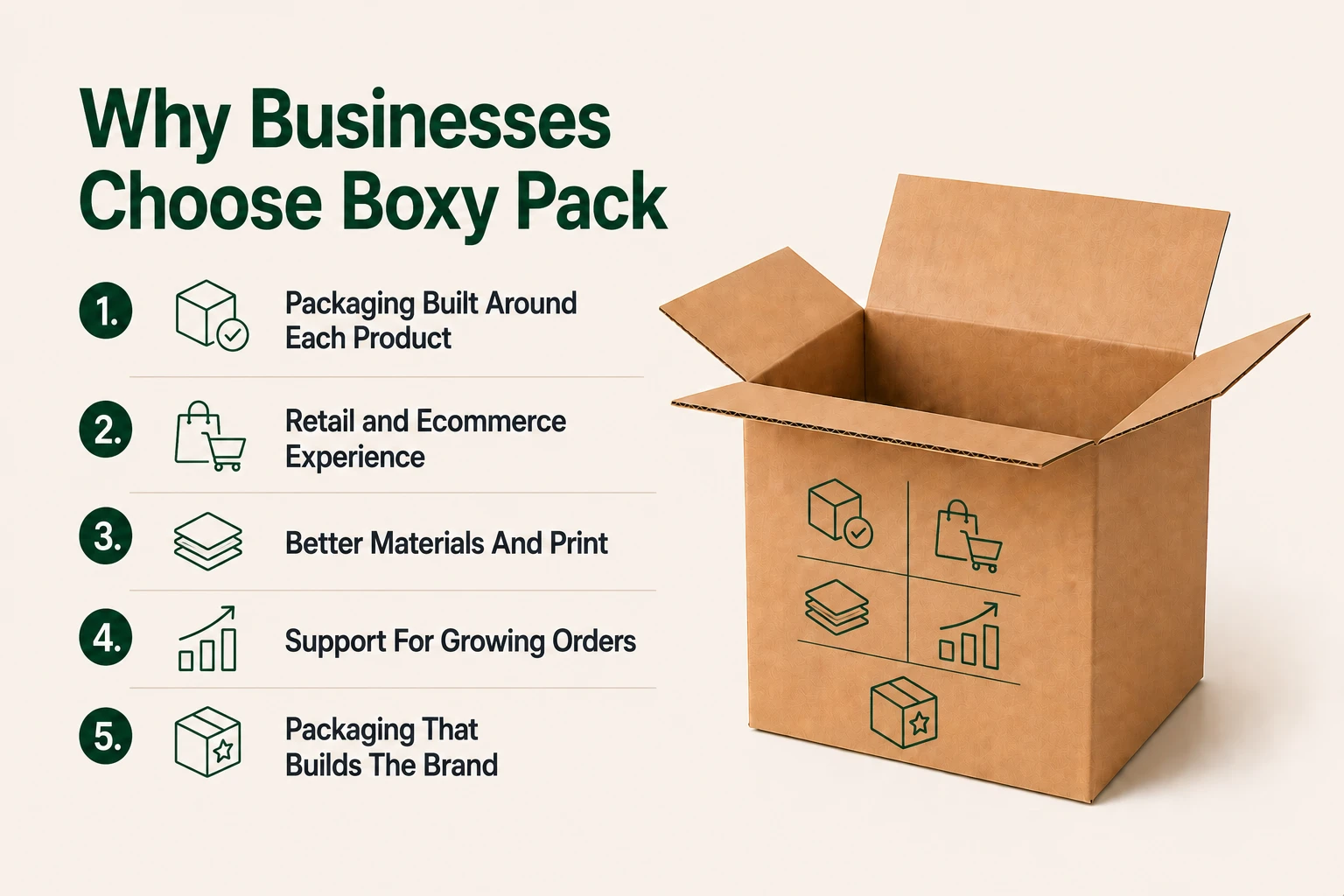
Packaging Built Around Each Product
Boxy Pack creates custom cardboard packaging for real product needs. Each box can match size, weight, and sales use. This careful fit helps protect goods and reduce wasted space. It also gives growing brands a pack system that feels planned from day one.
Retail and Ecommerce Experience
Retail shelves and online orders need different pack choices. Boxy Pack understands both paths. The team plans cardboard retail boxes for display storage, shipping, and simple opening. These packaging solutions help brands keep a clear look across shops' websites and delivery routes.
Better Materials And Print
Brands can choose more soundboard options for many product types. Premium print helps logos, colors, and product facts stay clear. The aim is not a loud design. The aim is clean packaging that buyers can trust and recall.
Support For Growing Orders
Small brands may need short runs at first. Larger firms need steady output and clear supply plans. Boxy Pack supports both stages. Output can grow with demand while box quality and brand details stay the same across each order.
Packaging That Builds The Brand
Good packaging should do more than hold a product. It should support trust and make each delivery feel complete. Boxy Pack joins form, print, and brand goals into one clear plan. This helps firms grow without changing their full pack system later.
Conclusion
This blog showed how better packaging can solve real business needs. Cardboard packaging solutions protect goods and support safer shipping. They also help firms control costs and manage stock with less waste. Strong design and clear print can build trust before product use. The main finding is simple. Packaging now shapes both sales and buyer views. These findings matter because buyers expect more from every order. Boxy Pack helps brands turn these insights into practical packaging solutions.
They want less waste and better product care. Firms also need packs that can grow with demand. Future packaging will mix smart design with sound material use. Brands should review size, strength, print, and disposal needs often. The right packaging plan can support growth and improve each buyer's touch point. It can also help firms stay ready for new markets.
Frequently Asked Questions
Why is cardboard packaging popular among businesses?
Businesses choose cardboard packaging solutions because they are light, strong, easy to print, and often cheaper than many pack types used for daily orders today.
Is cardboard packaging environmentally friendly?
Cardboard can be a sound choice when it is made from recycled fiber, and local recycling systems accept it after buyers first remove tape and plastic parts.
How does custom cardboard packaging improve branding?
Custom cardboard packaging gives every order the same colors, logo, and style, which helps buyers recall the brand and trust future purchases more easily.
What industries use cardboard packaging the most?
Food, beauty, retail tech, candles, and online brands use cardboard the most because it fits many products and works well for shelf storage and shipping daily.
Can cardboard packaging reduce shipping costs?
Yes, right-sized cardboard boxes use less filler and space, which can lower parcel weight, freight use, and damage costs during normal shipping work, too.
Ready to Get Started?
Discover our custom packaging solutions and bring your brand to life with premium boxes.