
A candle that leaves the workshop looking flawless can arrive at a customer's door cracked, scratched, melted at one edge or shifted so far inside the box that the label is torn. Custom candle boxes exist to prevent exactly this kind of outcome, since attractive outer packaging alone rarely does enough to protect a product through several stages of handling, stacking and transit. Candles need more than a nice-looking box; they need one built to absorb impact, control movement, and hold up under conditions that vary between a short local delivery and a longer cross-country shipment.
Safe delivery affects more than the product itself. A candle that arrives damaged undermines customer trust, reduces the value of what was otherwise a well-made product, and makes repeat purchases far less likely. This risk is even higher for glass jar candles, heavily scented products and multi-piece candle sets, all of which are more vulnerable to cracking, leaking or shifting than a single simple pillar candle.
Shipping protection ultimately comes down to fit, material, internal support and overall box structure working together rather than any single feature doing all the work. Packaging has to guard against several types of transit stress at once, including impact, pressure, vibration and temperature changes, which is rarely something one design choice can handle alone. The sections that follow cover box design, material selection, inserts, printing, sustainability and final shipping preparation, building toward a complete picture of what keeps a candle intact from production to doorstep.
Why Candle Boxes Need Strong Shipping Protection
Candles face a specific set of risks that many other retail products do not. Glass jars can crack under pressure or impact, wax can chip or crumble if a box allows too much internal movement, and scented candles can lose fragrance strength if packaging does not seal properly during transit. Even sturdy-looking candles can scratch or develop surface marks when packed loosely enough to shift against the sides of a box repeatedly during handling.
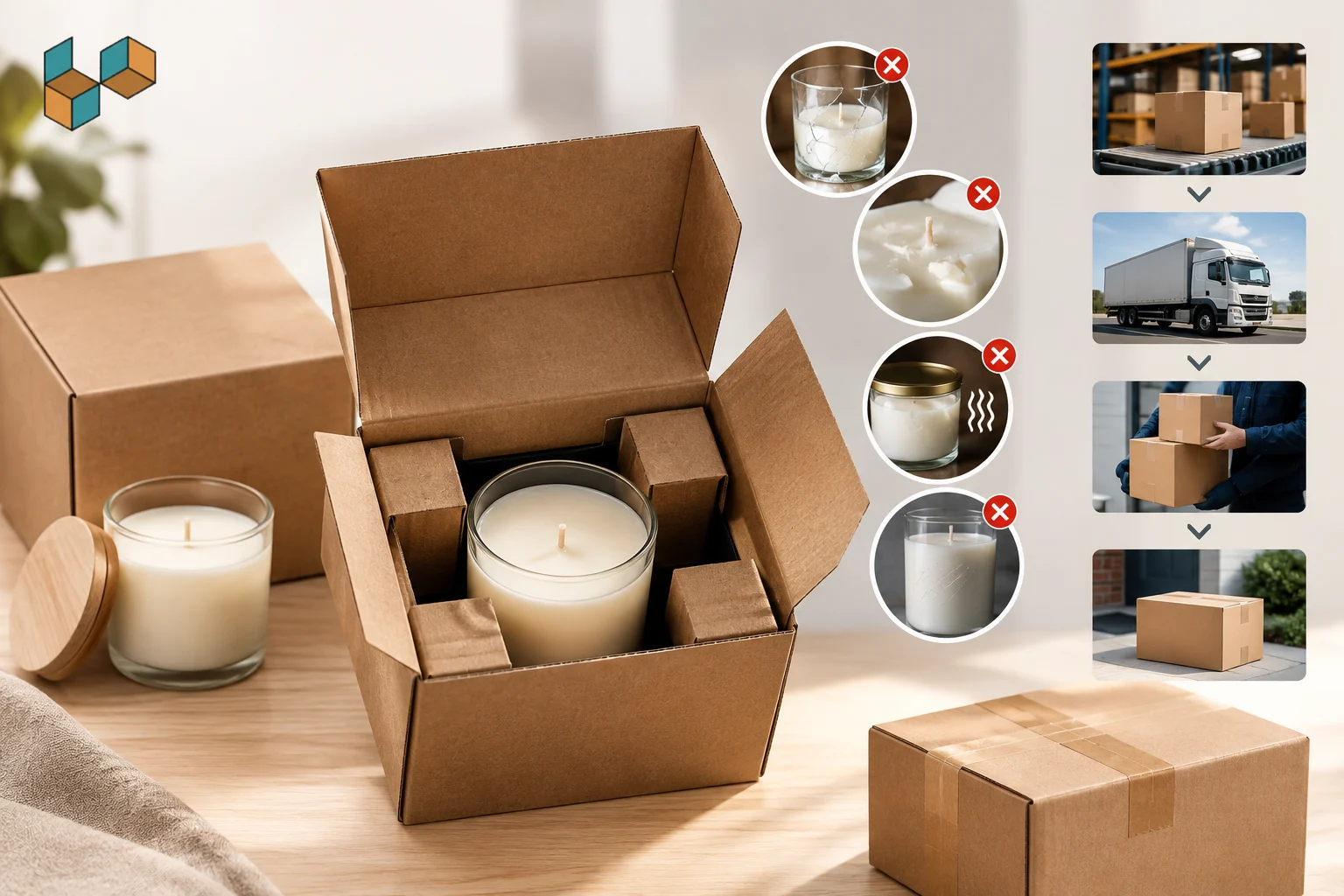
Ordinary packaging often fails candles specifically because it was designed with lighter, less fragile products in mind. Protective candle boxes need to account for weight, glass fragility and heat sensitivity in ways that generic retail boxes usually do not. Custom candle packaging solves this by building protection around the candle's actual shape, weight and material, rather than expecting a standard box to handle whatever gets placed inside it. Since candle product packaging often travels through multiple handling stages, from warehouse sorting to delivery vehicles, this kind of purpose-built protection tends to matter more than it would for sturdier products.
How Custom Candle Boxes Prevent Damage in Transit
Preventing shipping damage is rarely the result of one packaging decision. It usually comes from a sequence of choices that start with measuring the product and end with how the finished box is packed for its journey. The seven steps below outline how custom candle boxes build protection at each stage of that process.
Start With the Candle Size and Weight
Accurate measurements form the foundation of safe packaging. Jar diameter, candle height, lid size and overall product weight all need to be recorded precisely, since even small gaps in measurement can lead to boxes that are slightly too loose or too tight. Precise sizing reduces empty internal space, which in turn reduces the amount of unwanted movement a candle experiences during handling.
Select a Material That Matches Shipping Risk
Material choice should reflect how far the product is travelling and how much weight it carries. Cardboard suits lighter candles and shorter shipping distances, while rigid board offers more structural strength for heavier jars or premium products. A rigid candle box structure tends to suit premium candle packaging where the added strength justifies the extra material, particularly for glass jars that need more resistance to pressure. Kraft and corrugated materials each bring their own strengths depending on whether the priority is natural presentation or added durability for bulkier shipments.
Add Inserts to Control Movement Inside
Fitted inserts keep candles centred and stop them from knocking against the sides of the box during handling. Cardboard and pulp inserts are both common approaches, with the right choice depending on the candle's shape and how many units the box holds. Inserts matter more for glass jars and multi-candle sets, since these products have more surface area exposed to potential contact damage than a single simple pillar candle.
Build Closure and Structure for Secure Handling
A box that stays closed during handling is just as important as one with strong walls. Tuck-end, mailer, rigid and magnetic closures each offer different levels of security, and the right choice depends on how the box will be handled rather than how it looks on a shelf. A cardboard box lid style can offer a secure, enclosed structure that keeps contents in place without needing a more complex closure system. Structure should ultimately be chosen to match the product's weight and fragility, not simply selected for visual appeal.
Add Protection Against Heat and Surface Damage
Suitable materials and protective coatings can help limit some of the more common forms of shipping damage, including scuffing and surface marks that build up during repeated handling. Heat exposure and moisture are harder to control fully through packaging alone, so it helps to keep expectations realistic here rather than treating any single material as a guaranteed solution. Choosing sturdier board and a snug internal fit remains one of the more practical ways to reduce surface contact during transit.
Check the Packed Candle Before Bulk Production
Reviewing fit, closure, insert position and artwork before committing to full production helps catch problems while they are still easy to fix. A sample check or a digital proof review gives a clear look at how the finished box will actually perform, which tends to reduce the number of packaging issues that show up after a full production run has already been completed.
Pack the Finished Box for the Shipping Journey
The candle box itself is only part of the picture once it enters the wider shipping process. Stacking, vibration, drops and pressure from other packages all affect how well a candle survives delivery, which is why the inner candle box and the outer shipper should be planned together rather than treated as separate decisions. A kraft mailer box style can work well as part of this outer layer, since it is built specifically to handle the demands of shipping rather than retail display alone.
Which Candle Box Materials Handle Shipping Best?
Material selection has a direct effect on how well a candle survives shipping, and different materials tend to suit different priorities. Rigid board offers strong structural support for premium or heavier candles, while cardboard provides a lighter, more cost-effective option for candles that do not need heavy-duty protection. Kraft material appeals to handmade and small-batch candle brands that want a natural look alongside reasonable durability, and corrugated board adds extra strength for bulkier shipments or multi-candle sets.
A quick comparison of how each material tends to perform:
Rigid board : strong support suited to premium or heavier candle jars
Cardboard : lightweight and cost-effective for lower-risk shipping
Kraft : natural appearance with reasonable strength for smaller shipments
Corrugated : added durability for bulk orders or multi-piece sets
Eco-friendly candle boxes built from kraft or recycled board can still offer solid protection when sized correctly, which means sustainable candle packaging does not have to come at the expense of durability. Custom soy candle boxes in particular often benefit from this balance, since soy candles are frequently sold as a more environmentally conscious product in the first place.
How Box Fit Reduces Candle Movement During Delivery
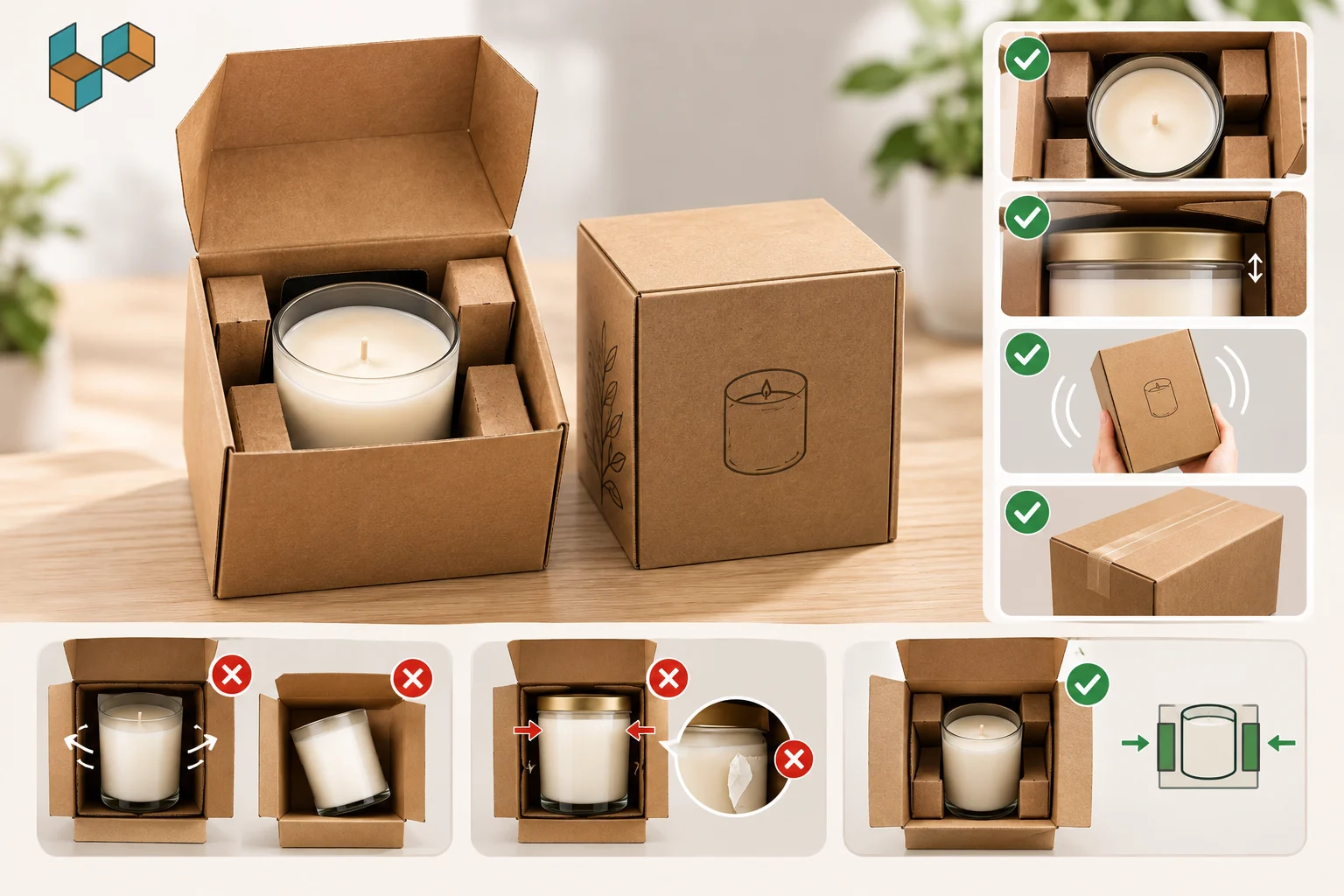
Internal space plays a bigger role in shipping protection than many sellers initially expect. A box that is too loose allows a candle to shift, knock against the walls and potentially crack a jar or scratch a surface, while a box that is too tight can put unnecessary pressure on the product or make it difficult to pack without damaging the label. The goal is a fit that is close without becoming forceful, supported by inserts or internal padding where the product needs extra stability.
A short checklist for evaluating fit before finalising a box:
Confirm there is minimal space around the candle once packed.
Check that any lid, label or wick tab has enough clearance to avoid pressure.
Test that inserts hold the candle in a fixed position during light shaking.
Verify the closure stays secure when the box is tilted or turned.
Jar candle packaging in particular benefits from this level of attention, since glass containers carry more risk than simpler wax shapes. Scented candles also tend to hold fragrance better when custom candle boxes are sealed properly around a snug fit, since gaps can allow scent to escape gradually during longer shipping times.
Which Custom Box Styles Suit Different Candle Products?
Not every candle needs the same packaging structure, and matching box style to product type tends to reduce both shipping risk and unnecessary cost. Jar candles generally need more rigid support due to their glass construction, while tins and simpler pillar candles can often work with lighter packaging. Gift sets and premium candles usually call for more structured presentation, and a cardboard display box style can suit retail candles that need to remain visible while still staying protected on a shelf.
Some common product and box pairings worth considering:
Glass jar candles paired with rigid or insert-supported boxes
Tin candles paired with lighter cardboard or kraft structures
Premium single candles paired with rigid or drawer-style boxes
Multi-candle gift sets paired with divided insert boxes
Retail shelf candles paired with window or display-style boxes
Custom soy candle boxes and candle gift boxes both benefit from this kind of product-specific matching, since a structure chosen around the candle's actual shape and use tends to perform better than one selected for appearance alone. Retail candle packaging built with these pairings in mind also tends to present more consistently across a product line.
When Inserts Make Candle Packaging Safer
Inserts are not necessary for every candle, but they add real value in specific situations. Single candles with a stable base and simple shape often ship safely without additional internal support, particularly when the box already provides a close fit. Glass jars, however, benefit significantly from inserts, since the added stability reduces the chance of contact damage during handling.
Multiple candles packed together also tend to need inserts, since separating individual units prevents them from knocking against each other inside the box. Protective candle boxes built for gift sets in particular rely on this kind of internal structure, since gift packaging often holds several items that need to stay both protected and neatly arranged. Candle gift packaging without proper separation between items risks both damage and a less polished unboxing experience, while jar candle packaging with well-placed inserts tends to arrive in noticeably better condition.
How Printing Supports Safe and Clear Candle Packaging
Printing on a candle box does more than support branding, though that remains an important function. Clear product details, including scent name, burn time or ingredient information, help customers understand what they are buying before the box is even opened. Handling information, such as care instructions or fragile warnings, can also support safer transit by signalling to handlers how the package should be treated.
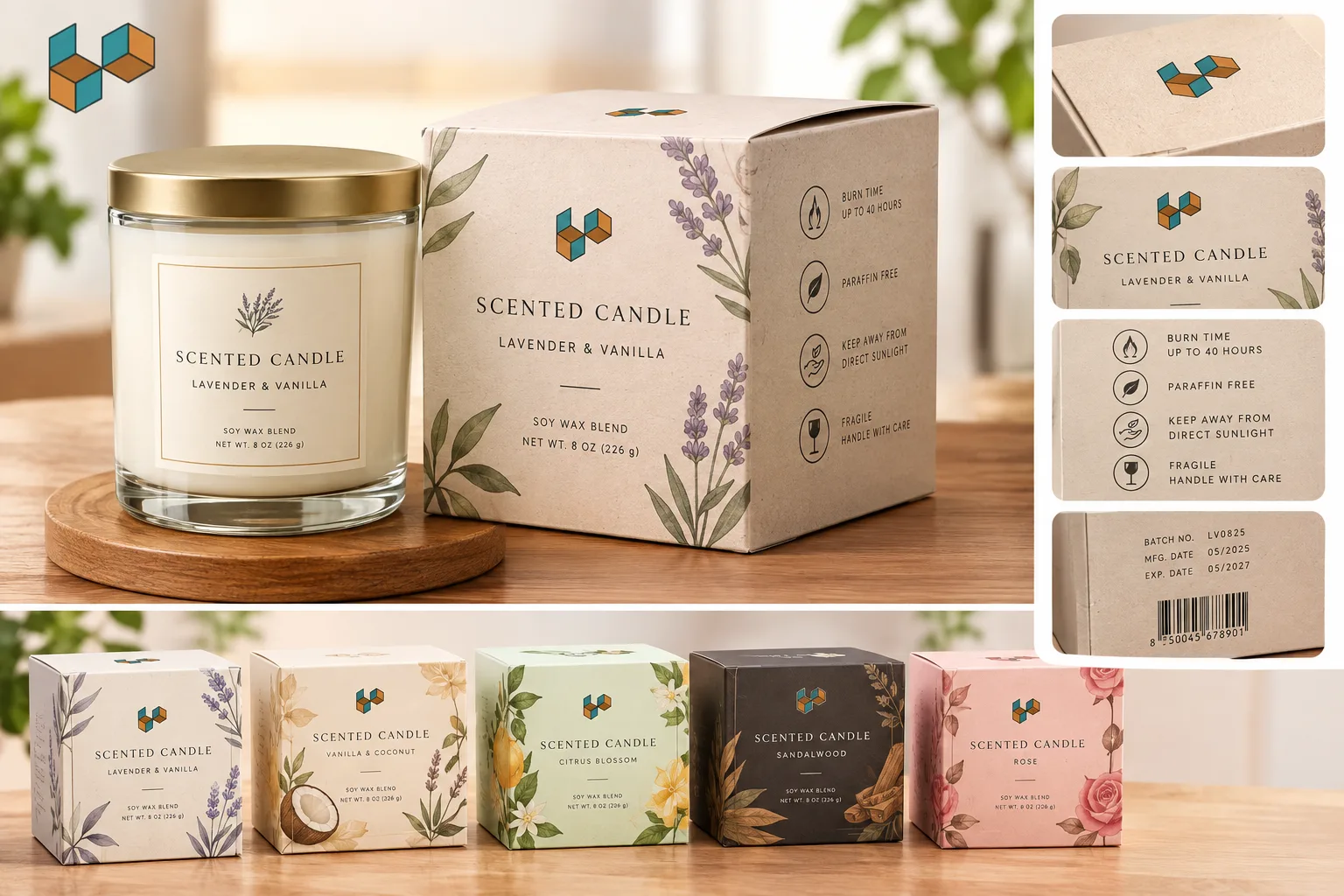
Practical elements worth including on printed candle packaging:
Brand logo and consistent colour scheme
Scent name and any relevant product details
Basic handling or care instructions where useful
Batch or production information for larger retail runs
Custom printed candle boxes that balance these practical details with clean artwork tend to communicate more effectively than packaging that relies on decoration alone. Branded candle packaging built this way supports both presentation and clarity, and candle branding packaging that stays consistent across a product line helps customers recognise the brand quickly on a shelf or in a shipment.
Which Finishes Suit Protective Candle Boxes Best?
Finishing choices affect how a candle box looks and feels without replacing the structural protection built into the box itself.
Matte finishes give a soft, understated look suited to minimal branding.
Gloss finishes add shine and work well with bold colour schemes.
Soft-touch coatings create a smoother, more premium feel in hand.
Foil detailing highlights logos or scent names without covering the box
Embossing adds subtle raised texture to specific design elements.
Textured papers give the packaging a more tactile, considered feel.
Luxury candle boxes tend to benefit most from finishes applied selectively rather than combined all at once, since a cleaner design usually reads as more premium than a heavily decorated one. Decorative candle packaging should still be balanced against shipping needs, since delicate finishes can be more prone to scuffing during transit than a straightforward matte or soft-touch surface. Premium candle packaging works best when the finish supports the brand without compromising the structural choices covered earlier in this article.
How Eco-Friendly Candle Boxes Balance Protection
Sustainability and shipping protection do not have to work against each other. Kraft material, recycled board and recyclable paperboard can all offer reasonable strength when sized and structured correctly, which means eco-friendly candle boxes are not automatically a weaker option compared to standard packaging. Reducing unnecessary packaging layers, such as oversized boxes or excess filler material, also supports sustainability goals without sacrificing the core protection a candle needs.
A few practical considerations for balancing these two goals:
Choose recyclable or recycled materials that still match the candle's weight.
Size the box closely to the product to avoid excess material and wasted space.
Use inserts only where genuinely needed rather than as a default addition.
Sustainable candle packaging built with these principles in mind tends to perform well for both online shipping and retail display. Handmade candle packaging in particular often benefits from this approach, since smaller-batch producers frequently want packaging that reflects their product's natural, less mass-produced positioning.
What Box Features Improve Candle Shipping Safety Most?
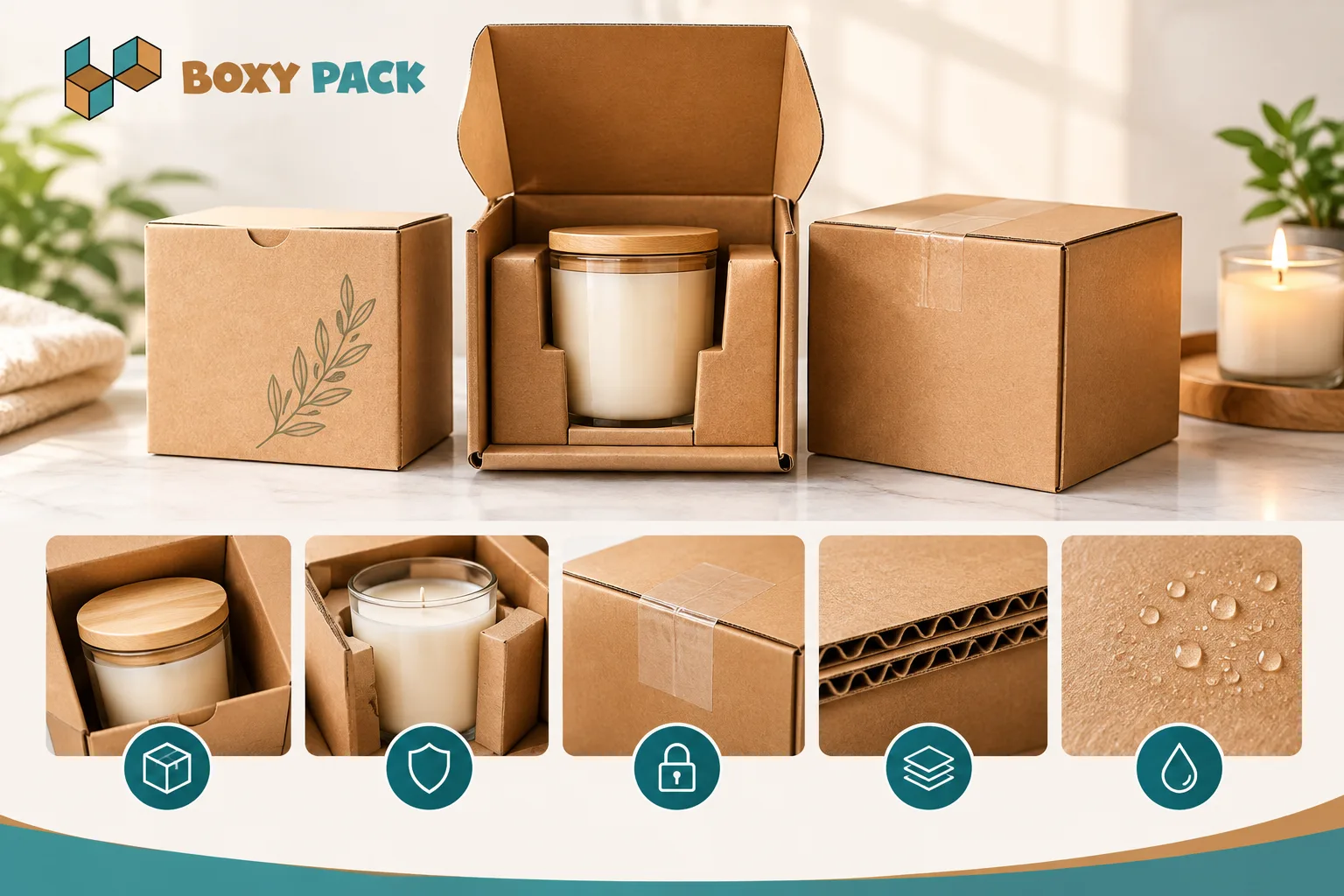
A handful of structural features tend to have the biggest direct impact on shipping safety.
A close, accurate fit that leaves minimal room for movement
Inserts positioned to hold candles securely, especially glass jars.
A closure type that stays secure through handling and transit
Board strength suited to the candle's actual weight
Protective finishes that reduce surface scuffing during transit
Protective candle boxes built around these features tend to perform more reliably than packaging chosen mainly for its appearance. Custom candle packaging that addresses each of these points individually, rather than relying on one strong feature to compensate for weaknesses elsewhere, generally holds up better across a full shipping journey. Premium candle packaging in particular benefits from this layered approach, since higher-value products carry more risk if any single protective feature falls short.
How Candle Packaging Supports Retail and Gifting
The same protective box does not need to serve only one purpose. Packaging built with shipping protection in mind can also work well for shelf presentation, gifting and subscription-style orders, provided the structure and design are planned with all of these uses in mind from the start. A two-piece rigid structure often suits this dual purpose well, since the separate lid and base give a considered opening experience that works for both a retail purchase and a gift.
Common ways one candle box design can support multiple touchpoints:
Retail shelf presentation with clear branding and visible product details
Gift purchases that benefit from a more polished opening experience
Online orders that need the same box to double as reliable shipping protection
Subscription boxes where consistent packaging builds brand recognition over time
Retail candle packaging designed with these overlapping uses in mind tends to reduce the need for separate packaging lines, which can simplify both production and inventory. Candle gift boxes and candle gift packaging built on the same core structure as shipping packaging also help maintain a consistent brand experience regardless of how the customer receives the product. Scented candle boxes in particular benefit from this consistency, since fragrance-focused products often rely on packaging to reinforce the sensory experience from the moment a customer sees the box.
How to Choose Custom Candle Boxes for Shipping
Choosing the right packaging becomes far more straightforward with a clear process to follow. The five steps below outline a practical workflow for selecting custom candle boxes built around both the product and its shipping needs.
Identify the Candle Type Before Choosing
Jar, pillar, taper, tin and soy candles all have different shapes and fragility levels, which means they often need different packaging approaches. Identifying the candle type early helps narrow down which structures are worth considering before moving further into the selection process.
Measure the Candle and Its Complete Set
Measurements should cover the candle itself along with its lid, label and any included accessories, rather than just the base product. Complete measurements help prevent a box that fits the candle but not the full set, as it will actually be packed.
Match the Material With Shipping Conditions
Distance, weight, and expected handling conditions should all factor into material choice. Balancing protection against packaging cost usually means selecting a sturdier material for longer shipments or heavier products, while lighter materials can work for shorter, lower-risk deliveries.
Decide Where Inserts Add Real Value
Inserts genuinely help with fragile jars and multi-piece sets, but they are not necessary for every product. Adding inserts where they solve a real movement or separation problem makes more sense than including them as a default feature regardless of need.
Review the Finished Design Before Ordering
Artwork, dimensions, closure, material and finishing should all be checked together before committing to production. A digital proof review at this stage is a practical, low-cost way to catch issues before they affect a full order.
Custom Candle Box Costs and What Changes the Price
Several factors combine to determine the final cost of a custom candle box order, and understanding these in advance makes it easier to plan a realistic budget.
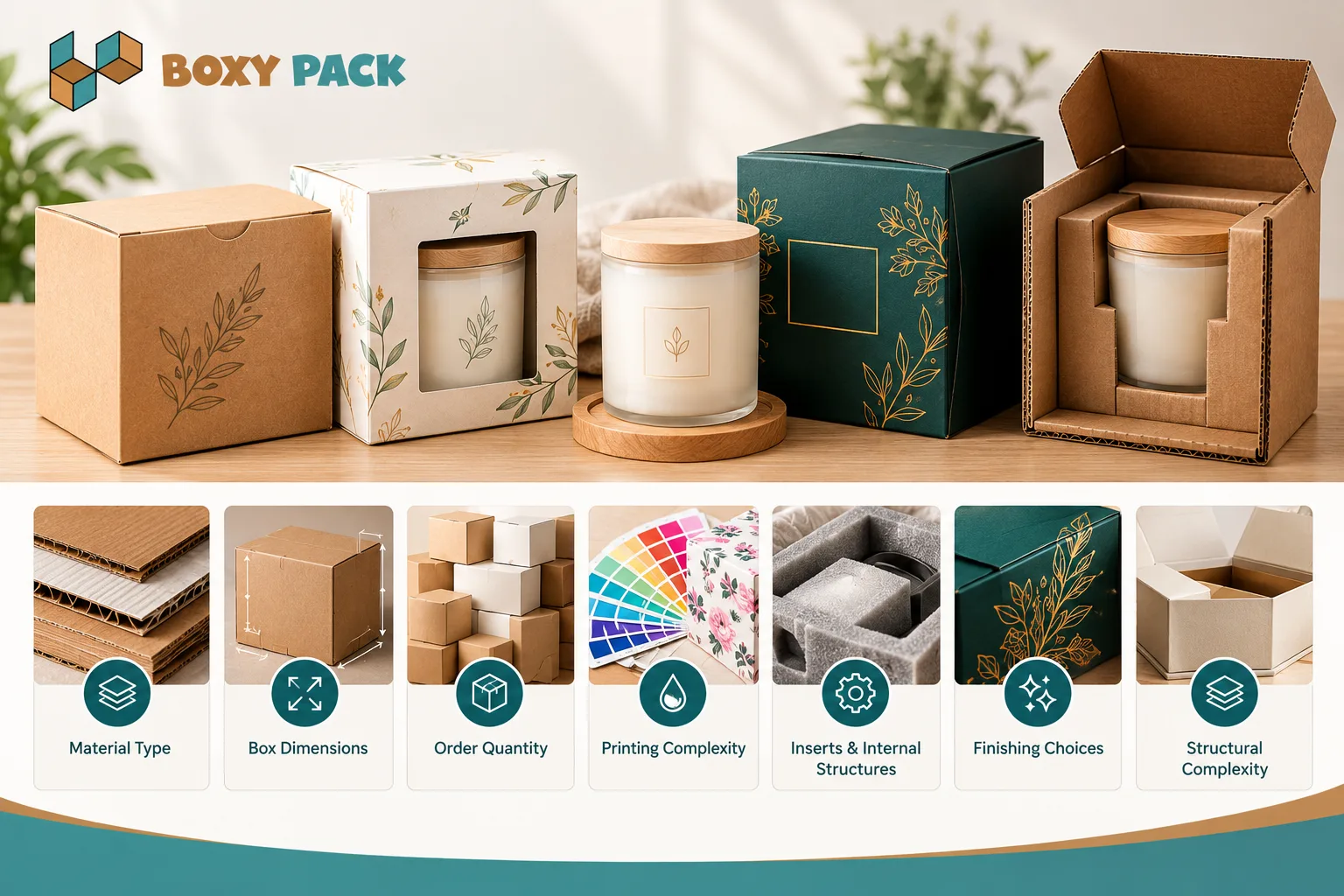
Material type, from standard cardboard to rigid or corrugated board
Box dimensions and how much material each unit requires
Order quantity and whether it qualifies for bulk pricing
Printing complexity, including colour count and artwork detail
Inserts or internal structures added for movement control.
Finishing choices such as foil, embossing or soft-touch coatings
Overall structural complexity, including closures and multi-piece designs
Wholesale candle boxes ordered in larger quantities generally bring the per-unit cost down compared to smaller custom runs, though this depends heavily on the complexity of the design being ordered. Luxury candle boxes with premium finishes and rigid construction will naturally cost more than a simple paperboard box, which is why it helps to prioritise which features matter most before requesting a quote. Custom printed candle boxes with straightforward single-colour artwork also tend to cost less than designs involving multiple colours or speciality printing techniques.
Candle Box Options Compared by Protection Needs
Box Style | Best For | Protection Focus | Main Advantage |
Rigid Box | Premium candles | Strong structure | Premium presentation |
Corrugated Shipper | Online shipping | Impact and pressure | Strong transit support |
Insert Box | Glass jars and sets | Movement control | Secure internal fit |
Kraft Box | Handmade candles | Basic protection | Natural presentation |
Window Box | Retail candles | Enclosed product | Product visibility |
Drawer Box | Gift sets | Structured storage | Premium opening experience |
Comparing these options side by side makes it easier to match a packaging style with the specific protection a candle product needs, whether the priority is premium presentation, transit durability, internal stability or retail visibility.
Final Thoughts on Preventing Candle Shipping Damage
Preventing shipping damage comes down to a series of connected decisions rather than any single packaging feature. Fit, material, inserts, structure, testing and final shipping preparation all play a part in whether a candle arrives intact or damaged, and skipping any one of these steps tends to weaken the overall protection the packaging can offer. Custom candle boxes give brands the ability to address each of these factors individually, building protection around the candle's actual shape, weight and fragility rather than relying on a generic box to handle whatever gets placed inside it.
Protective candle boxes work best when they are treated as part of a complete system rather than a single line item in the ordering process. Custom candle packaging built with this full picture in mind supports more than just safe delivery; it also reinforces the brand and product presentation that customers see the moment a package arrives. Candle product packaging that gets this balance right tends to reduce damage claims, protect product value and support the kind of consistent experience that encourages repeat orders. Before placing an order, take the time to review your candle's size, weight, shipping distance and branding needs, then consider Boxy Pack for custom packaging that puts the right protection in place.
FAQs About Custom Candle Boxes for Shipping
Candle packaging has to balance protection, fit, presentation and shipping conditions all at once, which makes the right choice different for every product and business. Materials, inserts, box structure and custom sizing all play a role in how safely a candle arrives at its destination. The questions below cover some of the more common concerns that come up when comparing custom candle packaging options.
What type of box protects candles best during shipping?
A box with a close, accurate fit and a material matched to the candle's weight generally offers the strongest protection, especially when combined with inserts for glass jars or multi-candle sets.
How do inserts stop glass candle jars from moving?
Inserts hold a jar in a fixed position within the box, which reduces contact with the walls during handling and lowers the risk of cracking or scratching in transit.
Which material is best for shipping heavy candle jars?
Rigid board or corrugated material generally offers better support for heavier jars than lighter cardboard, particularly over longer shipping distances.
Can custom candle boxes protect candles from heat?
Suitable materials and protective structures can help reduce some risks associated with heat exposure, though packaging alone cannot fully eliminate heat-related issues during transit.
How should I measure a candle before ordering its box?
Measure the candle's height, width, lid and any accessories together as a complete set, rather than measuring the candle alone, to avoid a box that fits the product but not the full packed contents.
Are kraft candle boxes strong enough for shipping?
Kraft boxes can offer reasonable protection for lighter candles and shorter shipments, though heavier jars or longer shipping distances usually benefit from a sturdier material such as rigid or corrugated board.
Can custom candle boxes also work for retail and gifting?
Yes, a well-designed candle box can support shipping, retail display and gifting at once, provided the structure and finishing are planned around all of these uses from the start.
Ready to Get Started?
Discover our custom packaging solutions and bring your brand to life with premium boxes.