
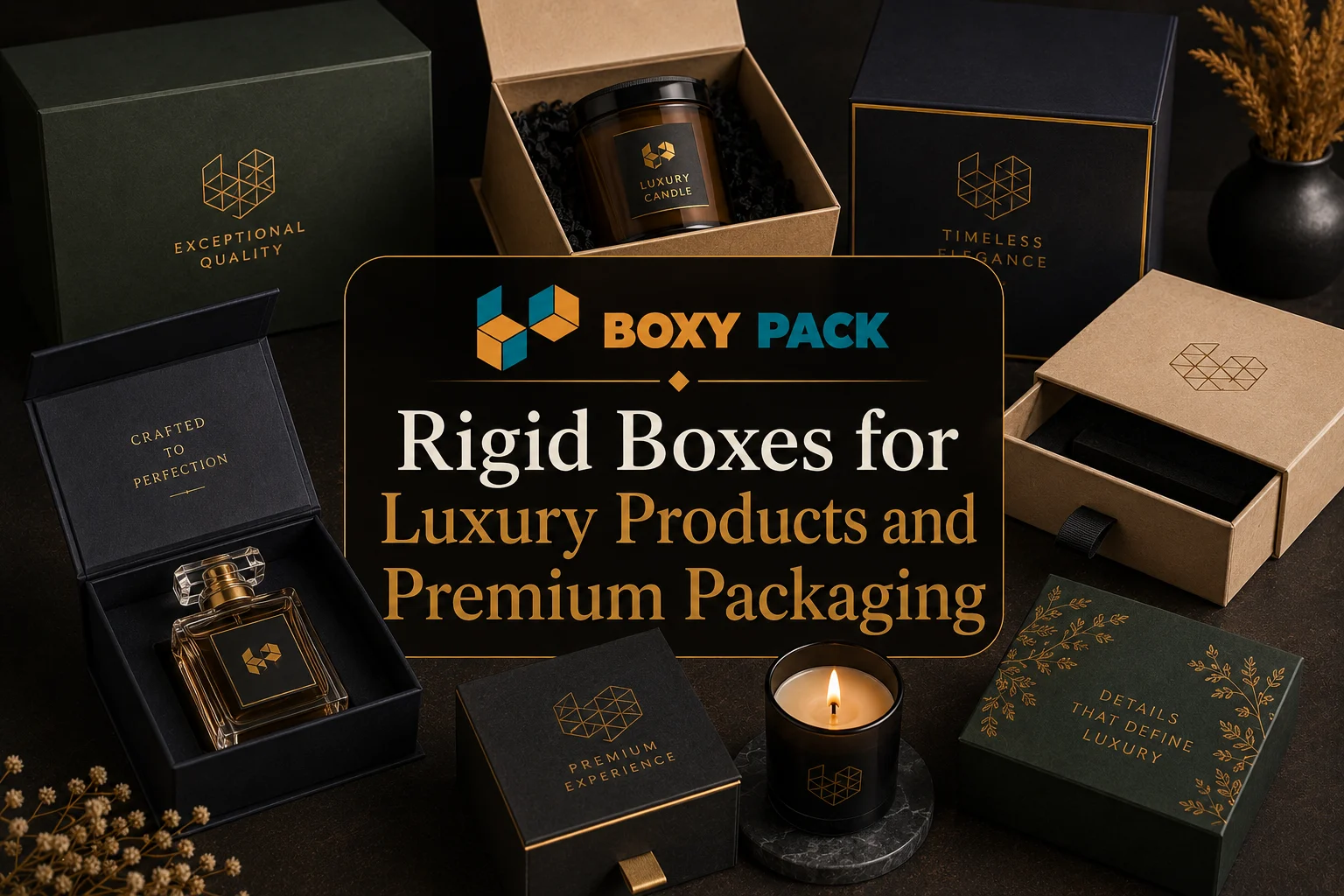
Better custom candle packaging begins with a clear purpose. It should present the product well and protect it during handling. It should also support a consistent brand identity. The strongest options match the candle size, sales channel, customer, and budget. Materials, box structures, inserts, labels, and printing should support the same packaging plan.
The main finding is simple. Good packaging depends on fit, function, and clear design more than decoration alone. This matters because packaging affects product safety, shelf appeal, gifting, and customer experience. As candle brands grow, these choices can shape wholesale planning, storage, and repeat production. Future packaging decisions should focus on accurate testing, useful materials, and realistic order needs. Brands can apply these principles to new products, seasonal ranges, and wider retail collections.
How Rigid Boxes Differ From Standard Packaging
Rigid boxes use thick paperboard that keeps its formed shape. Manufacturers usually wrap the board with printed or finished paper. This structure feels firmer than standard folding cartons. custom candle boxes can use rigid structures when brands want stronger presentation and product protection.

Rigid setup boxes normally arrive already formed. Folding cartons arrive flat and require folding before use. The solid structure gives rigid packaging its strong feel. It also allows deeper lids and drawers and hinged structures. These features explain why many premium brands use rigid packaging for valuable products.
Why Premium Brands Choose Rigid Packaging for Products
Premium packaging must protect the product and support its market position. Rigid packaging can serve both needs when the structure suits the product.
Common reasons brands choose this format include these benefits.
Strong premium presentation
Better resistance to crushing
Better support for delicate products
More controlled product placement
More memorable opening experience
Greater branding space
Wider finishing choices
Reuse after the original purchase
A jewelry box may need protection and presentation. A cosmetic set may need organized product placement. Electronics may need both support and space for accessories. The structure should always match the actual product need.
How Rigid Packaging Supports a More Premium Brand Image
Packaging affects how customers understand product value. Weight, texture, and opening style all shape that judgment. Luxury rigid boxes can make a product feel more considered. The effect works only when the packaging matches the product.
Jewelry can use compact boxes with fitted inserts. Cosmetics can use drawers or magnetic closures. Electronics can use divided inserts for parts. Fashion accessories can use large lid and base structures. Gift products can use reusable boxes that remain useful after opening. candle subscription boxes can also benefit from a consistent rigid presentation when brands want each recurring delivery to maintain the same premium identity.
Premium packaging should support brand identity without making false promises. The package still needs clear function and honest presentation.
Six Rigid Box Styles for Different Product Experiences
Rigid box structure affects opening, storage, and product access. Different styles create different customer experiences. The right choice depends on the product and sales setting.
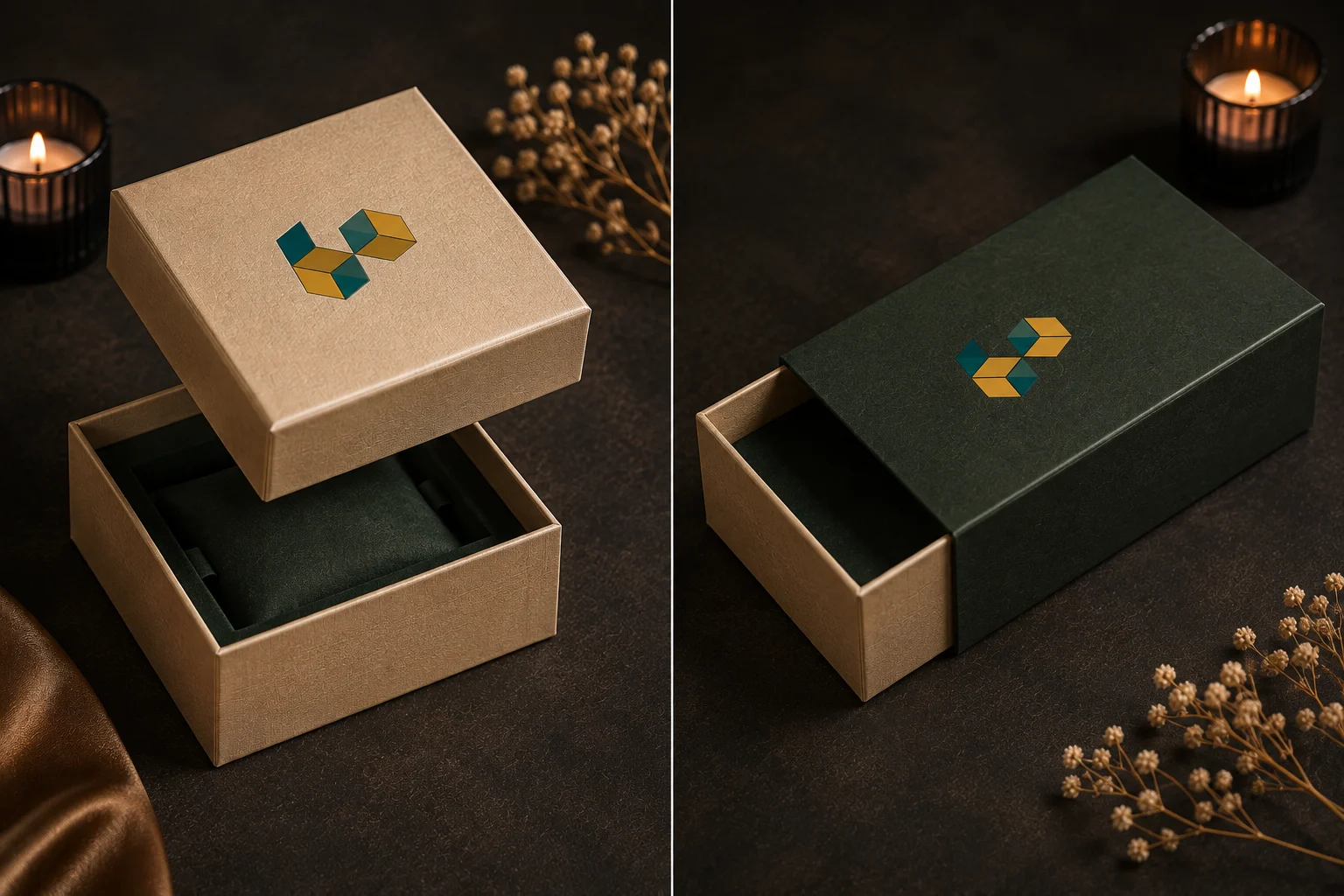
Two Piece Lid and Base Boxes for Classic Presentation
This structure uses a separate lid and lower base. It creates a familiar gift box experience. It suits jewelry, apparel, and gift sets. Product access remains simple. Custom inserts can also keep products secure inside the base.
Telescope Boxes for Flexible Lid Coverage
Telescope boxes use a lid that covers part or all of the base. Deeper lid coverage can create a slower opening experience. It also gives more space for printed wrap and branding.
Drawer Style Boxes for Distinctive Opening
Drawer style boxes use an inner tray and outer sleeve. Customers pull the tray from the sleeve. This format suits cosmetics, jewelry, and small electronics. The sliding action can make product access feel more deliberate.
Magnetic Closure Boxes for Reusable Packaging
Magnetic closure boxes use hidden magnets to secure the lid. They often open like a book. The closure supports repeated use and clean presentation. These boxes can work well for gift sets and premium retail products.
Hinged Rigid Boxes for Book Style Access
Hinged boxes connect the lid and base. This design keeps both parts together during use. Some versions open like books. Others use clamshell structures. They work well when customers need regular access after purchase.
Rigid Tube Boxes for Round Products
Rigid tubes use a cylindrical structure instead of square panels. They can suit bottles, candles, and cosmetic products. Their unusual shape can help products stand apart. custom wax melt boxes can also use specialized rigid structures when the product requires a distinctive presentation and secure fit.
What Materials Give Rigid Boxes Their Strong Structure
The main structure usually comes from thick chipboard or rigid paperboard. This board gives the box its firm walls and stable shape. A decorative wrap covers the outside surface. Wraps can use printed paper or textured paper. Interior areas may use paper or fabric-based materials. Board thickness affects strength and final weight. Larger products may need stronger board. Smaller products may work with lighter structures.
kraft cake boxes can use kraft-based material choices when a natural appearance and suitable structural performance are both important. Material selection also affects cost and shipping. Using more board does not always improve the packaging. The structure should provide enough support without adding waste.
Four Benefits That Make Rigid Boxes Worth Considering
Rigid packaging provides value beyond its visual appearance. Its main benefits connect presentation with daily function. The product and sales channel still determine the final value.
Stronger Protection for Valuable Products
Rigid board resists crushing better than many thin paper cartons. This can help protect delicate items. Inserts still matter because strong outer walls cannot stop every product from moving.
A More Memorable Unboxing Experience
Customers interact with packaging before using the product. A fitted lid or drawer changes that first interaction. Good structure can make opening feel controlled without adding unnecessary decoration.
More Opportunities for Brand Presentation
Printed rigid boxes can use custom artwork, textures, and interior graphics. Brands can also combine finishes with structural details. This gives designers more ways to connect packaging with product identity.
Longer Useful Life After Purchase
Some rigid gift boxes remain useful after the product leaves them. Customers may reuse them for storage or gifting. Reuse depends on durability, size, and practical value.
How Custom Rigid Boxes Are Designed and Produced
Creating custom rigid packaging starts with product needs. Structure and artwork must support those needs. Production follows only after the main details are confirmed.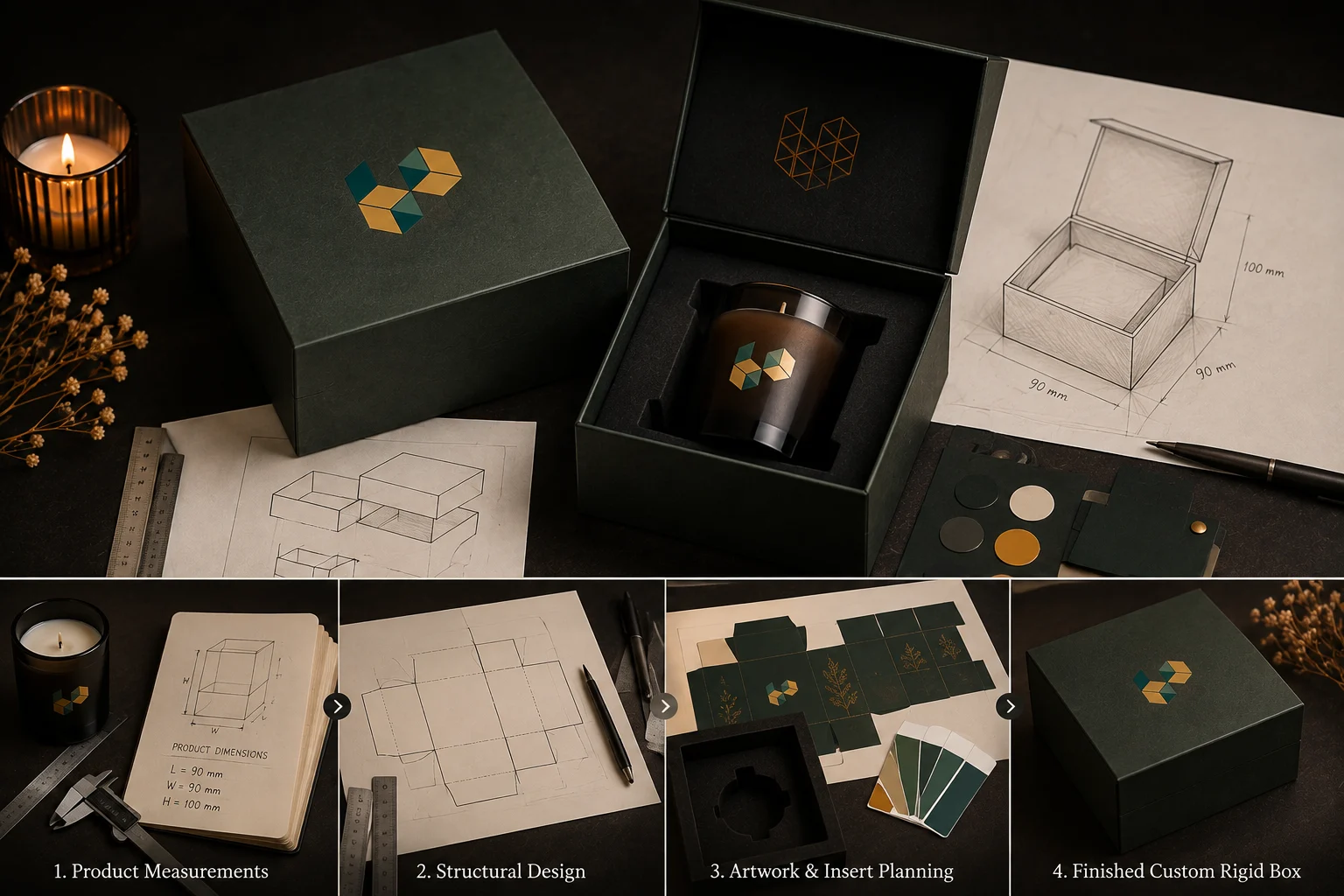
Start With Product Dimensions and Requirements
The process begins with product length, width, and depth. Weight also matters. Designers also review product shape and quantity. Fragile items may need inserts. Premium sets may need several sections.
Develop the Structure and Packaging Artwork
Designers select the box style after reviewing product needs. They then prepare the structure and artwork. Branding must align with panels and folds and visible surfaces. Insert placement also needs planning at this stage.
Build the Box and Apply Finishing
Manufacturers cut the rigid board into required shapes. They form the board into the final structure. The printed wrap is then placed around the board. Selected finishes are added based on the approved design.
Inspect and Prepare Boxes for Delivery
Completed boxes need visual and structural checks. Teams inspect corners, closures, and alignment. Inserts should fit the intended product. Magnetic parts should close correctly. Finished boxes are then packed for transport.
How Inserts Make Rigid Packaging More Functional
Box inserts help control product position inside rigid packaging. They can also separate accessories and create a cleaner presentation. Common options include paperboard and molded pulp, foam, and fabric-based inserts.
The insert should match product shape and fragility. Fragile products may need stronger cushioning. Product sets may need divided sections. The insert should be planned with the box. Adding it later can create poor fit and wasted space. candle boxes inserts should therefore be designed around the product dimensions from the beginning.
Which Rigid Box Finishes Create a Luxury Feel
Finishing changes both appearance and touch. The right choice depends on brand identity and budget.
Foil stamping adds metallic details
Embossing creates raised design areas
Debossing creates recessed details
Matte finishes create a softer surface
Gloss finishes add stronger light reflection
Soft touch finishes change surface feel
Spot UV adds contrast to selected areas
Textured wraps add tactile detail
Using every finish rarely improves a design. A restrained finish can often communicate the brand more clearly. Printing and finishing should support the product rather than compete with it.
Rigid Boxes Versus Folding Cartons and Corrugated Boxes
Factor | Rigid Boxes | Folding Cartons | Corrugated Boxes |
Construction | Thick rigid board | Foldable paperboard | Layered board |
Presentation | Premium | Flexible retail look | Functional |
Protection | Strong | Moderate | Strong |
Storage | Needs more room | Stores flat | Often stores flat |
Shipping use | Product presentation | Retail packaging | Transport protection |
Common fit | Premium products | General retail | Shipping needs |
Rigid packaging is not suitable for every product. Folding cartons can reduce storage needs. Corrugated boxes can suit transport demands better. Product value, shipping needs, and budget should guide the choice.
When Rigid Packaging May Not Be the Right Choice
Rigid packaging can require more storage space than flat cartons. Formed boxes may also increase transport volume. This matters for businesses managing large order quantities.

Large products may require too much board. Very heavy products may need stronger transport packaging. Brands with limited budgets may prefer good folding cartons. Corrugated packaging may also suit products that need shipping protection more than premium presentation. The added cost makes sense only when the packaging supports clear product needs.
Pros and Cons of Choosing Rigid Boxes
Rigid boxes offer strong branding options. They also bring practical limits. Businesses should review both before placing large orders.
Pros
Strong structural feel
Premium visual presentation
Wide printing choices
Custom insert options
Distinct opening styles
Good product organization
Possible reuse
Strong gifting presentation
Cons
Higher production cost
More storage space
Higher transport volume
Longer production for complex designs
More tooling for unusual structures
Limited value for some low-cost products
Added costs from excessive finishing
Rigid boxes wholesale can reduce unit costs at larger volumes. Total spending still depends on specifications and order size.
What Factors Increase the Cost of Custom Rigid Boxes
Custom rigid boxes usually cost more than basic folding packaging. Their production uses thicker material and more assembly work.
Cost changes with box size, board thickness, and structure. Printing and finishing also affect production needs. Inserts add materials and labor. Complex structures may need special tooling. Low volume orders can have higher unit costs. Shipping and storage can also affect total spending. Businesses should request quotes based on identical specifications. This makes supplier comparisons more useful.
How Businesses Can Control Rigid Packaging Costs
Cost control should remove waste without reducing needed protection. Several design choices can lower unnecessary spending.
Use standard sizes where practical
Avoid board that is thicker than needed
Reduce empty space inside boxes
Limit special finishes to key areas
Use simpler printing when suitable
Use paperboard inserts when suitable
Share structures across product ranges
Compare supplier quotes using equal specifications
A cheaper box has little value when it cannot protect the product. Cost decisions should start with product needs.
How to Avoid Common Rigid Box Design Mistakes
Oversized packaging can increase material and shipping costs. Poor inserts can let products move during handling. Too many finishes can make branding feel confused. Weak testing can allow small design issues into full production.
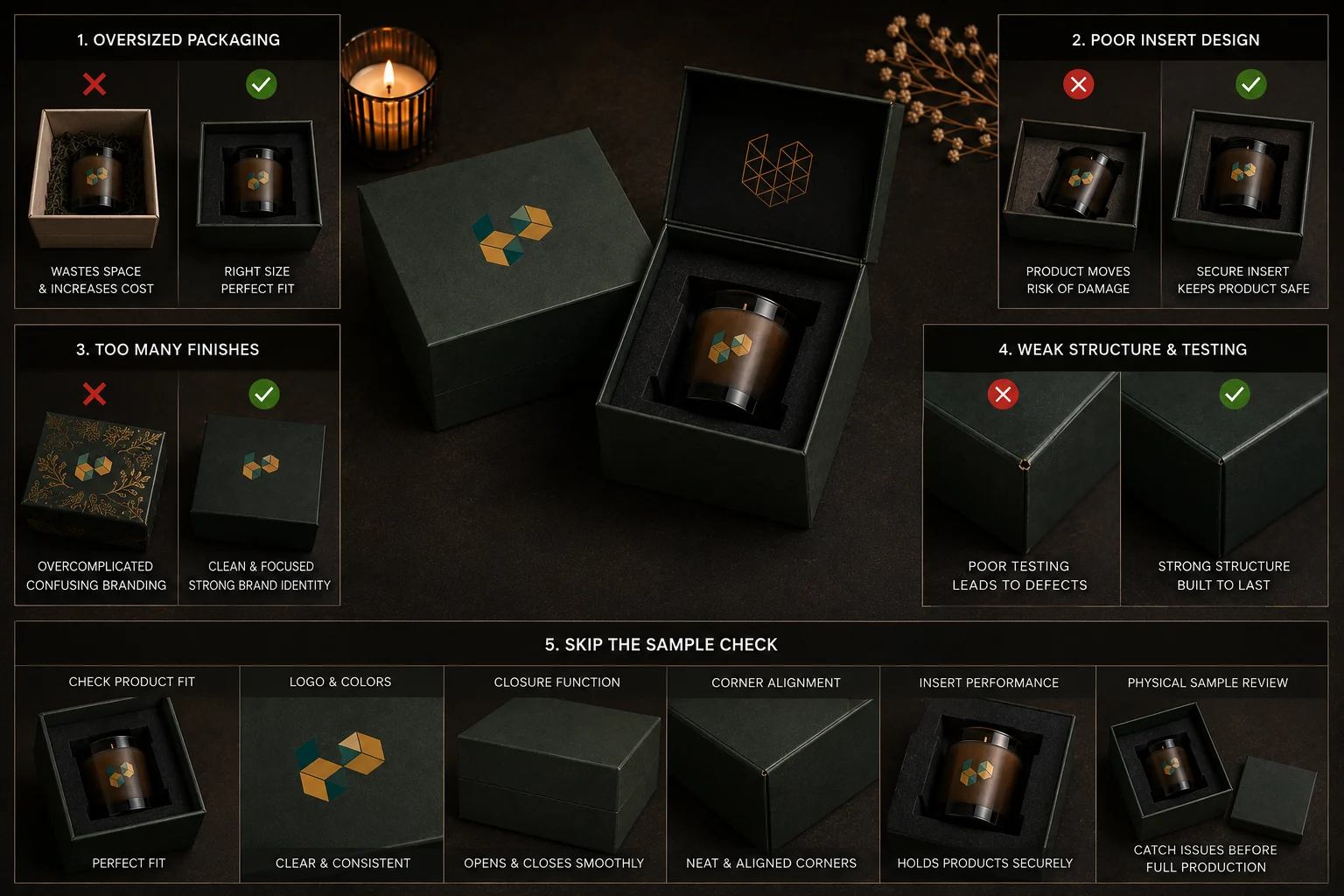
Businesses should check product fit before approving the final design. Logos and colors should remain clear. Closures should work correctly. Corners should remain aligned. Inserts should hold products without excessive pressure. Physical samples can reveal issues that digital artwork cannot show.
How Testing Can Prevent Problems Before Mass Production
Testing helps identify structure and fit problems before large production runs. A sample allows teams to check product dimensions, closures, and inserts.Magnetic boxes need reliable lid alignment. Drawer boxes need smooth tray movement. Inserts should hold products without damage.
Printed areas should align with visible panels. Corners should remain clean after handling.Drop testing may also matter for some products. The full shipping system should be reviewed when transport damage presents a concern.
What to Look for in a Custom Rigid Box Supplier
A suitable supplier should understand rigid box construction. Buyers should review physical samples before comparing only digital presentations. Samples show board feels, corner quality, and print quality.
Ask suppliers about minimum order levels and production timing. Review available materials and printing methods. Discuss inserts and finishing before requesting final quotes. Buyers should also ask about proofing and quality checks.Compare each supplier using the same box specifications. Different specifications can make price comparisons misleading.
Final Thoughts on Choosing Rigid Boxes for Premium Brands
Rigid boxes combine firm construction with refined product presentation. Their value depends on correct product fit and useful design. Boxy Pack ensures materials, structure, and inserts work together. Finishing should support brand identity without adding unnecessary cost. Testing should confirm that the packaging works before full production.
Businesses should define product size and protection needs before requesting quotes. They should also review storage and shipping needs. A clear packaging specification makes supplier discussions more useful. Custom rigid boxes can suit brands that need stronger presentation and durable structure. Contact us to discuss box styles and materials, inserts, and finishing options for your product range.
FAQs About Rigid Boxes and Premium Packaging
What makes rigid boxes different from folding cartons?
Rigid boxes use thick board and stay formed. Folding cartons use lighter paperboard and usually ship flat before being folded into their final box shape.
Which materials are commonly used to construct rigid boxes?
Most structures use thick chipboard or rigid paperboard covered with printed or textured paper. Interior liners and inserts vary based on specific product protection needs.
Which rigid box style works well for luxury products?
The best style depends on the product and opening experience. Lid and base boxes suit gifts while drawers and magnetic closures support a premium presentation.
Can rigid packaging use custom inserts and premium finishes?
Yes. Custom packaging can use fitted inserts and foil, embossing, and textured wraps. The right combination should support the product and overall brand identity.
Are rigid packages recyclable or reusable after purchase?
Many rigid packages can be reused because their firm structure lasts longer. Recycling depends on materials and whether magnets or mixed components can separate easily.
When should a business choose rigid packaging over corrugated boxes?
Choose rigid packaging when presentation and product support matter more than flat storage. Corrugated packaging often suits shipping-focused products and heavier transport protection needs.
What factors determine the cost of custom rigid boxes?
Cost depends on size, board thickness, structure, and printing. Finishes, inserts, tooling, order volume, and shipping also affect final pricing.
Ready to Get Started?
Discover our custom packaging solutions and bring your brand to life with premium boxes.