
A great product can still look ordinary if it arrives in a flimsy box. Thin cartons bend during shipping, colors fade under cheap printing, and a weak lid can make even a premium item feel like an afterthought. This is where custom rigid boxes change the equation. Built from thick, sturdy board and finished with precision, they give a product the structure, protection, and presentation that ordinary packaging cannot match.
Rigid boxes bring together several things at once: a solid structure, a design that reflects the brand, protective materials, and printing that carries a company's identity. In the sections below, we will look at the materials used, the box styles available, how printing and finishing raise perceived value, how inserts protect what's inside, what affects cost, and how sustainable choices fit into the picture. Together, these decisions are what turn a simple box into packaging that genuinely adds measurable value for a brand.
Why Custom Rigid Boxes Add More Product Value
Rigid boxes are not just containers. They are part of how a customer judges a product before it is even opened. A well-built box signals that a brand paid attention to detail, and that impression carries over to how the product itself is perceived. This is one of the main reasons brands move away from standard cartons and invest in custom rigid packaging instead.
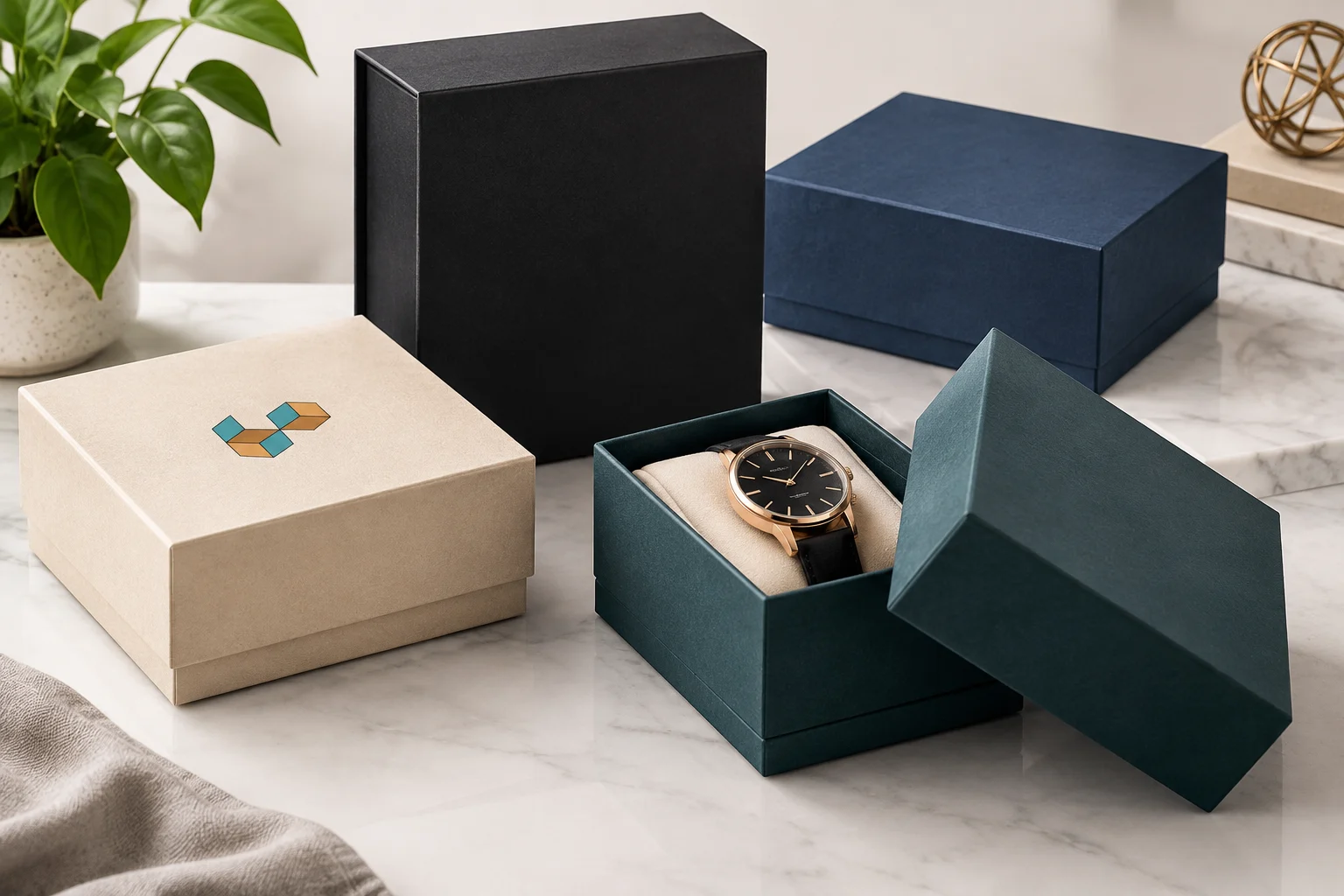
The value comes from a combination of factors working together. A thicker board protects the product physically, while the outer finish and printing shape how the product is judged visually. Businesses weighing their options can browse the rigid box range to compare how these structural and finishing differences show up across various formats. Rigid box packaging also tends to hold its shape through repeated handling, which matters for retail displays and for gifting, where the box is often kept and reused. When protection, design, and branding line up, the packaging stops being a cost and starts working as part of the product experience.
Stronger Product Protection From Box Structure
The thick walls used in rigid boxes are what set them apart from folding cartons. This extra board thickness resists pressure, bending, and crushing far better than a single layer of card. For fragile or high-value items, that structural strength is not optional. Cosmetics in glass containers, electronics with sensitive components, and jewelry with delicate settings all benefit from a box that holds its shape under stress. This is where durable product packaging earns its reputation, since it protects the product through warehouse handling, transit, and shelf storage without losing its form.
A Better First Impression Before Opening
Before a customer touches the product, they see the box. A rigid box with a clean structure, balanced proportions, and a well-printed exterior creates an impression of quality before anything is revealed. This matters both on a retail shelf, where a box competes for attention next to other products, and during an unboxing moment, where the visual reveal often shapes how the buyer feels about the purchase. Presentation and protection work together here, since a box that looks premium but falls apart in the hand undermines the very impression it was meant to create.
How Custom Rigid Boxes Are Made for Your Product
Understanding custom box manufacturing helps buyers make better decisions before placing an order. A rigid box moves through several distinct stages, and each one affects how the finished box looks, performs, and fits the product it is meant to hold.
Start by Defining Product Size and Box Structure
Every rigid box begins with accurate measurements of the product it will hold, including its height, width, depth, and any irregular shape. This step also decides the opening style, whether that's a lift-off lid, a hinged lid, or a drawer format. Getting this stage right matters because an oversized box wastes material and leaves room for the product to shift, while an undersized box risks damaging what's inside.
Select the Board and Outer Cover Materials
The next stage involves choosing the board thickness and the outer wrap. Chipboard and greyboard are the common choices for the rigid core, and the outer paper or wrap determines how the finished surface looks and feels. These rigid packaging materials influence strength, weight, and how the box takes printing and finishing later in the process.
Build the Custom Structural Design
With size and materials confirmed, the structural design comes together. This includes deciding between a two-piece structure, a drawer-style slide, a magnetic closure, or another format. The structure should match how the customer will actually use the box, not just how it looks in a rendering.
Add Printing and Brand Design Details
Once the structure is locked in, printing and design elements are applied. Logos, brand colors, typography, and any supporting artwork are placed across the surface. This is where custom printed rigid boxes take shape, turning a plain structure into something that clearly belongs to a specific brand.
Add Inserts for Product Fit and Protection
Inserts are built to match the exact shape of the product, using foam, cardboard, or molded paper depending on what's being packed. A good insert stops the product from shifting during transit and often improves how the product is presented when the box is opened.
Apply Finishes and Assemble the Box
Finishing touches such as foil stamping, embossing, debossing, spot UV, or a soft-touch laminate are applied at this stage. These choices affect both the visual result and the final cost, so they are usually selected based on how premium the product positioning needs to be.
Check Quality Before Boxes Reach the Customer
Before boxes leave production, they go through checks for size accuracy, print quality, structural strength, closure function, and insert fit. This step matters because even a small inconsistency, like a lid that doesn't sit flush or a slightly off-register print, can undercut the branded experience the box was built to deliver.
How Rigid Box Design Shapes the Customer Experience
Design choices do more than decorate a box. They influence how a customer feels about the product before, during, and after opening it, which makes custom packaging design one of the more consequential decisions in the entire process.
Match Box Design With Product Positioning
A premium product needs packaging that reflects that positioning consistently. Color choices, typography, logo placement, and overall visual balance should all point in the same direction as the product itself. Personalized rigid packaging that aligns with a brand's existing identity reinforces trust rather than creating a disconnect between the product and the box it arrives in.
Make Opening and Handling Feel Natural
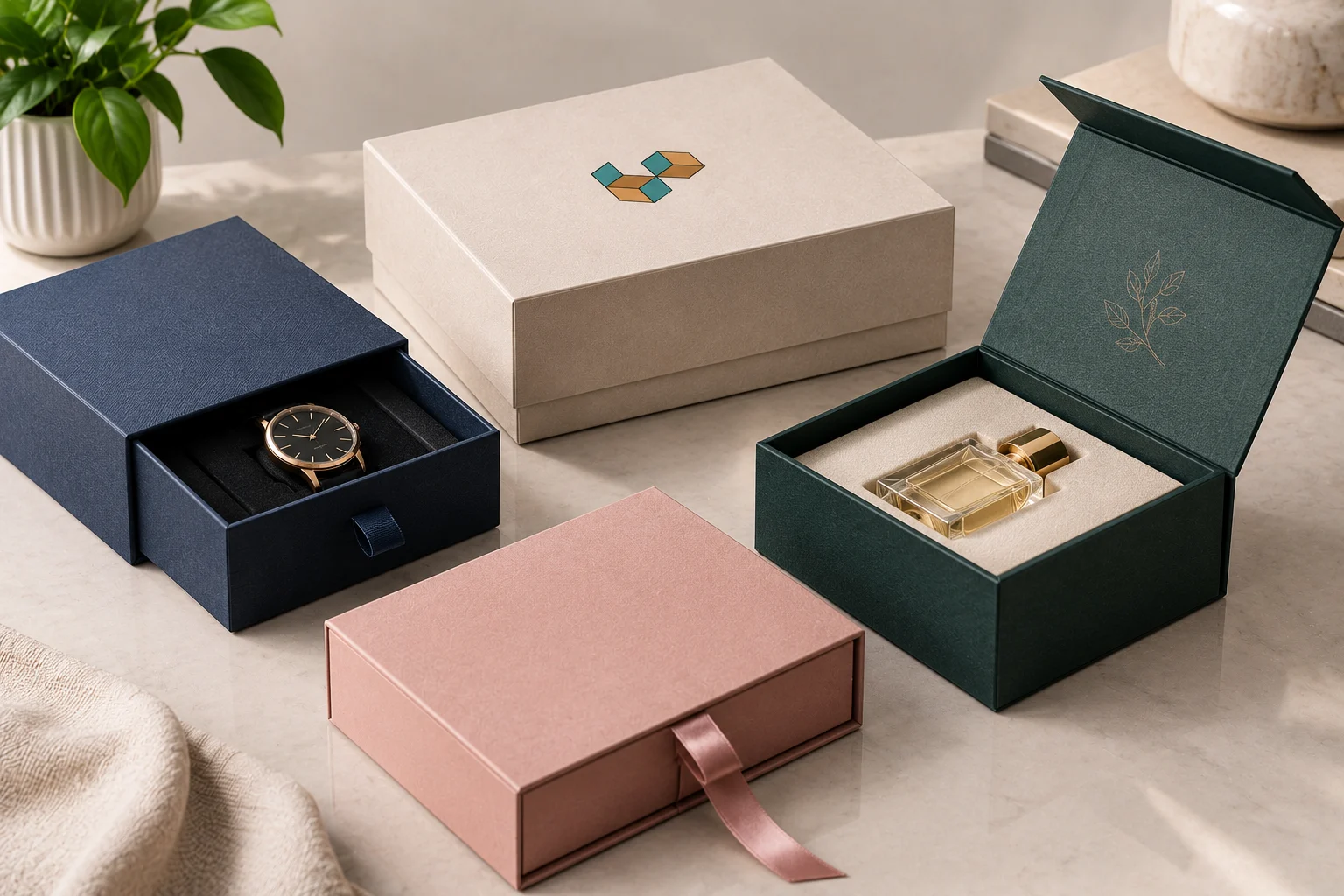
How a box opens matters as much as how it looks. A magnetic closure lid, a drawer-style base, or a hinged lid each create a different physical interaction, and that interaction becomes part of how the customer experiences the product. A box that opens smoothly, with inserts that hold the product securely, feels more considered than one that's simply functional.
Which Products Benefit Most From Rigid Box Packaging
Not every product needs rigid packaging, but for several categories, the benefits are significant and easy to see in practice.
Cosmetics and Beauty Products
Skincare, makeup, and fragrance products often carry a premium price point, and rigid product boxes reinforce that positioning. Custom inserts hold bottles and jars securely, while the outer presentation supports the high-end feel these products are usually sold at.
Jewellery and Small Valuable Products
Small, valuable items need secure inserts that keep them from moving or getting scratched. Rigid structures paired with fitted foam or velvet-lined inserts keep delicate pieces in place while presenting them attractively when the box is opened.
Electronics and Premium Accessories
Electronics and accessories need protection against pressure and movement during shipping. Custom inserts shaped around the exact product dimensions prevent shifting, while the rigid outer shell resists the kind of compression that can damage sensitive components.
Food, Confectionery and Gift Products
Premium food and confectionery items rely heavily on presentation, since the packaging often communicates quality before the product is tasted. Material choice and inner protection need to suit the product, particularly for items sensitive to moisture or pressure.
Apparel, Gifts and Special Product Sets
Rigid gift boxes work well for curated sets and gifting occasions, where the box itself becomes part of the gift. A book-style box is a popular choice for this category, since its hardcover-style reveal suits the presentation gift sets are usually built around. Many of these boxes are reused by customers afterward, which extends brand visibility well past the point of purchase and supports stronger brand recall over time.
How Rigid Boxes Protect Products During Handling
Protection is one of the clearest, most measurable benefits of rigid packaging. During shipping and handling, products face pressure from stacking, movement from transit, and occasional impact from drops or rough handling. A rigid box's thicker walls resist compression better than a folding carton, which helps maintain the box's shape even under stacked weight in a warehouse or delivery vehicle.
Internal support plays an equally important role. Custom inserts limit how much a product can shift inside the box, which reduces the risk of impact damage even if the outer box is jostled. Together, the structural strength of the board and the internal fit of the inserts create a packaging system that protects the product from the point it leaves the factory to the moment it reaches the customer. This combination is what makes durable product packaging a practical investment rather than just a design preference.
Choosing Materials for Stronger Rigid Box Packaging
Material selection has a direct effect on how a rigid box performs and how it's perceived. Chipboard is common for the rigid core because it offers a good balance between strength and weight, while greyboard is often used where extra rigidity is needed for heavier products. The outer wrap, whether it's a printed paper, a textured stock, or a laminated finish, determines how the box looks and feels in hand.
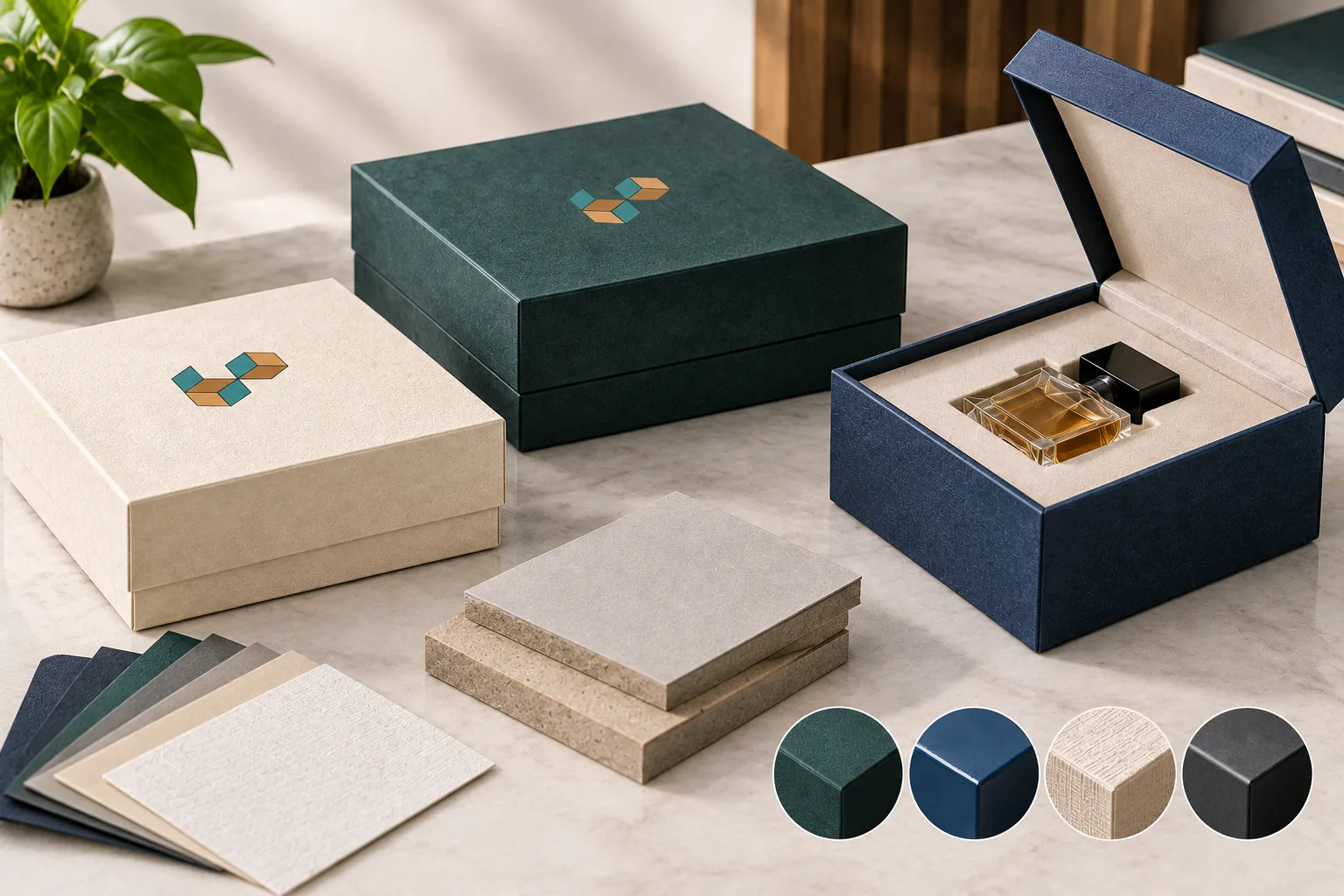
Choosing the right combination of rigid packaging materials depends on the product being packed and the impression the brand wants to create. A few practical points worth considering:
Heavier products generally need a thicker board to avoid sagging or warping over time.
Textured or uncoated outer papers tend to read as more premium than glossy stock for high-end products.
A lighter board reduces shipping weight but should never compromise the structural integrity needed for the product inside.
These choices, when matched correctly to the product, are what separate high-end packaging boxes from packaging that simply looks expensive without performing well.
Which Rigid Box Styles Fit Different Product Needs
Different box styles suit different products and different customer experiences, and choosing the right one often has more impact than any single design detail.
Two-piece lid and base boxes remain one of the most common choices because they are straightforward to produce and offer strong structural support, working well across categories from cosmetics to electronics. Magnetic rigid boxes add a closure mechanism that keeps the lid securely shut without needing tape or extra materials, which makes them a common choice for premium retail and gift packaging, while book-style formats open like a hardcover book and suit products that benefit from a dramatic reveal, such as gift sets or premium accessories.
Sliding sleeve and match-style boxes use an inner tray that slides out of an outer sleeve, offering a different tactile experience from a hinged or magnetic lid. A sliding sleeve style suits products where a slower, more deliberate reveal supports the presentation.
For businesses choosing between these formats, a few practical guidelines help:
Choose two-piece structures for straightforward products that need reliable, cost-effective protection.
Choose magnetic closures for products where a smooth, secure open-close experience matters.
Choose book-style or sliding sleeve formats for gift sets, premium accessories, or products where the unboxing itself is part of the brand experience.
How Custom Printing Builds a Stronger Brand Image
Printing is what turns a plain rigid box into recognizable branded product packaging. Logos, brand colors, typography, and supporting artwork give a customer an immediate visual cue about which company they're buying from, even before they read a label. Custom printed rigid boxes allow brands to carry their identity consistently across every product line, which builds familiarity over repeated purchases.
Consistency matters here more than complexity. A box that uses the same color palette, logo placement, and typography as the rest of a brand's materials reinforces recognition, while inconsistent printing across product lines can dilute that effect. Good printing also supports product positioning directly, since the same box structure can look budget or premium depending entirely on how the artwork is executed.
Which Finishes Make Rigid Boxes Look More Premium
Finishing touches are often what separates a good rigid box from one that feels genuinely premium. Each option changes the visual and tactile experience differently:
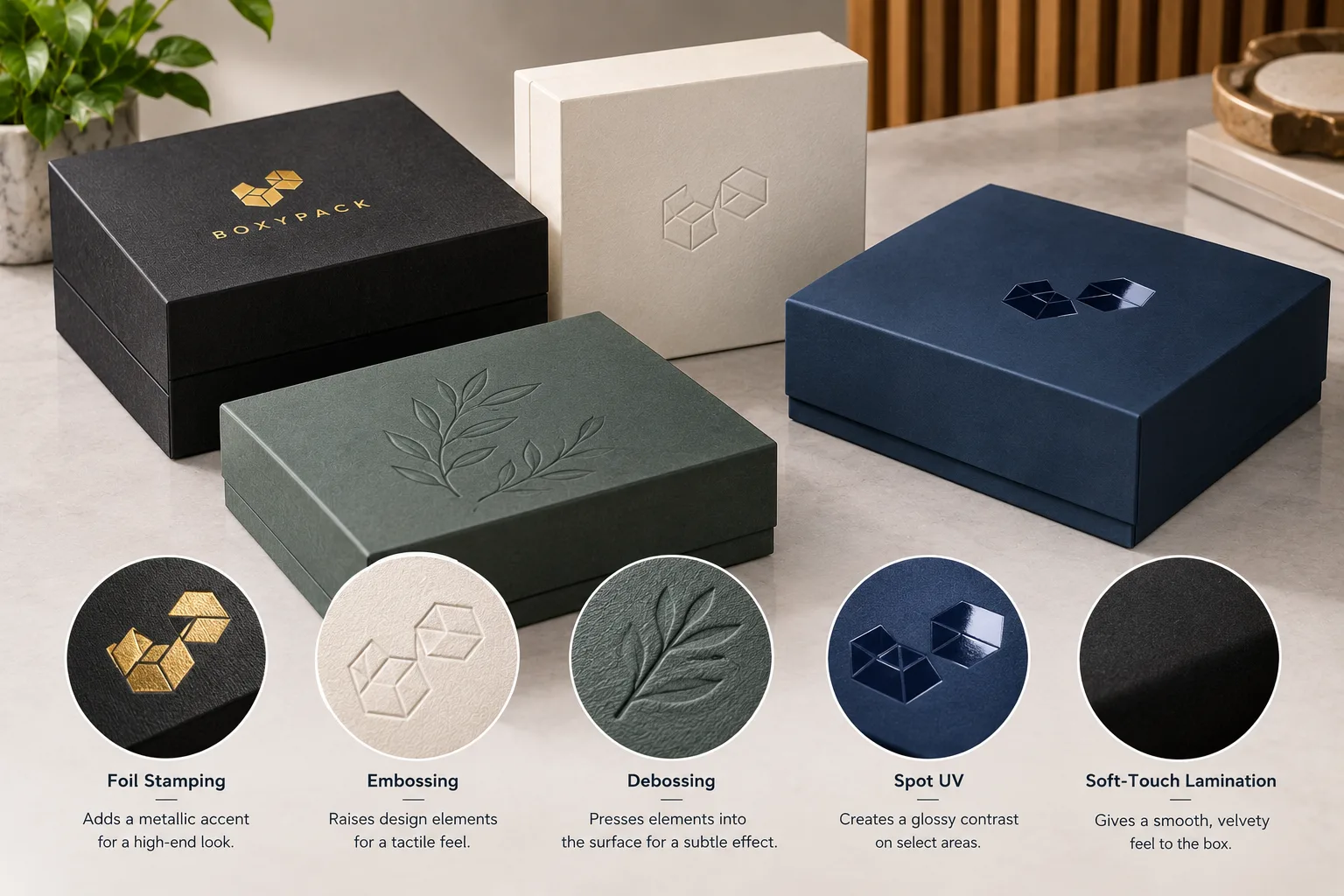
Foil stamping
Adds a metallic accent to logos or text, commonly used for luxury rigid boxes where a subtle shine reinforces a high-end feel.Embossing
Raises selected design elements off the surface, adding texture that can be felt as well as seen.Debossing
Presses elements into the surface for a more understated, tactile effect.Spot UV
Applies a glossy coating to specific areas, creating contrast against a matte background.Soft-touch lamination
Gives the box a smooth, velvety surface that feels distinct from standard printed stock.
These finishes are usually combined selectively rather than all at once, since overusing them can raise cost without adding proportional value to high-end packaging boxes.
How Inserts Improve Product Safety and Presentation
The inside of a rigid box matters just as much as the outside. Inserts are shaped to match a product's exact dimensions, which limits movement during shipping and prevents the kind of shifting that can lead to scratches, dents, or breakage. Beyond protection, a well-designed insert also improves presentation by holding the product in a fixed position that looks intentional when the box is opened.
Common insert materials include die-cut foam for fragile items, molded pulp for eco-conscious brands, and cardboard trays for lighter products. A few practical points to consider when choosing inserts for rigid product boxes:
Foam inserts work well for items with irregular shapes or delicate surfaces.
Cardboard trays are a lighter, lower-cost option suited to products that don't need heavy cushioning.
Custom-molded inserts offer the closest fit but usually involve a longer production timeline.
Inserts are also a major factor in durable product packaging, since a box can be structurally strong on the outside but still fail to protect its contents without the right internal support.
How Sustainable Rigid Boxes Reduce Packaging Waste
Sustainability has become a practical consideration for many brands choosing rigid packaging, not just an added preference. Recyclable paper materials, right-sized boxes, and reusable designs all contribute to reducing the overall waste a product's packaging generates.
Right-sizing is one of the simplest ways to cut waste, since an oversized box uses more material and often requires extra filler to keep the product secure. Choosing recyclable rigid packaging materials for the outer wrap, rather than laminates that are harder to process, also supports easier end-of-life disposal. A few practical recommendations for brands considering this direction:
Size boxes as closely as possible to the product to reduce material use and shipping volume.
Choose recyclable or FSC-certified paper stock where the finish allows it.
Design reusable structures for gift and premium boxes, since customers keeping the packaging reduces the number of boxes that end up discarded immediately.
These choices don't need to compromise the premium feel of a rigid box. In many cases, uncoated, textured recyclable stock reads as more upscale than a heavily laminated alternative.
What Factors Affect Custom Rigid Box Costs
Rigid box pricing varies based on several interconnected factors, and understanding them helps buyers interpret quotes more accurately. The main factors include:
Size and structure
Larger or more complex structures require more material and assembly time.Board thickness
Heavier board costs more but offers greater protection.Order quantity
Wholesale rigid boxes typically bring the per-unit cost down significantly at higher volumes.Printing complexity
More colors and detailed artwork increase production time and cost.Inserts
Custom-molded inserts cost more than simple cardboard trays.Finishes
Foil, embossing, and soft-touch coatings all add to the base price.
None of these factors work in isolation. A small, simply printed box with a basic insert will always cost less than a large, heavily finished box with a custom-molded interior, regardless of the quantity ordered.
How to Control Costs Without Losing Box Quality
Managing packaging costs doesn't have to mean cutting corners on quality. A few practical strategies help brands keep spending reasonable while still getting rigid packaging that performs well:
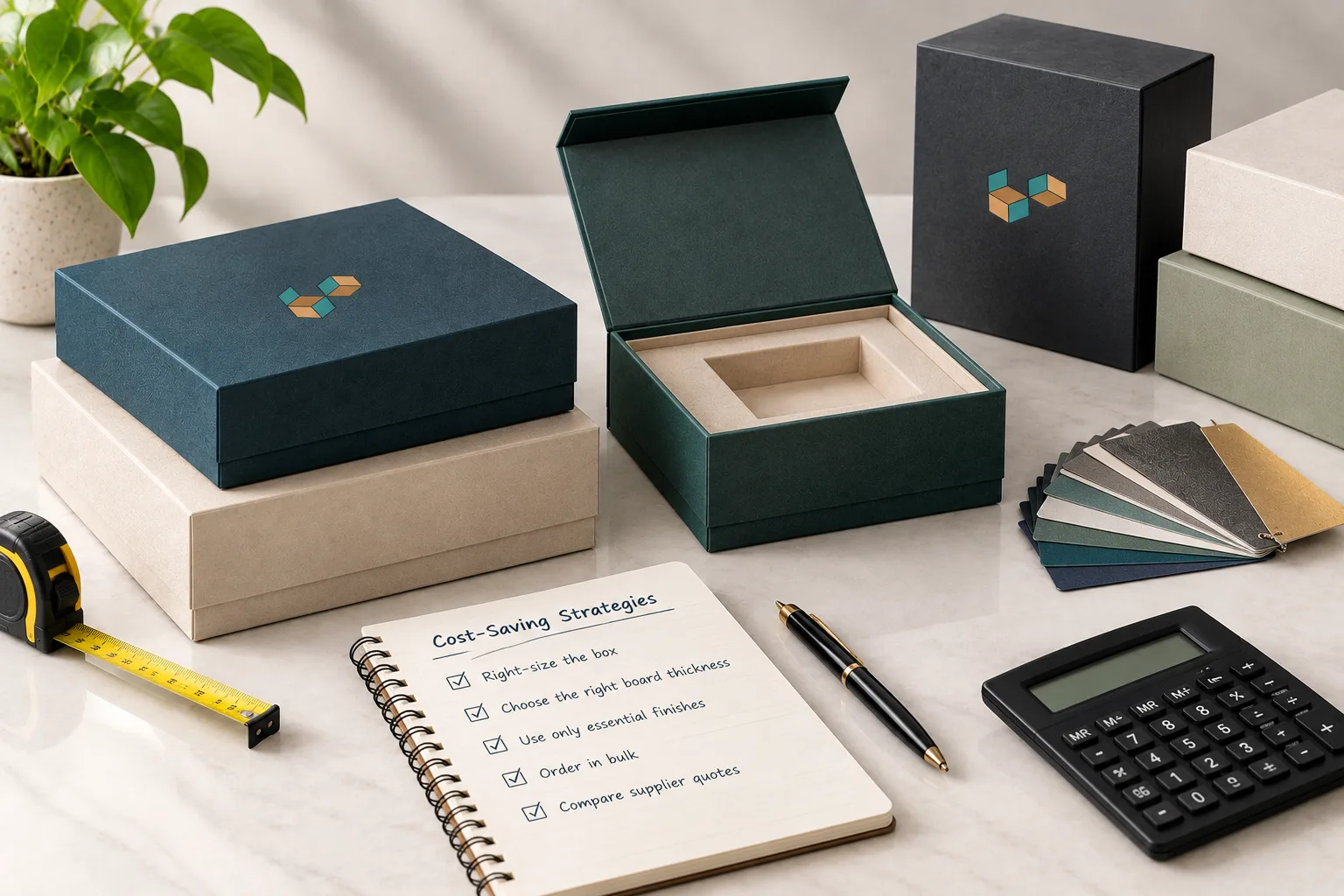
Right-size the box to the product to avoid paying for unnecessary material.
Choose board thickness based on actual protection needs rather than defaulting to the heaviest option available.
Limit finishes to the elements that matter most for brand recognition, rather than applying every available option.
Order in efficient quantities, since wholesale rigid boxes often bring meaningful savings once volume increases.
Compare supplier quotes carefully, since pricing structures can vary significantly for the same specifications.
These steps help brands get genuinely useful custom rigid packaging without spending on features that add little practical or visual value.
Rigid Boxes vs Folding Boxes for Product Packaging
Choosing between rigid and folding box formats often comes down to how a product is priced, positioned, and shipped.
Feature | Custom Rigid Boxes | Folding Boxes | Best Use |
Structural strength | Thick, sturdy board holds shape under pressure | Thinner stock, less resistant to crushing | Rigid boxes for fragile or high-value items |
Presentation | Premium look and feel, strong shelf presence | Functional but less distinctive | Rigid boxes for premium and gift products |
Storage before use | Ships pre-assembled, takes up more space | Flat-packed, easy to store in bulk | Folding boxes for high-volume, space-limited storage |
Customization | Wide range of structures, closures, and finishes | Fewer structural options, mainly print-based customization | Rigid boxes for brand-defining packaging |
Shipping cost | Heavier and bulkier, higher shipping cost | Lightweight and flat, cheaper to ship | Folding boxes for cost-sensitive, high-volume shipping |
Overall cost | Higher per-unit cost | Lower per-unit cost | Rigid boxes where perceived value matters most |
The right choice depends on the product itself. Folding boxes make sense for high-volume, cost-sensitive products where flat storage and shipping efficiency matter most. Rigid box packaging is worth the added cost when a product's positioning depends on protection and presentation working together, particularly for premium retail packaging where first impressions carry real weight.
How to Avoid Common Custom Rigid Box Mistakes
A few recurring mistakes tend to show up in rigid box projects, and each one can add unnecessary cost or reduce product protection:
Inaccurate sizing:
A box that's too large wastes material and leaves room for the product to shift, while one that's too tight can make packing and unpacking difficult.
Weak or missing inserts:-
Skipping proper inserts to save cost often leads to product movement and damage during shipping.
Excessive decoration:
Piling on multiple finishes at once can raise cost without adding proportional visual impact.
Unclear artwork files:
Low-resolution or incorrectly formatted print files can lead to blurry logos or misaligned designs.
Poor product fit:
Designing the box without testing it against the actual product can result in a structure that looks right on paper but doesn't work in practice.
Careful custom packaging design at the planning stage avoids most of these issues before production even begins.
How to Plan Custom Rigid Boxes for Retail Success
Bringing structure, material, design, and cost decisions together is what separates a packaging plan that works from one that causes problems later. Before approving a rigid box for production, it helps to check the following:
Confirm the box structure matches the product's shape, weight, and handling needs.
Choose board thickness and outer materials appropriate for the product's value and fragility.
Align printing and design with existing brand identity for consistency across product lines.
Select inserts that hold the product securely without adding unnecessary bulk.
Limit finishes to those that genuinely support the product's positioning.
Order a quantity that balances upfront cost against long-term storage needs.
Getting these elements right from the start makes a meaningful difference for retail product boxes, since inconsistencies discovered after production are far more costly to fix than issues caught during planning. A well-planned box supports premium retail packaging goals while keeping the project within a realistic budget.
Final Thoughts on Adding Value With Rigid Boxes
Custom rigid boxes add value in ways that go beyond simply holding a product. They protect what's inside through handling and shipping, shape how a customer perceives the product before it's even opened, and carry a brand's identity consistently across every unit produced. Boxy Pack understands that none of these benefits come from a single decision. They come from getting the structure, materials, design, and finishing right together, with each choice supporting the others rather than working in isolation.
The right box for one product isn't necessarily right for another, which is why balancing product needs, brand goals, and budget matters more than chasing every available feature. Custom rigid packaging works best when it's built around what a specific product actually requires, not around a generic template. If you're weighing packaging options for an upcoming product line, it's worth exploring the available box styles and structures to see which one fits your product and your brand goals before committing to a production run.
FAQs About Custom Rigid Boxes and Product Packaging
This section answers some of the practical questions that come up most often when brands are considering custom rigid boxes for their products.
What products are best suited to custom rigid boxes?
Products that benefit most from rigid packaging tend to be fragile, high-value, or positioned as premium, including cosmetics, jewelry, electronics, and curated gift sets. These categories gain the most from the added protection and presentation rigid structures provide.
Can custom rigid boxes be made in any size or shape?
Rigid boxes can be built around nearly any product dimension, including irregular shapes, as long as the structure is designed around accurate measurements from the start. Custom molds and inserts allow for a close, secure fit.
How long do custom rigid boxes usually last?
Because of their thicker board construction, rigid boxes generally hold their shape and structural integrity far longer than folding cartons, which is part of why many customers keep and reuse them after the original product has been used.
Are rigid boxes a good choice for premium retail products?
Yes. The combination of strong structure, quality printing, and premium finishing options makes rigid boxes particularly well suited to premium retail packaging, where first impressions influence purchasing decisions.
Can rigid boxes be made with recyclable materials?
Many rigid boxes can be produced using recyclable paper stock and boards, particularly when laminated finishes are avoided in favor of uncoated or textured papers that are easier to recycle.
What is the best rigid box style for luxury products?
Magnetic closure and book-style boxes are commonly chosen for luxury products, since both formats create a deliberate, premium unboxing experience that supports higher-end positioning.
How can businesses reduce the cost of custom rigid boxes?
Right-sizing the box, choosing board thickness based on actual protection needs, limiting finishes to essential elements, and ordering in efficient quantities are the most effective ways to manage cost without sacrificing quality.
Ready to Get Started?
Discover our custom packaging solutions and bring your brand to life with premium boxes.