
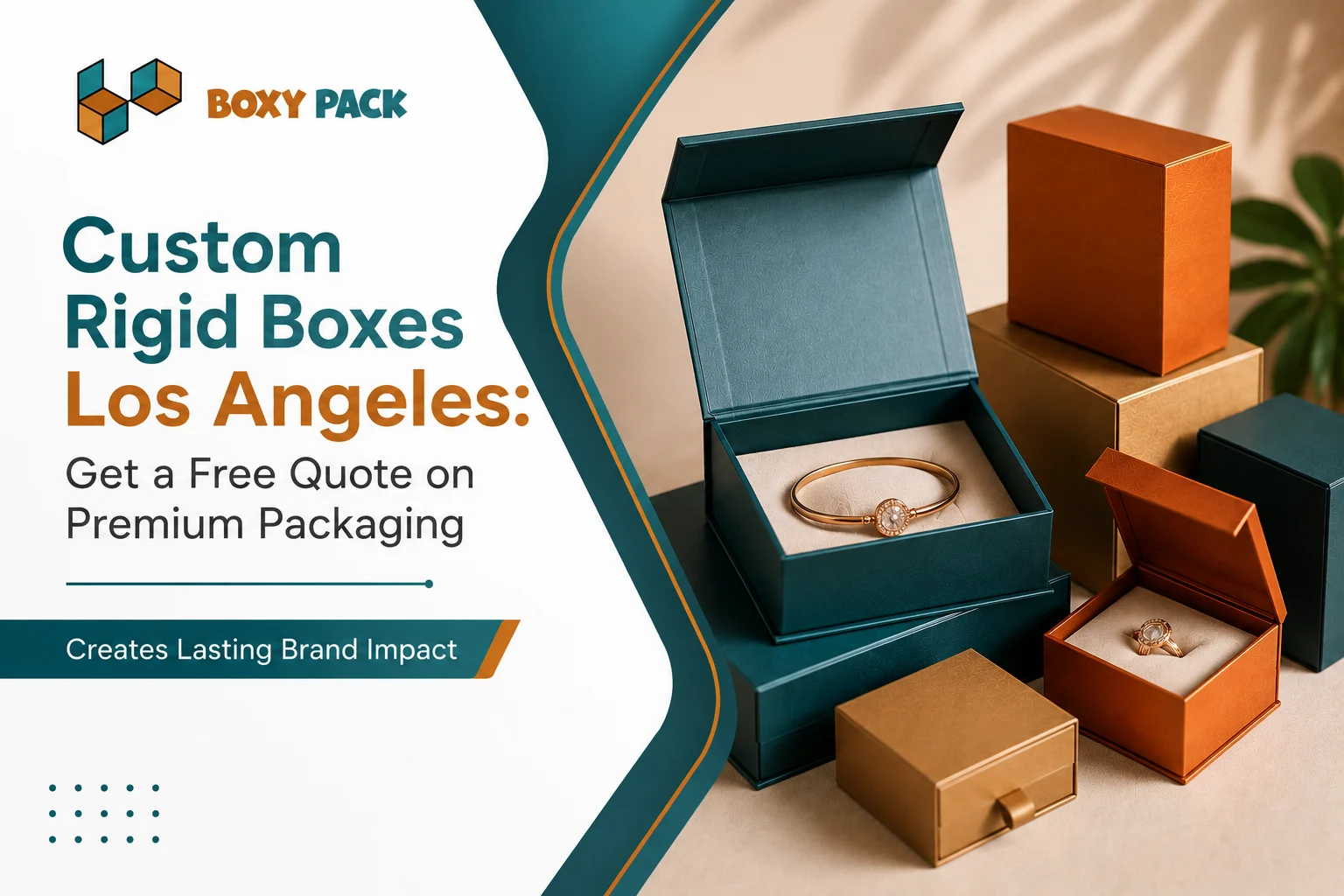
A plain box rarely earns a second look, but a sturdy, well-finished one can turn a simple unboxing moment into something a customer remembers and shares. For growing brands, the packaging a product arrives in often says as much about quality as the product itself, and cutting corners here tends to cost more in returns, damage, and lost trust than it saves.
Whether the goal is protecting a fragile product, standing out on a crowded shelf, or giving an online order a moment worth remembering, the right packaging decision usually comes down to understanding the options clearly rather than guessing. This guide breaks that decision down step by step, so choosing between materials, sizes, and finishes feels less like a gamble and more like a straightforward business choice.
What Makes Our Custom Rigid Boxes Los Angeles Stand Out
Our custom rigid boxes Los Angeles solutions are designed to make a strong first impression. Each box is made from thick, non-collapsible board, then laminated, wrapped, and hand-finished for a premium look and lasting durability. Whether for jewelry, skincare, or limited-edition products, every box is customized to match your brand. It offers excellent product protection during shipping while maintaining its shape and appearance. With custom sizes, finishes, inserts, and closures, each box is built to fit your product perfectly rather than relying on a standard design.
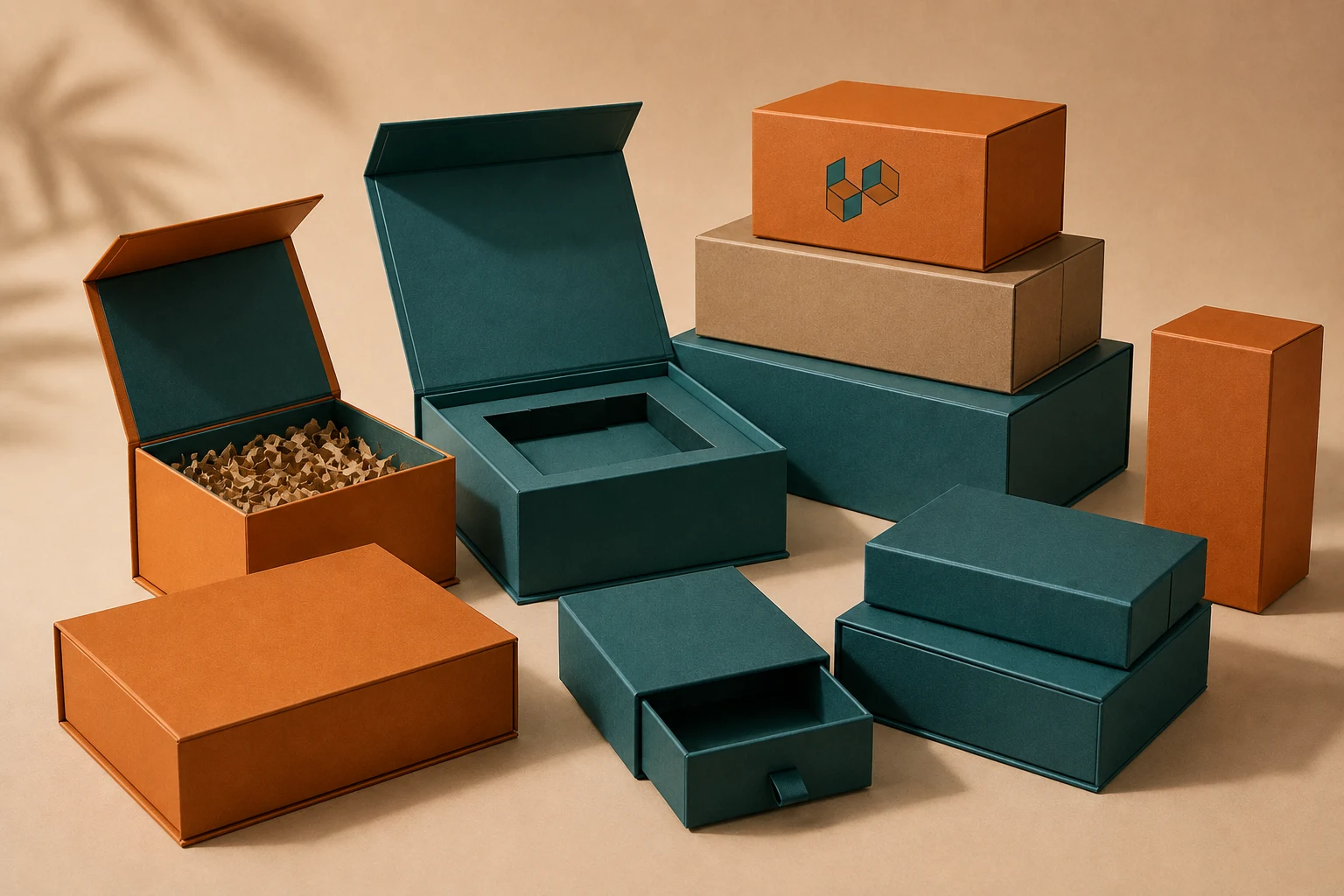
Like any packaging choice, it comes with trade-offs worth weighing honestly. Rigid boxes cost more per unit than folding cartons and typically take a bit longer to produce because of the extra construction steps involved. In exchange, businesses get a box that survives rough handling, reinforces brand identity at the point of delivery, and rarely needs to be replaced due to crushing or tearing. For products where presentation drives the sale, that trade-off tends to work heavily in the brand's favor.
Why Businesses Are Switching To Sturdier Premium Packaging
Retail expectations have shifted, and packaging is one of the clearest signals customers use to judge quality before they've even opened a product. A box that feels flimsy raises doubts, while one that feels solid builds confidence before a single word of marketing copy is read. This shift is especially visible among brands selling online. where premium packaging has become part of the overall customer experience rather than just a way to protect products during shipping.
There's also a competitive angle worth noting. As more brands within the same category upgrade their packaging, standard cartons start to look outdated by comparison, even if the product inside hasn't changed at all. Businesses that make the switch early often see it reflected in how customers describe the brand, using words like premium or high-quality well before those customers have used the product itself. For brands positioning themselves as premium, the packaging now has to match that positioning at every touchpoint, from the first unboxing photo to the box sitting on a shelf months later.
Breaking Down What Rigid Box Materials Are Actually Made Of
Understanding the build of a rigid box helps explain both its strength and its cost. These boxes aren't a single material but a layered construction, and each layer plays a specific role in how the finished piece performs.
The Core Board That Gives Boxes Their Strength
At the center is a dense paperboard, usually measured between 1.5mm and 3mm thick, which gives the box its rigidity and resistance to bending or crushing. Thicker board is typically chosen for heavier products or boxes that need to survive repeated opening and closing without warping.
The Wrap And Finish That Define Its Look
The core is wrapped in decorative paper, textured stock, or specialty film, which is where branding, color, and print detail come through. This outer layer can be matte, glossy, soft-touch, or textured, and it's finished with lamination that protects the surface from scuffs, moisture, and fading over time.
Choosing the Right Materials for Long-Lasting Protection
Picking the right base material shapes everything from how a box feels in hand to how well it survives a cross-country shipment. The same principles behind the materials apparel boxes also apply to rigid packaging, where selecting the right board and finish improves durability, appearance, and long-term product protection.
Material Option | Best For | Typical Feel |
Grey Board (Chipboard) | Standard rigid boxes, general retail | Firm, cost-effective |
Kraft Board | Eco-conscious brands, natural aesthetic | Textured, earthy |
Specialty Laminated Board | Luxury cosmetics, jewelry, gifting | Smooth, premium sheen |
Textured Wrap Paper | High-end unboxing experiences | Tactile, refined |
Material selection isn't just an aesthetic decision; it directly affects durability, weight, and unit cost. Grey board remains the most common base because it balances strength with affordability, while specialty laminated boards are reserved for products where the packaging itself is part of the perceived value. Brands leaning into sustainability messaging often pair kraft board with soy-based inks and recyclable inserts, which keeps the box functional without contradicting the brand's environmental claims.
How Custom Sizing And Design Options Work For Your Brand
No two products fit the same box well, which is why sizing and design flexibility matter as much as material quality. A box built to exact product dimensions reduces wasted space, cuts shipping costs, and prevents contents from shifting during transit.
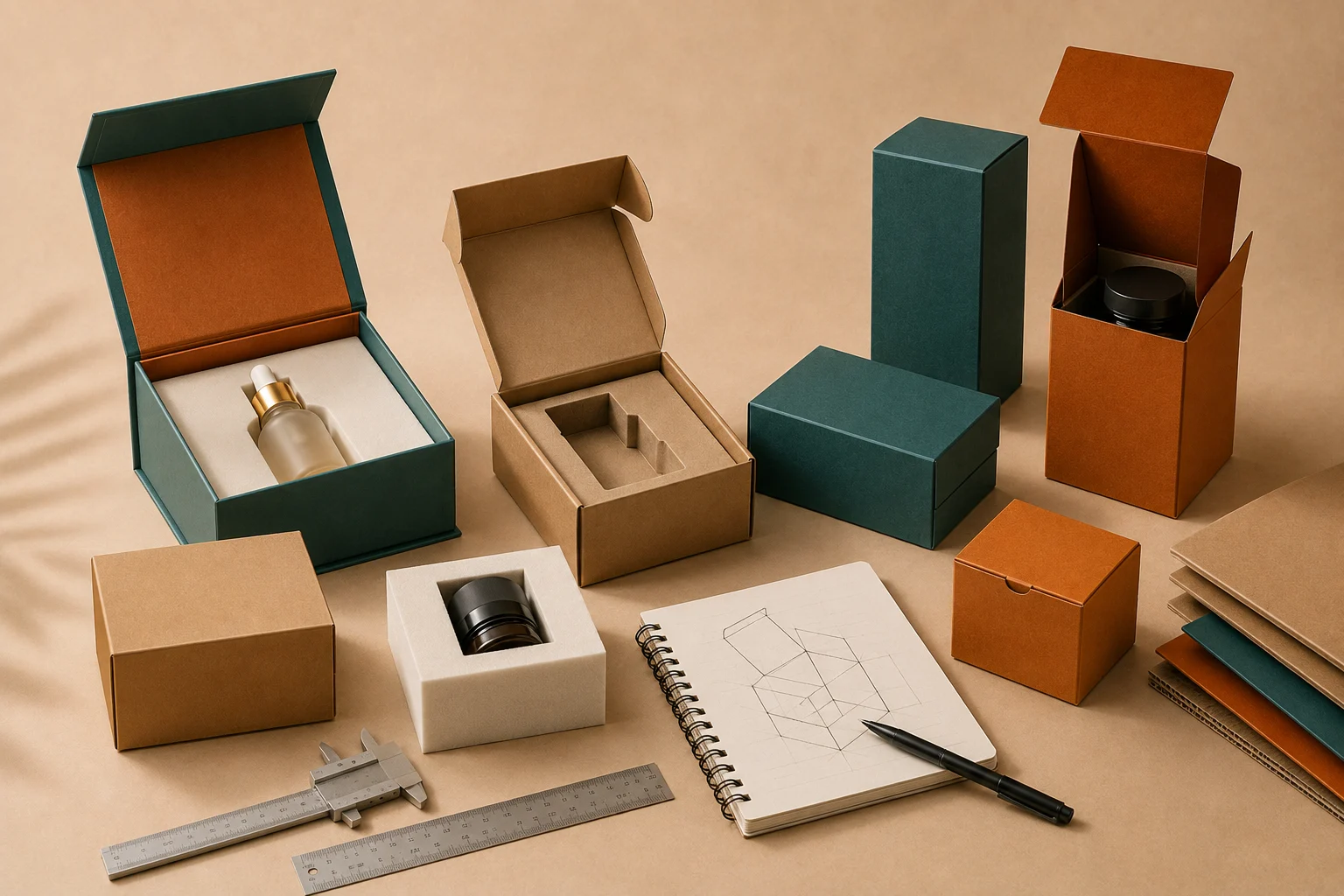 Matching Box Dimensions To The Actual Product
Precise measurements are taken from the product itself, including any inserts, dividers, or padding needed to keep it stable. This step alone prevents the two most common packaging complaints: products arriving damaged or looking lost inside an oversized box.
Layering Print, Color, And Texture Choices
Beyond size, brands choose finishes like foil stamping, embossing, spot UV, or debossed logos to create texture and visual hierarchy on the box surface. These details are typically applied selectively, highlighting a logo or key design element rather than covering the entire surface.
Industries That Rely Heavily On High-End Rigid Packaging
Rigid boxes show up across a wide range of industries, but they tend to cluster around products where presentation is tied directly to perceived value. Cosmetics, skincare, jewelry, and watch brands use them to protect small, high-value items while giving the packaging enough visual weight to match the price point, especially for gift sets and limited releases where the unboxing experience is part of the product story.
Beauty, Jewelry, And Lifestyle Product Categories
Cosmetics and skincare brands lean on rigid boxes to reinforce a premium positioning at the exact moment a customer forms their first impression of a product line. Jewelry and watch makers favor the same construction because it holds delicate inserts securely while still photographing well for retail and social display. Premium Candle Boxes also benefit from rigid packaging, helping protect fragile products while enhancing their gift-ready appeal.
Tech, Food, And Apparel Product Categories
Electronics and tech accessory companies use rigid boxes for flagship products, where a sturdy box signals build quality before the device is even removed from the packaging. Food, beverage, and apparel brands apply the same approach to gifting lines and limited drops, while Style Rigid Boxes offer an excellent option for premium corporate gifts, luxury kits, and special product collections that need a distinctive presentation.
Understanding The Real Cost Behind Premium Box Packaging
Pricing for custom rigid boxes Los Angeles depends on several factors working together rather than a single flat rate. Board thickness, wrap material, print complexity, box size, and order volume all influence the final unit cost. Board thickness, wrap material, print complexity, box size, and order volume all move the final unit price up or down, which is why two boxes that look similar on the surface can differ significantly in cost.
Smaller orders naturally carry a higher per-unit price because setup and tooling costs are spread across fewer pieces, and that per-unit cost drops noticeably as order volume increases, which is part of why many businesses batch their packaging orders around larger production runs. Custom finishes like foil stamping or magnetic closures add incremental cost per box, and shipping distance and box weight factor in too, since rigid boxes are heavier than folding cartons and take up more space per unit during freight. Getting an accurate number usually requires sharing exact dimensions, quantity, and finish preferences so pricing reflects the actual specification rather than a rough estimate, since two boxes that look nearly identical can carry very different price tags once material and finish choices are factored in.
Making Sense Of Minimum Order Quantities And Bulk Pricing
Minimum order quantities exist because rigid box production involves custom tooling and setup that isn't cost-effective at very low volumes. That said, the threshold varies depending on box complexity and supplier capacity, and it's worth understanding before assuming a small business can't access custom packaging.
Standard minimum orders typically start in the low hundreds of units, though this can flex based on box size and finish.
Bulk pricing tiers usually kick in noticeably once orders move into the thousands, rewarding brands that can forecast demand ahead of time.
Businesses launching a new product often start closer to the minimum threshold to test market response before committing to a larger production run, which limits upfront risk while still giving access to the same material quality and finishing options used in larger orders. It's also worth asking whether a supplier offers tiered minimums based on box complexity rather than a single flat number across every product type, since a simple two-piece box with basic printing often has a lower minimum than one requiring magnetic closures, foil stamping, and custom inserts. Brands planning multiple SKUs sometimes combine smaller quantities of several designs into one larger production run to meet a supplier's overall minimum while still keeping individual product runs manageable.
The Manufacturing Journey From Concept To Finished Box
Producing a custom rigid box involves several distinct stages, and understanding this timeline helps businesses plan launches without last-minute packaging delays.
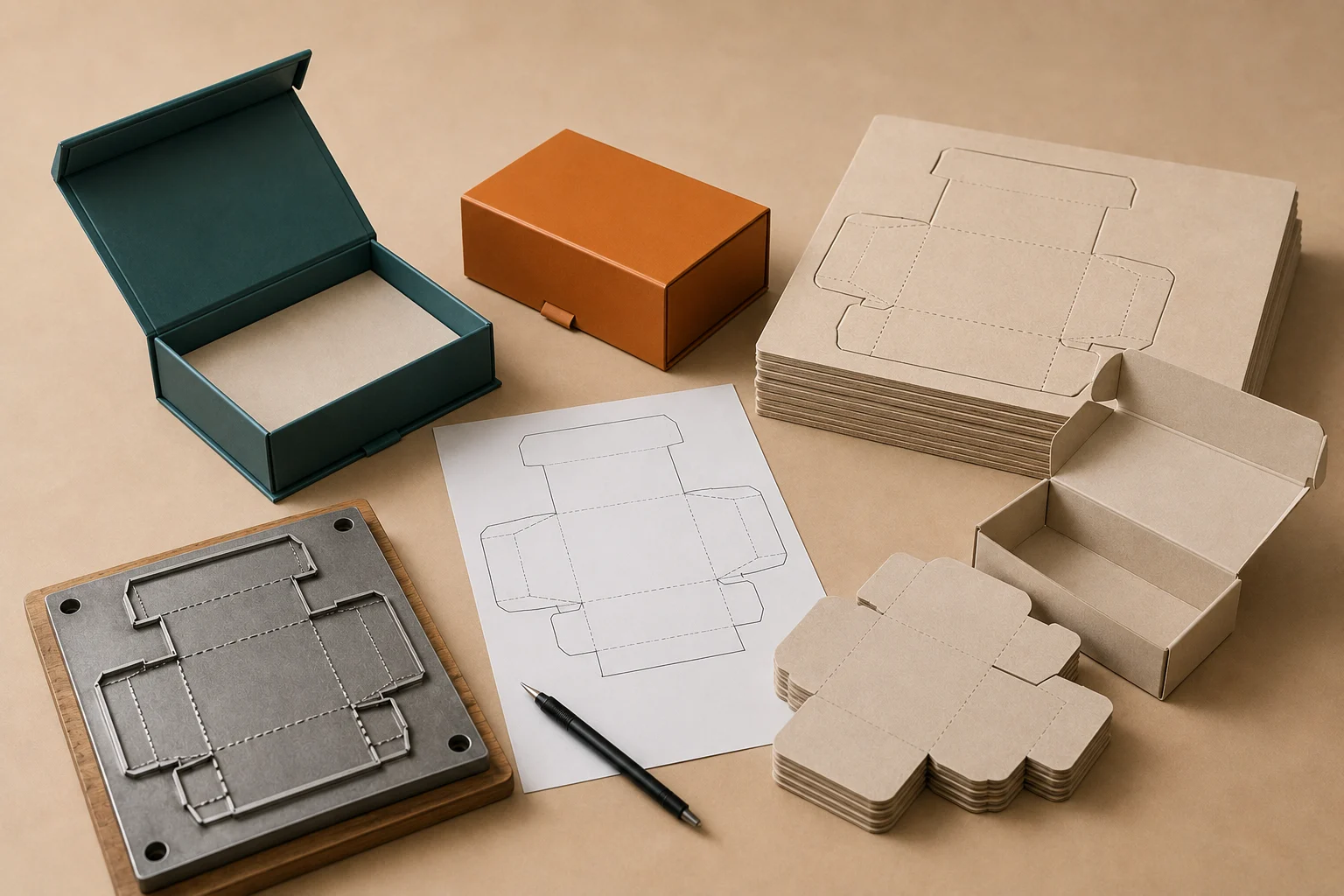 From Design Approval To Die-Cutting
Once a design is finalized, a die-line is created to match exact product dimensions, followed by cutting and scoring the core board into the required shape. This stage sets the structural foundation for everything that follows.
Wrapping, Assembly, And Final Quality Checks
After cutting, the board is wrapped with the chosen print material, assembled by hand or machine depending on complexity, and inspected for alignment, durability, and finish quality before packing for shipment. Full production timelines commonly run several weeks from approved design to delivery, depending on order size.
Rigid Boxes Versus Folding Cartons Which Should You Pick
The choice between rigid boxes and folding cartons usually comes down to what the product needs and what impression the brand is trying to create. Folding cartons are lighter, cheaper, and collapsible for storage, making them practical for high-volume, lower-cost items where shipping efficiency matters most. Rigid boxes trade that efficiency for strength, structure, and a heavier, more premium feel that doesn't fold flat, making them better suited to products where the packaging itself contributes to perceived value or where fragile contents need consistent protection through multiple handling points.
Many brands actually use both, reserving rigid boxes for flagship or gift-tier items while using folding cartons for everyday inventory, which balances cost against presentation depending on the product line. A useful way to decide is to ask whether the packaging itself needs to do any selling: if a product sells primarily on price and volume, a folding carton usually makes more sense, but if the box is part of the reason someone pays a premium price, the added cost of a rigid build tends to pay for itself.
The Real Pros and Cons of Custom Rigid Box Packaging
Custom rigid boxes combine premium protection with branded presentation, making them a popular choice for luxury products. High-quality rigid packaging boxes allow businesses to create unique packaging that reflects their brand identity while keeping products secure during storage and shipping. However, they also require a higher investment and longer production time than standard packaging.
Pros | Cons |
Offer premium product protection with a strong and durable structure. | Higher manufacturing costs than standard packaging boxes. |
Fully customizable with unique sizes, colors, finishes, and inserts. | Longer production time due to custom design and printing. |
Enhance brand recognition through personalized packaging. | Require more storage space because they cannot be folded flat. |
Create a memorable unboxing experience that increases customer satisfaction. | Higher shipping costs because of their rigid construction and weight. |
Ideal for luxury products such as cosmetics, jewelry, electronics, and gifts. | |
Reusable design adds value and supports a premium brand image. |
Magnetic Closures And Other Premium Finishing Touches
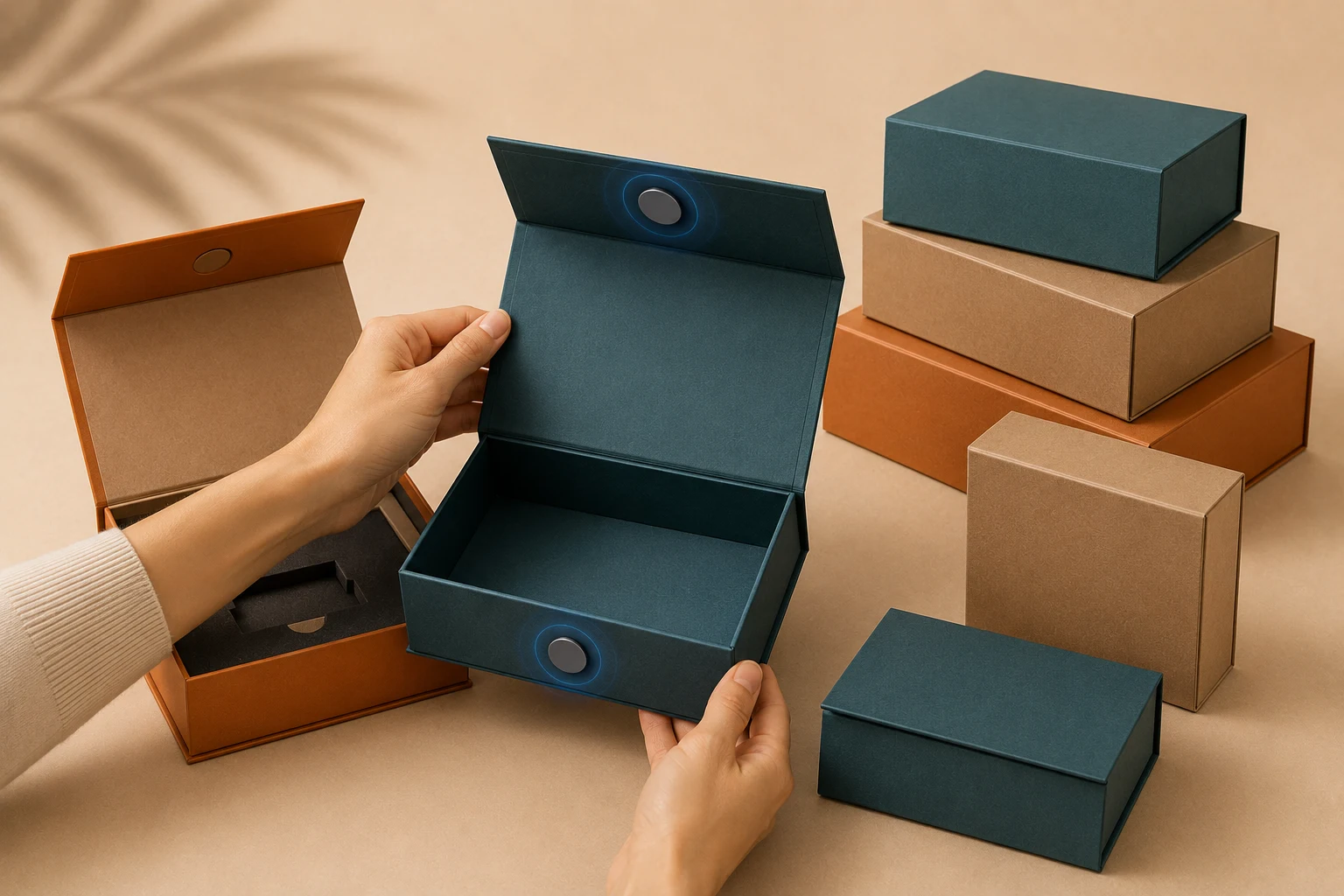
Closure style has a bigger impact on user experience than most brands expect, since it's the first physical interaction someone has with the box. Book Style Rigid Boxes are especially popular for premium presentations because their hinged opening and magnetic closure create a polished unboxing experience that customers remember.
 Why Magnetic Closures Feel Different To Customers
A magnetic flap closes with a soft, deliberate click that immediately signals quality, and it allows the box to be reopened cleanly without tearing tabs or ribbons. This makes it a popular choice for gifting and subscription products meant to be reused or displayed after opening.
Ribbon Pulls And Other Practical Alternatives
Ribbon pull mechanisms offer a similar premium feel for Two Piece Rigid Boxes, making it easy to lift the lid without damaging the print surface. Simpler friction-fit lids remain a reliable, lower-cost option when magnetic hardware isn't necessary for the product category.
Sustainable Practices Shaping Modern Packaging Choices
Sustainability has moved from a nice-to-have to an expectation for many customers, and rigid box production has adapted accordingly. Recyclable board options, water-based adhesives, and soy or vegetable-based inks now sit alongside traditional materials as standard choices rather than premium add-ons.
Brands can request FSC-certified board sourced from responsibly managed forests to align packaging claims with actual sourcing practices.
Reduced-waste die-cutting and right-sized boxes cut down on excess material without compromising structural strength.
These choices don't require sacrificing the premium feel rigid boxes are known for, since textured kraft finishes and matte laminates can still deliver a high-end look while keeping the environmental footprint lower, and removing single-use plastic windows or unnecessary lamination layers is another simple adjustment that lowers impact without changing performance. Customers increasingly notice these details, and brands that pair genuine sourcing changes with clear, honest labeling tend to build more trust than those relying on vague eco-friendly language without backing it up.
Ordering In Bulk Without Sacrificing Design Quality
Scaling up an order for custom rigid boxes Los Angeles doesn't have to mean scaling down on design detail, though it does require more upfront planning. Locking in final artwork, dimensions, and finish choices before production begins prevents costly reprints once a bulk run is underway.
Planning Production Around Inventory Needs
Forecasting demand a few weeks ahead of launch dates gives enough runway for design approval, production, and shipping without rushing quality checks. This is particularly important around seasonal peaks when manufacturing schedules fill up quickly.
Maintaining Consistency Across Larger Runs
Color matching and print consistency become more important at scale, since even small variations are more noticeable across thousands of units. Established production processes with fixed print settings help keep every box in a bulk order visually identical.
Bringing Your Brand Vision To Life With Expert Support
Turning a packaging idea into finished custom rigid boxes Los Angeles businesses can rely on works best as a collaborative process rather than a one-way order form. Sharing brand guidelines, product samples, and reference designs upfront helps translate a rough concept into a box that actually reflects the brand's identity. Many businesses discover that rigid boxes improve presentation, making products feel more valuable before customers even open the package.
Working with a team that understands both the technical side of rigid box construction and the creative side of brand presentation tends to shorten the back-and-forth considerably, and sample rounds before full production give businesses a chance to catch sizing or color issues early, which saves time and material compared to catching problems after a bulk run is already printed. Clear communication about timelines matters just as much as the design itself, since packaging is often the last piece finalized before a product launch, and looping a packaging partner in early generally leads to a smoother path from concept to finished box and a final product that feels considered rather than assembled at the last minute.
Final Thoughts On Choosing The Right Packaging Partner
Custom rigid boxes aren't just a container; they're a tangible extension of how a brand wants to be perceived from the moment a package arrives. Boxy Pack offers solutions that match different product needs and brand goals. Between material choice, sizing precision, closure style, and finishing details, there's enough flexibility to build a box that fits almost any product category and budget tier.
Businesses that get the most value from rigid packaging tend to treat it as part of the product experience rather than an afterthought tacked on before shipping. Getting the specifications right upfront, planning production timelines around real launch dates, and working with a team that can guide material and design decisions all make the difference between a box that just holds a product and one that actively sells it. A free quote is the simplest way to see how these choices translate into real numbers for a specific product line.
Quick Questions People Often Ask About Rigid Packaging
Before wrapping up, it helps to address a few things that come up repeatedly when businesses start exploring custom rigid box packaging. These are the questions that tend to shape a first order the most, from budgeting to production timing. The list below covers the most common ones worth knowing before reaching out for a quote, along with quick answers to help guide that first conversation.
What makes rigid boxes different from standard cardboard packaging?
Rigid boxes use a thick, non-collapsible board core that holds its shape under pressure, while standard cardboard packaging is thinner and designed to fold flat, making rigid boxes sturdier but heavier and more costly per unit.
How far in advance should a business order packaging before a launch?
Most businesses budget at least four to six weeks ahead of a launch date to allow time for design approval, sampling, production, and shipping without last-minute delays.
Can existing brand artwork be adapted directly onto a rigid box?
Yes, existing logos, color palettes, and design files can typically be resized and adjusted to fit the box dimensions, though some artwork may need minor tweaks for print clarity on textured or laminated surfaces.
What's the difference between a two-piece box and a hinged-lid box?
A two-piece box has a separate lid and base that lift apart completely, while a hinged-lid box keeps the lid attached at the back so it opens like a book, which is often preferred for retail displays.
Are sample boxes available before committing to a full production run?
Most suppliers offer sample or prototype boxes so the material, print quality, and fit can be reviewed before locking in a bulk order.
Ready to Get Started?
Discover our custom packaging solutions and bring your brand to life with premium boxes.