
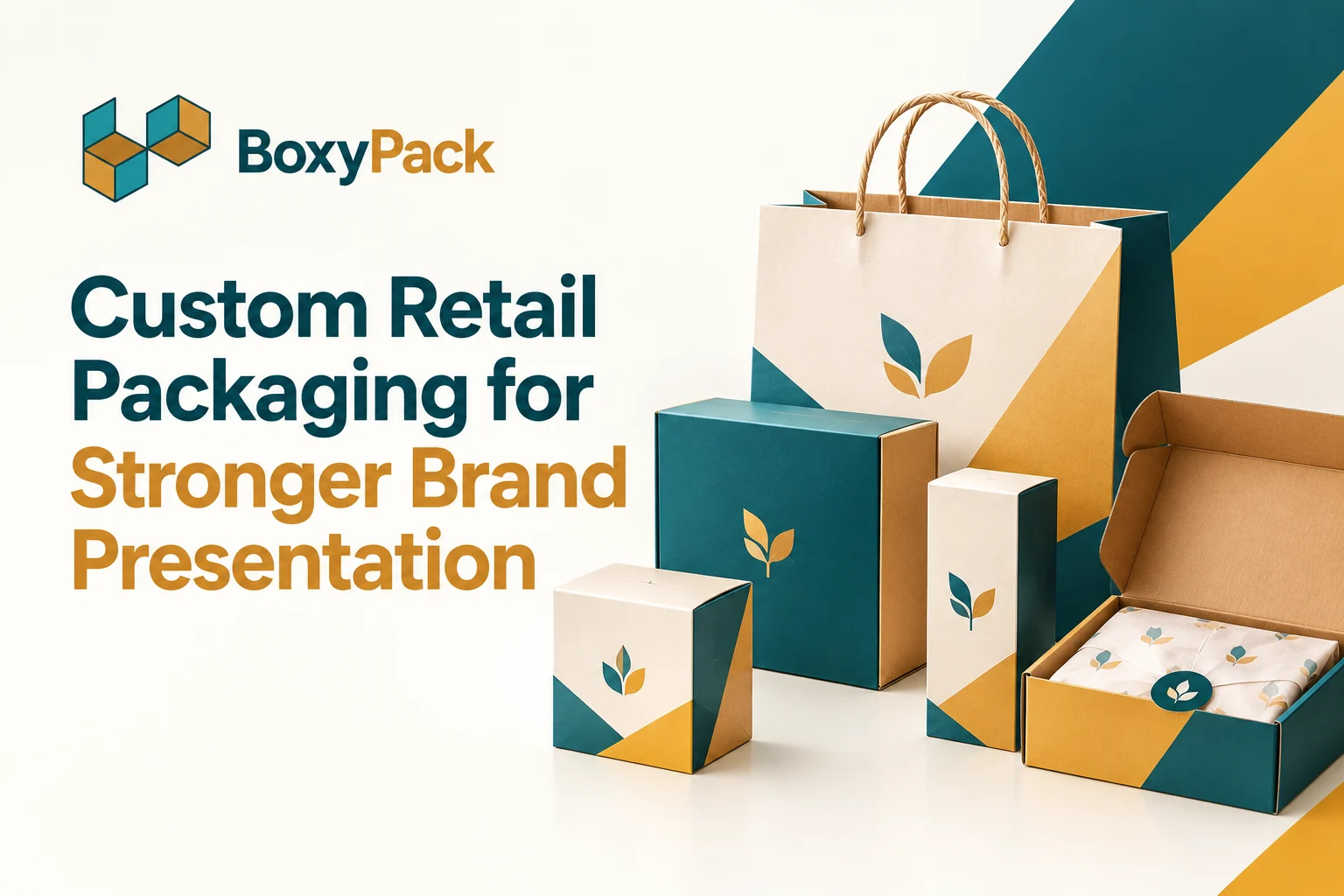
A great product can still get overlooked when it sits on a crowded shelf or arrives in a plain shipping carton. Shoppers make quick judgments, and the box in their hands is often the first thing they judge. Custom retail packaging gives a brand control over that moment, so the product looks as considered as the work behind it.
Ordinary packaging can make a high-quality item look generic or forgettable, even when what is inside is excellent. Thoughtful packaging improves product presentation, helps customers recognize the brand, protects the product, and keeps the look consistent across a range. This article covers how custom packaging works, materials, design, sizing, sustainability, costs, ordering, and the mistakes worth avoiding. Let's start with how a packaging idea becomes a finished box.
How Custom Retail Packaging Works From Idea to Box
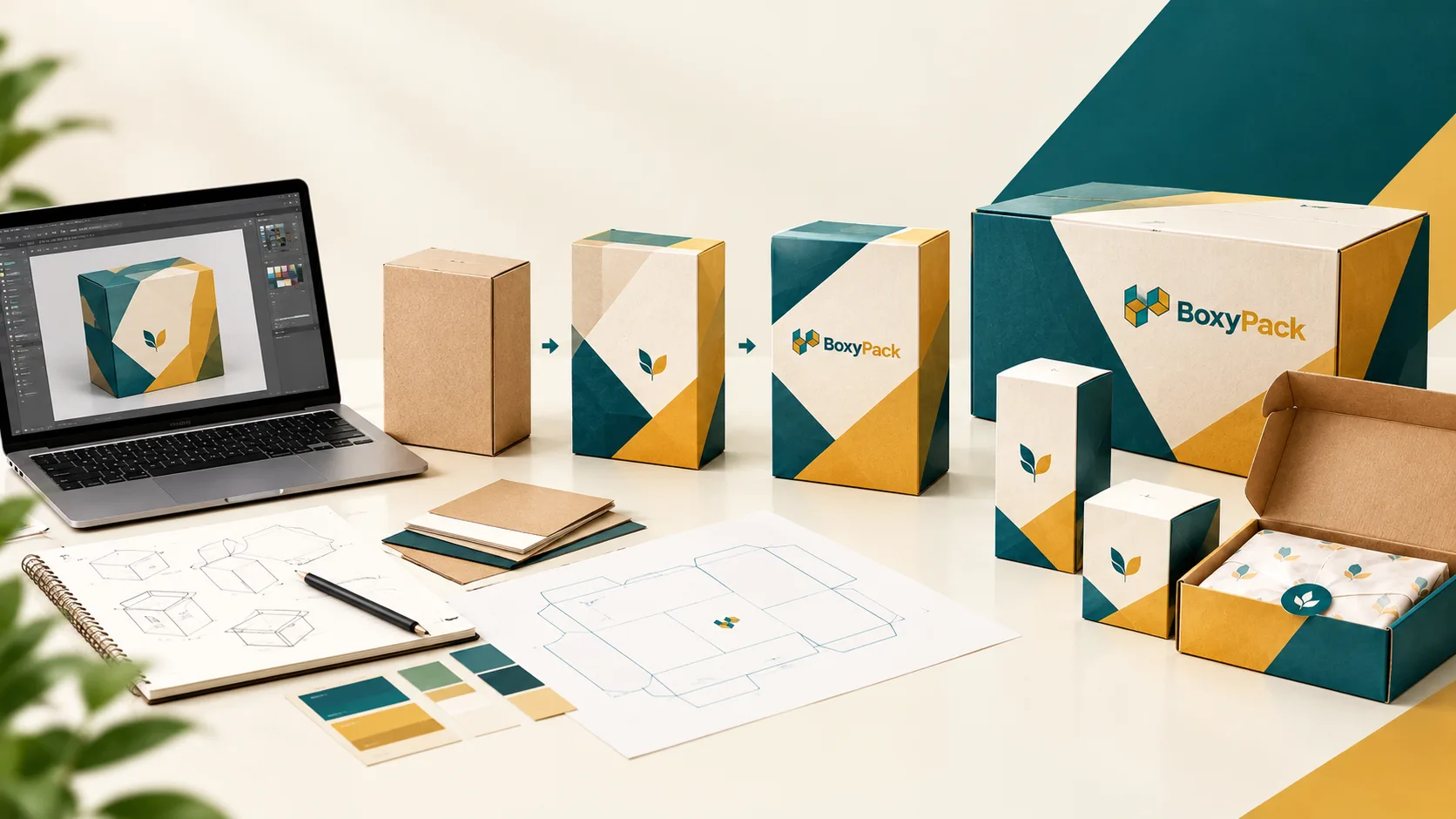
Developing custom product packaging follows a predictable path. Knowing each stage helps you plan, avoid costly surprises, and make decisions in the right order.
Define the Product and Packaging Requirements
Start with the product itself. Its dimensions, weight, fragility, intended use, shelf placement, and shipping needs all shape the packaging concept. A heavy glass item needs a different structure than a lightweight accessory, and a product sold on a shelf has different demands than one shipped directly to customers. Writing these requirements down early keeps every later decision grounded in what the product actually needs.
Turn the Concept Into a Production-Ready Design
Once the requirements are clear, the concept becomes a technical design. This covers structural dimensions, dielines, artwork placement, printing requirements, finishes, and proofing before anything goes into production. Brands without in-house design support often work with an experienced packaging designer to translate the idea into files a manufacturer can use. A precise dieline at this stage prevents misaligned artwork and fit problems later.
Choose Materials Based on Product Needs
Board type, thickness, coatings, durability, and sustainability requirements all affect the final result. A product that will be handled often or stacked in storage needs sturdier material than one that sits in a display case. Matching the material to the real demands of the product keeps the packaging protective without adding unnecessary weight or cost.
Build the Artwork Around the Brand
Artwork is where retail packaging design becomes recognizable. Logos, colors, typography, product information, and imagery need a clear visual hierarchy so the most important details are read first. A good layout feels deliberate, and the brand name and product identity are easy to find at a glance.
Review Samples Before Full Production
A physical sample or proof reveals things a screen cannot. Sizing, color accuracy, fit, readability, and structural issues often become obvious only when you hold the box in your hands. Reviewing a sample before committing to a full run is one of the most reliable ways to avoid expensive corrections.
Move From Approved Design to Production
After approval, the specifications move into manufacturing. The sheets are printed, cut, folded, finished, and assembled according to the agreed details. Clear approvals at this stage keep production on schedule and make sure the finished boxes match what was signed off.
Inspect the Finished Packaging Before Use
Before the boxes go into service, check them against the approved specifications. Look at print consistency, dimensions, construction, fit, and finishing, and confirm that the packaging presents the product the way you intended. Catching an issue at this point is far easier than discovering it after products are packed.
How to Choose Materials That Fit Your Product
Material choice affects protection, appearance, handling, and environmental impact, so it should be driven by what the product needs rather than by looks alone. Paperboard is common for lightweight items such as cosmetics, supplements, and small accessories because it prints well and folds into many shapes. Corrugated board adds strength for heavier or more fragile products, and it suits items that also travel through shipping channels. Premium products often call for rigid box packaging, which has a thick, sturdy structure that signals quality the moment a customer picks it up.
Thickness and coating matter as much as the base material. A thicker board resists crushing and holds its shape on a shelf, while coatings can add moisture resistance or a smoother surface for sharper printing. Some finishes make recycling harder, so it helps to weigh durability against end-of-life disposal. Before deciding, think about how the product will be stored, shipped, displayed, and opened, since each of those steps places different demands on the box. Retail packaging materials work best when they are chosen for the real conditions the package will face.
Design Choices That Make Retail Packaging Stand Out
Effective retail packaging design gets noticed without becoming cluttered. Shoppers usually give a package only a second or two, so the designer has to communicate the brand and the product quickly. That means deciding what matters most and letting everything else support it.
Color is often the fastest way to attract attention, but contrast and restraint matter more than the number of colors used. Typography should be readable from a normal viewing distance, with the product name clearly dominant. Imagery works best when it explains or showcases the product rather than competing with the text. Finishes such as matte coatings, spot gloss, or embossing add depth and tactile interest, and they work best when used sparingly on the elements you want to highlight.
Structure is part of the design too. The shape of the box, the way it opens, and the placement of windows or inserts all shape product presentation packaging. A clean layout, a clear hierarchy, and a structure that suits the product will usually outperform a busy design with too many competing elements. When every detail has a purpose, the retail product presentation feels confident and easy to understand.
Building a Strong Brand Identity Into Every Box
Packaging feels branded when it looks like it could only belong to one company. That comes from consistent decisions repeated across every box, not from a single clever element.
Create a Consistent Visual Language
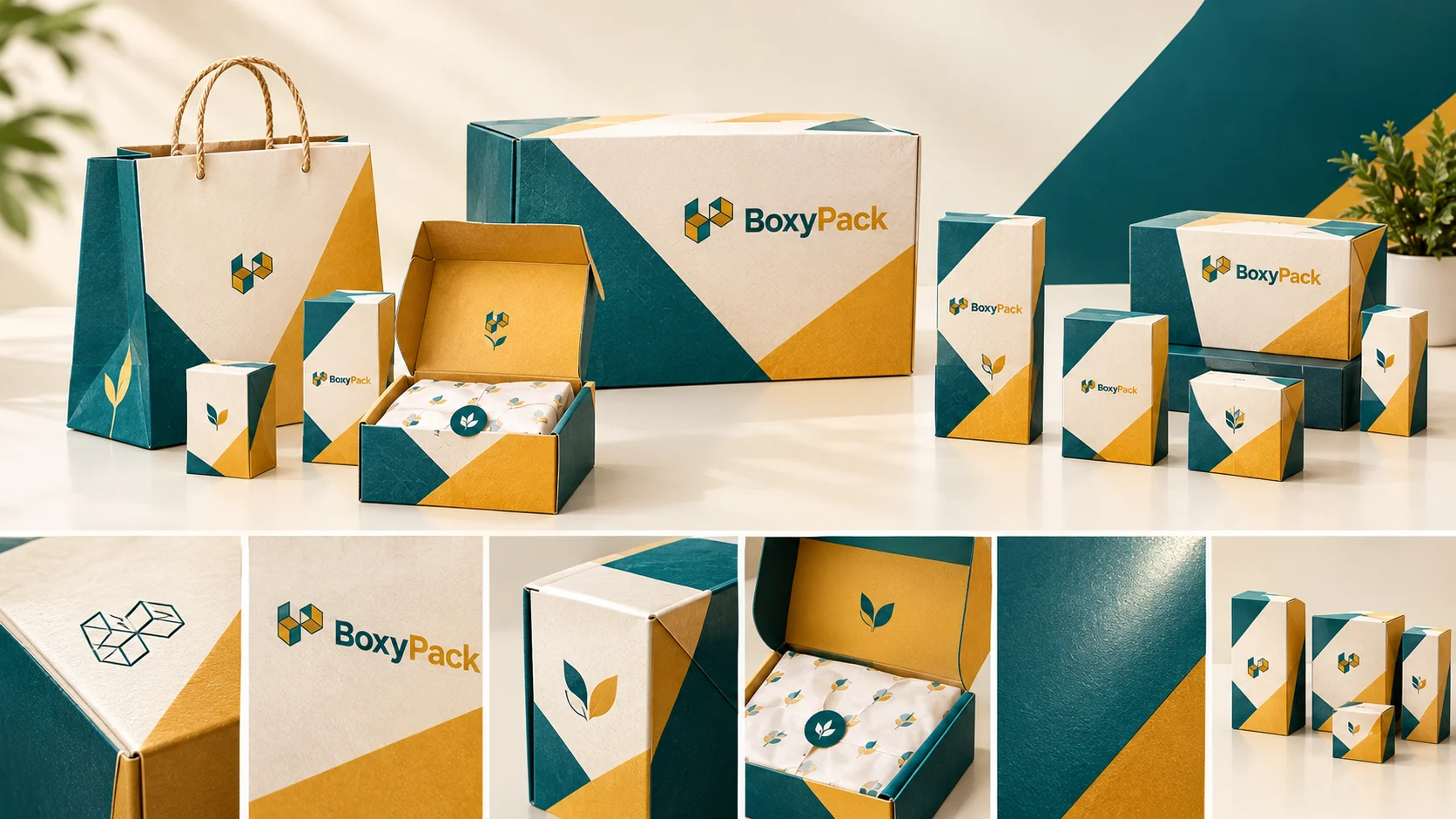
Colors, fonts, logos, imagery, and graphic elements should follow the same rules from one product to the next. When customers see the same visual language repeatedly, they begin to recognize the brand before they read the name. Consistency also makes custom branded packaging look more established and trustworthy.
Make Product Information Easy to Find
Shoppers should be able to find the product name, key features, instructions, and essential details without hunting for them. A clear hierarchy guides the eye, with the most important information given the most space and contrast. Secondary details such as ingredients, usage notes, or legal text can sit in quieter areas without being lost.
Use Finishes to Support the Brand Experience
Finishes and tactile details can reinforce the character a brand wants to project. A soft-touch coating suggests a calm, premium feel, while a natural uncoated surface can suggest simplicity and honesty. The key is restraint, because too many effects can overwhelm the design and distract from the product.
Connect Packaging Across Your Product Range
When a brand sells several products, the boxes should look like a family. Shared layouts, colors, and typography create a recognizable look, while small differences in color or imagery help customers tell individual products apart. This approach makes branded retail boxes easier to shop and easier to remember.
Design for the Unboxing Experience
The experience continues after the box is opened. Interior printing, inserts, tissue, or a short message can turn opening the package into another branded touchpoint. Planning both the outside and the inside means the customer's experience feels connected from the shelf to the moment they use the product.
Choosing the Right Box Size for Product Protection
Box size should come from the product's requirements, not from appearance alone. A box that is too large wastes material, allows the product to shift, and can look careless on a shelf. A box that is too small risks crushing the product or making it difficult to remove. The right fit protects the contents, presents them well, and keeps storage and shipping efficient.
Start by measuring the product at its largest points, then think about what else needs to fit inside. Many retail product boxes include inserts, wrapping, or accessories, and each adds to the interior dimensions. These are the measurements and fit points to confirm before finalizing a size:
Length, width, and height of the product at its widest points
Product weight and how it will be distributed inside the box
Space needed for inserts, padding, or accessories
Clearance for removing the product easily without damage
Shelf, display, and storage dimensions the box must fit
Shipping requirements if the box will travel in a carton
Allowance for material thickness, which reduces usable interior space
Testing a sample with the actual product is the best way to confirm the dimensions. A small adjustment at this stage is easy, while a size correction after production can be costly.
Packaging Formats That Fit Different Retail Products
The format of a box affects how it looks on a shelf, how it opens, and how well it protects the product. The right choice depends on the product's characteristics and on what customers expect. This comparison covers common custom packaging for retail and where each format tends to work well.
Packaging Format | Ideal Applications | Presentation Strengths | Important Considerations |
Folding carton | Cosmetics, supplements, small consumer goods | Prints well, flat storage, wide design flexibility | Offers moderate protection, so heavier items may need inserts |
Two-piece rigid box | Premium gifts, electronics, luxury items | Substantial feel, strong shelf presence | Takes more storage space and typically costs more |
Magnetic closure box | Gift sets, high-end accessories, keepsakes | Memorable opening experience | Closure and board choices affect durability and cost |
Window box | Food items, candles, products worth showing | Lets customers see the product | Window film and placement affect recyclability and strength |
Sleeve box | Multi-item sets, apparel accessories, seasonal editions | Adds a branded layer over a simple inner box | Needs accurate sizing to slide smoothly |
Corrugated mailer | E-commerce items, subscription products | Strong protection, good for shipping and unboxing | Printing options and surface finish differ from paperboard |
Use the table as a starting point, then check each option against your product's weight, fragility, and display needs. A format that suits a lightweight accessory may not hold up for a heavier item, and the opening experience should match the impression the brand wants to create.
How Sustainable Materials Can Strengthen Packaging
Sustainability is both a material choice and a design choice. Using recyclable materials helps, but so does making a package no larger than it needs to be and removing components that serve no purpose. When a brand applies both ideas, sustainable retail packaging can reduce waste without weakening the product presentation.
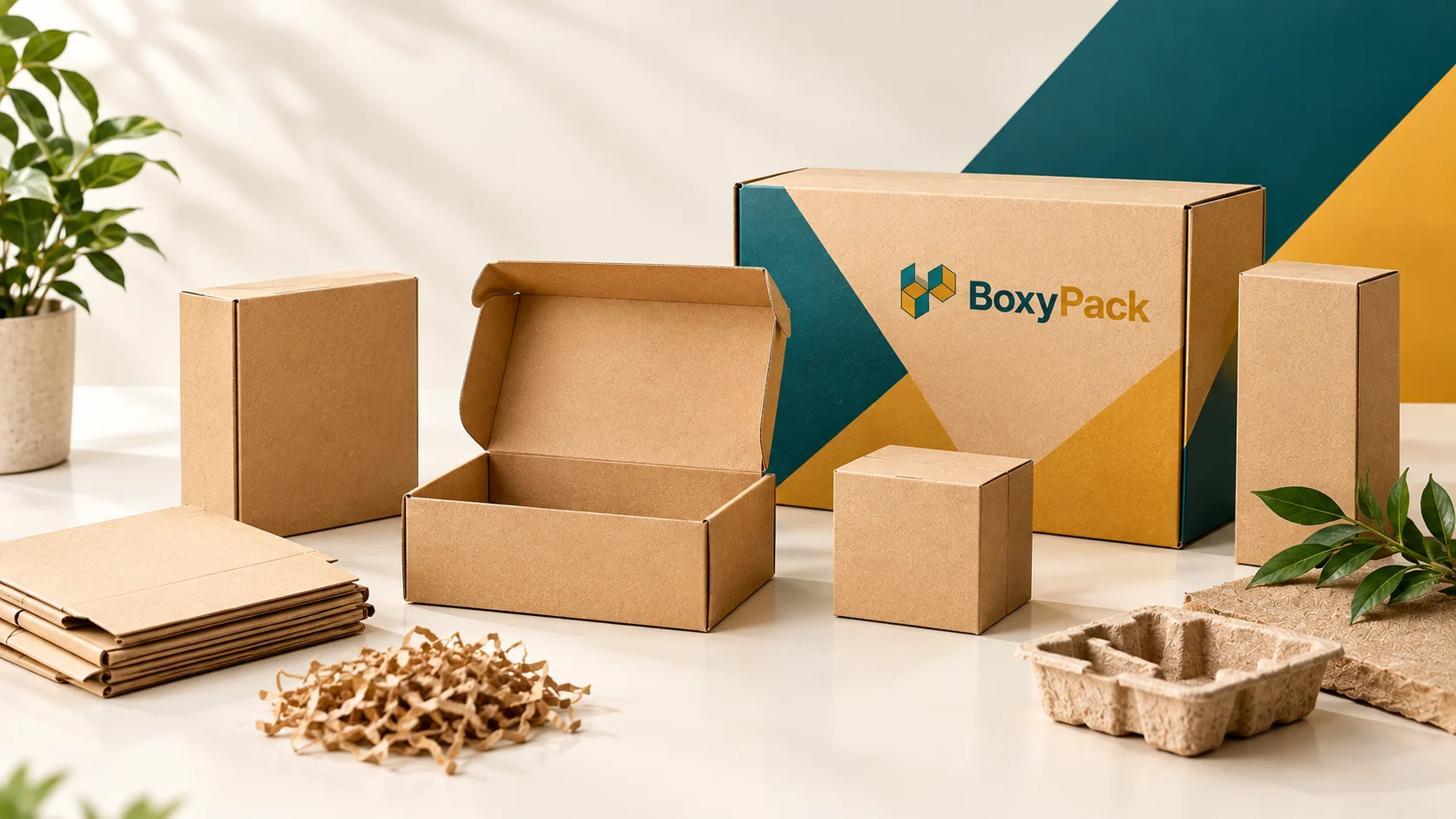
Recycled content and responsibly sourced boards are common starting points. Natural options such as recyclable kraft boxes give a simple, earthy look that suits many brands, and they can still be printed with clear branding. Right-sizing is equally important, because a box built close to the product's dimensions uses less material and often ships more efficiently.
It also helps to look at the packaging as a system. Plastic windows, mixed-material inserts, and heavy laminated coatings can complicate recycling, so each added component should earn its place. Clear disposal instructions on the box help customers recycle correctly. Sustainability claims should stay specific and accurate, describing what the package is actually made of rather than relying on vague language. A premium look and a responsible approach can work together when materials and structure are chosen with care.
Balancing Packaging Quality With Your Overall Budget
Packaging cost depends on many variables, so there is no single price that applies to every project. The better question is which features deliver meaningful value for your brand and which can be simplified. A box that protects the product and presents it well is an investment in how customers perceive the brand, while unnecessary extras can raise cost without improving results.
Size and material are usually the biggest drivers, since larger boxes and heavier board use more raw material. Quantity matters because setup work is spread across the run, which often lowers the per-unit cost on larger orders. Printing complexity, finishes, and structural details such as inserts, windows, or magnetic closures add further steps. Production requirements and timelines can also influence the final investment.
Prioritize the elements that customers will actually notice and that protect the product. A strong structure and clear branding often matter more than adding several decorative effects. Requesting quotes with clear specifications makes it easier to compare options fairly and understand what each detail contributes.
How to Make Packaging Work for Small Businesses
Smaller brands can look professional and distinctive without building a complicated packaging system. The goal is to make a few smart decisions and apply them consistently. A focused approach keeps costs manageable and helps a young brand look established.
Begin with a limited number of box styles and sizes. Using one structure across several products simplifies ordering and storage, and a consistent look across them strengthens recognition. Choose a simple color palette and a clear logo placement, then let one or two details, such as an interior print or a distinctive finish, add personality. Design layouts that can scale, so a new product can reuse the same template with a different name or color accent.
Order quantities that match real demand, and test a sample before committing to a larger run. Efficient product presentation does not require elaborate effects. Clean typography, a clear hierarchy, and a well-fitted box often do more for personalized retail packaging than extra embellishment. As the product range grows, the same foundation can expand without starting over.
Where Custom Printed Retail Boxes Add More Value
Custom printed retail boxes do more than hold a product. On a shelf, they help customers recognize the brand and tell one product apart from the next. Printed packaging also supports consistency, since every touchpoint carries the same colors, fonts, and messaging.
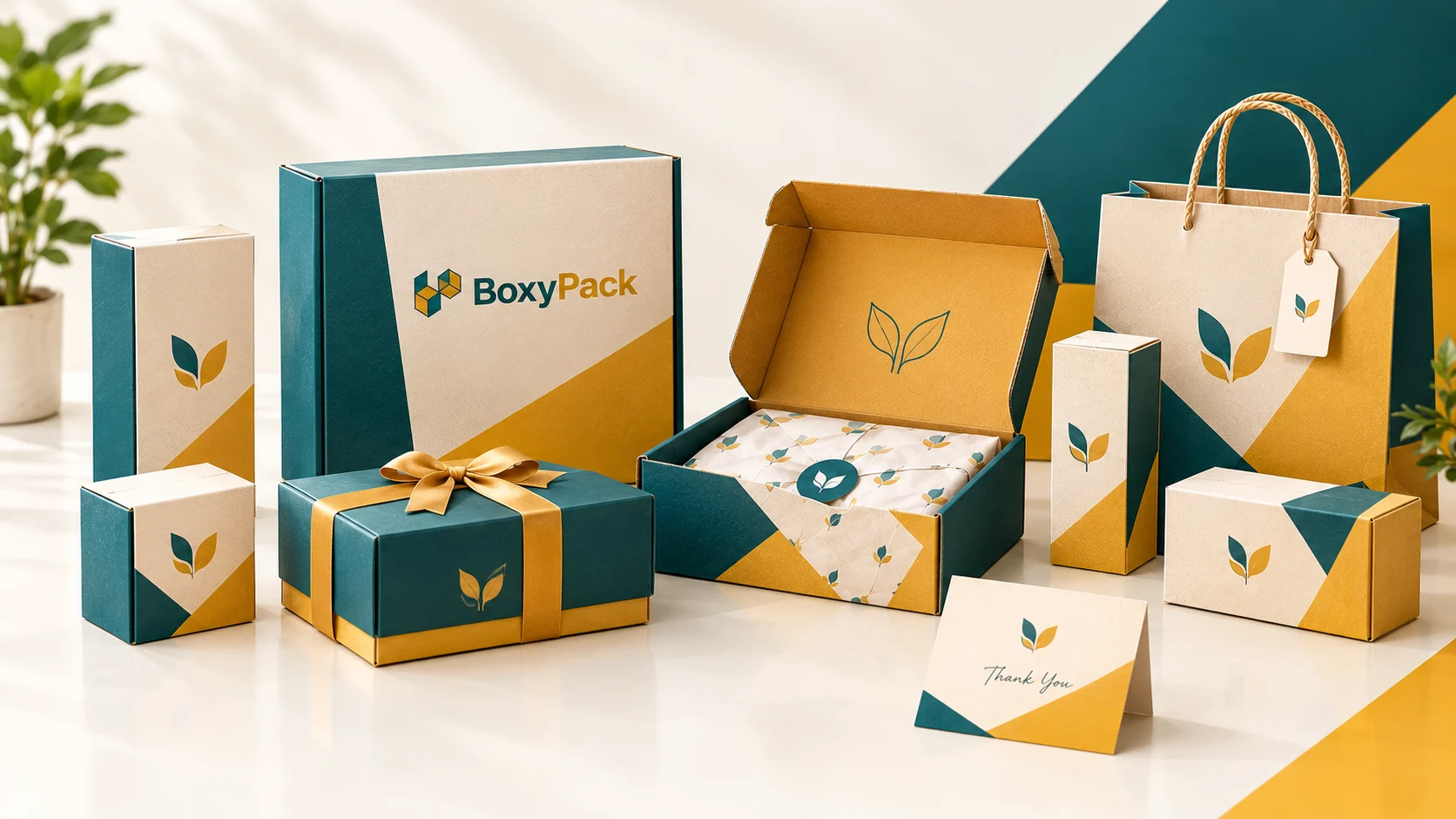
Gifting is one of the strongest applications. A product presented in custom gift boxes feels ready to give, and customers often choose a product partly because the presentation saves them extra wrapping effort. Seasonal promotions and limited editions work the same way, since a special print or finish can signal that something is new or time-limited without changing the product itself.
Printed packaging also strengthens the unboxing experience for online orders. Branded interiors, inserts, and messages give customers a reason to share the moment and remember the brand. Used where it matters most, custom printing supports several goals at once:
Retail shelf recognition, gifting, promotions, subscription deliveries, and customer-experience details all benefit when the printed design is clear and consistent. The value comes from using customization where customers will see and feel it.
Common Packaging Mistakes That Weaken Brand Impact
Most packaging problems are avoidable if you check the design before production. These are the mistakes that appear most often, along with how to correct them:
Poor sizing. A box that is too loose or too tight can damage the product or look unprofessional. Measure the product with any inserts and confirm fit with a sample.
Weak hierarchy. When everything competes for attention, nothing stands out. Decide the single most important message and give it the most space and contrast.
Too many design elements. Crowded layouts make the brand harder to read. Limit colors, effects, and graphics to those that serve a purpose.
Unsuitable materials. Board that is too thin or the wrong type may fail during handling or shipping. Match the material to the product's weight and conditions.
Unclear product information. Shoppers who cannot find key details may move on. Place names, features, and instructions where they are easy to locate.
Inconsistent branding. Colors and layouts that change from box to box weaken recognition. Use a shared system across the range.
Skipping the sample. Digital proofs can hide color and fit issues. Review a physical sample before approving a full run.
How to Order Custom Retail Packaging With Confidence
Ordering is easier when you know what a supplier needs and what to ask. Preparing information in advance shortens the process and reduces the chance of errors.
Prepare Your Product and Packaging Specifications
Gather the product dimensions, weight, expected quantity, intended use, and the packaging style you have in mind. Suppliers use this information to recommend structures and provide accurate quotes. The more precise the details, the fewer revisions are needed later.
Select the Structure and Material
Tell the supplier which box style you want, along with board requirements, durability needs, finishes, and any sustainability preferences. If you are unsure, describe how the product will be sold and shipped, and ask for recommendations. A clear brief helps the supplier suggest options that fit both the product and the budget.
Submit Artwork and Review the Proof
Send artwork in the format and structure the supplier requests, built on the correct dieline. Check color expectations, text placement, and all product information carefully on the proof. Errors are far cheaper to fix at this stage than after printing.
Confirm Quality and Production Requirements
Discuss printing consistency, construction standards, finishing, and acceptable tolerances before production begins. Putting these expectations in writing helps both sides agree on what a successful result looks like. It also gives you a clear reference when the boxes arrive.
Review Samples Before Scaling the Order
Test a sample or prototype with the actual product. Confirm the fit, appearance, ease of opening, and overall presentation before approving the larger run. This step is especially valuable for new designs or unusual structures.
Plan Lead Times Around Your Launch
Production schedules include design approval, sampling, manufacturing, finishing, and delivery. Build in time for revisions and unexpected delays, especially if the packaging is tied to a launch or seasonal date. Starting early gives you room to make good decisions rather than rushed ones.
Final Thoughts on Stronger Retail Brand Presentation
Effective custom retail packaging balances protection, presentation, branding, materials, sustainability, sizing, and usability. When these elements work together, packaging becomes more than a container. It becomes part of how customers recognize, trust, and remember a brand. The process rewards planning, from defining product requirements to reviewing samples and confirming quality before production.
The most successful packaging usually comes from clear priorities rather than extra decoration. A well-fitted structure, readable information, consistent branding, and thoughtful material choices create a retail experience that feels cohesive from the shelf to the unboxing. That consistency is what turns custom product packaging and custom branded packaging from a one-time expense into a lasting asset with Boxy Pack.
If you are planning new packaging, start by writing down your product's dimensions, weight, and intended use, then think about how you want customers to experience it. With those requirements clear, you can explore custom packaging solutions at Boxy Pack and find a format that fits your product and your brand.
Frequently Asked Questions About Custom Retail Packaging
Custom packaging decisions depend on product type, dimensions, materials, branding, quantity, and the retail experience a brand wants to create. Every product is different, so the right choices vary from one business to the next. These FAQs cover quick questions that businesses often consider before placing an order.
What makes custom retail packaging different from standard boxes?
Custom retail packaging is built around a specific product, so the size, structure, material, and printing are all chosen to suit it. Standard boxes come in set sizes meant to fit many items, which often leaves extra space and offers little room for branding. A custom box fits the product more closely, protects it better, and presents the brand more clearly.
Which packaging material works best for different retail products?
It depends on the product's weight, fragility, and how it will be sold. Paperboard suits lightweight items and prints cleanly, corrugated board adds strength for heavier or shipped products, and rigid board gives premium items a sturdy, high-end feel. Choosing the material around the product's real needs works better than choosing by appearance alone.
How can a brand make its retail packaging look more distinctive?
Focus on a clear visual identity, with a recognizable logo, a consistent color palette, and readable typography. One or two well-chosen details, such as a specialty finish or printed interior, add character without cluttering the design. A distinctive structure or a thoughtful unboxing experience can also help a product stand out.
What should I consider when choosing a custom box size?
Measure the product at its widest points and add space for any inserts, wrapping, or accessories. The box should fit snugly enough to prevent movement without squeezing the product or making it hard to remove. Also think about shelf dimensions, storage, and shipping, and test a sample with the actual product before ordering.
Can sustainable packaging still provide a premium retail presentation?
Yes. Recyclable board, recycled content, and natural stocks can look refined when paired with clean design and quality printing. Right-sizing the box and removing unnecessary components also keeps the packaging looking intentional. A premium feel often comes from fit, materials, and restraint instead of extra layers.
How early should a business order custom packaging before a product launch?
Start as early as possible, since the process includes design approval, sampling, production, finishing, and delivery. Build in time for revisions and possible delays, especially if the launch is tied to a fixed date or a busy season. Ordering early leaves room to test a sample and fix issues without rushing.
What information should I provide when requesting custom retail packaging?
Share the product dimensions, weight, and intended use, along with the quantity you need and the packaging style you have in mind. Include material preferences, durability needs, finishes, and any sustainability goals. If you have artwork, send it on the correct dieline, and mention your launch timeline so the supplier can plan accordingly
Ready to Get Started?
Discover our custom packaging solutions and bring your brand to life with premium boxes.