
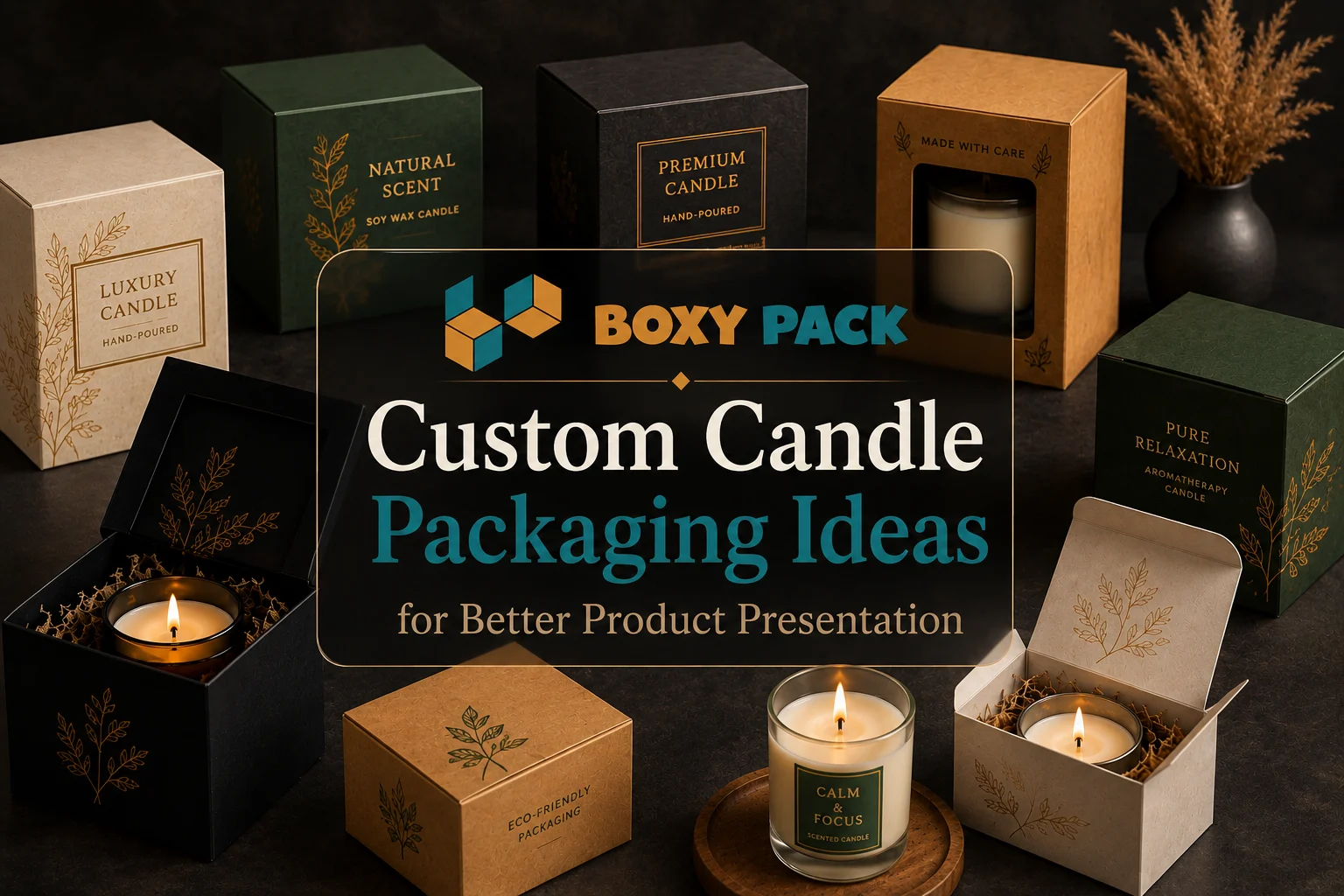
Great candles can lose impact when their packaging feels plain or poorly planned. Buyers often notice the box before they notice the scent. Weak packaging can leave glass jars exposed during storage or delivery. Custom candle packaging addresses these issues through better fit protection and brand control. It helps the product look considered before the customer opens the box. That first impression can support retail display and online presentation.
The right package should fit the candle and the customer. It should also suit retail shelves, online orders, gifts, and repeat production. This guide covers formats, box structures, insert materials, labels, and logo placement. It also explains luxury choices, sustainable options, and wholesale planning. You will see how custom candle packaging compares with stock packaging. Final checks before printing are included.
What Makes Custom Candle Packaging Worth Considering
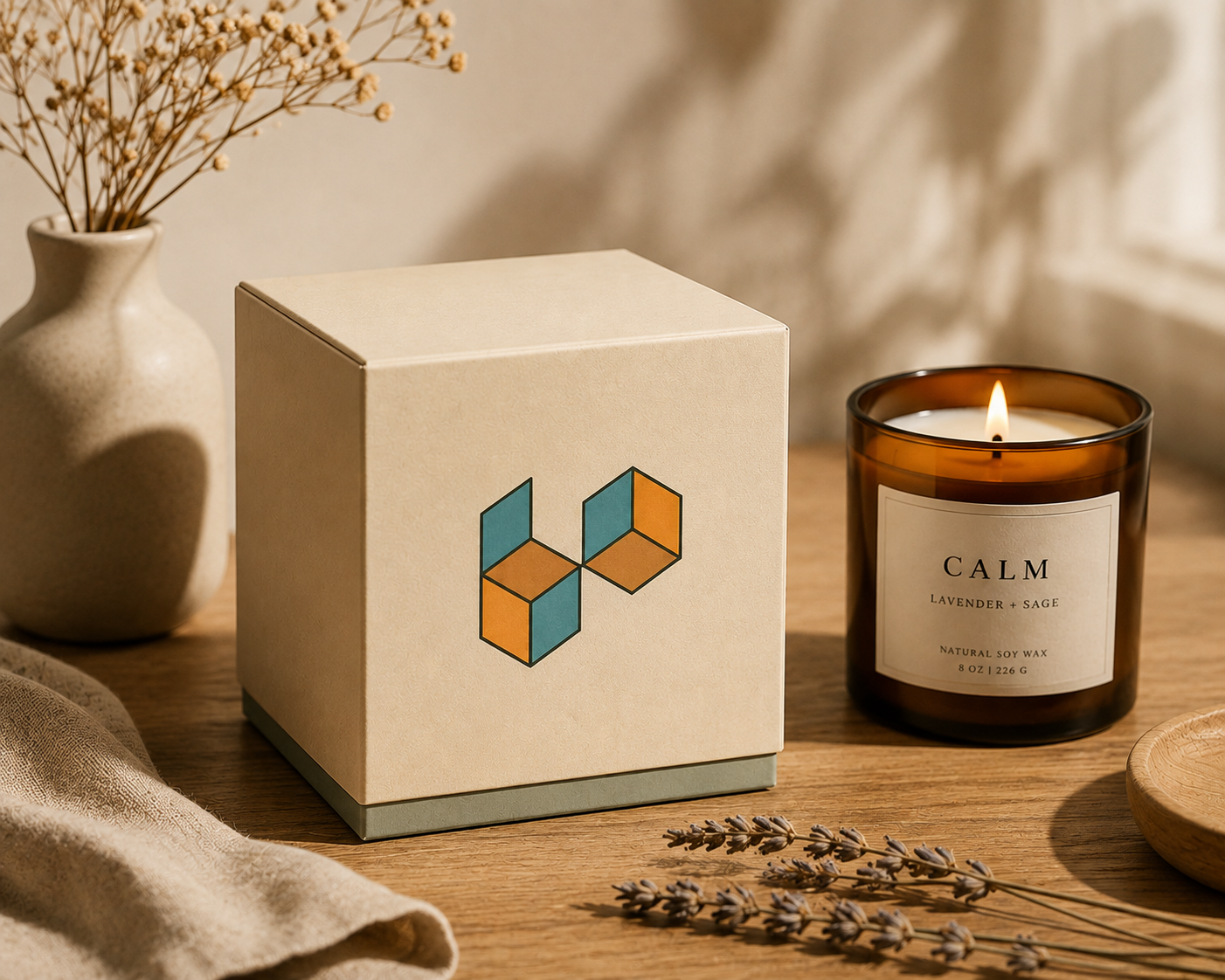
Custom packaging is designed around a specific candle and brand. Stock packaging uses fixed sizes and general styles. That difference affects fit, appearance, protection, and brand control. Personalized candle packaging can match jar size, scent range, color palette, and sales channel. It can also support inserts and printed product details.
Customization is more than placing a logo on a box. The structure should suit the candle shape and weight. The design should also suit the intended buyer. A luxury line may need rigid board and softer finishes. A simple retail line may work better with paperboard.Strong custom candle packaging boxes connect product fit with brand presentation. For brands that want more control over size, structure, and visual identity, custom candle boxes can be designed around specific jars, tins, or candle sets. This approach helps create a consistent appearance while supporting protection and retail presentation.
Seven Packaging Formats That Give Candles More Appeal
Different candle products need different outer formats. The right choice depends on product shape, sales channel, and presentation goals.
Candle jar packaging fits closely around glass or ceramic jars. It supports branded presentation and safer handling.
Packaging sleeves add branding while leaving part of the candle visible. They suit simple product lines.
Candle tubes create a clean round format for suitable candle shapes. They work well for gift lines.
Candle tins offer compact packaging for smaller candles. Their size can suit travel and online orders.
Gift packaging can hold one candle or several related products. It suits seasonal sets and special occasions.
Retail packaging supports shelf display and quick product recognition. Clear branding helps buyers compare scents and sizes.
Mailer packaging focuses on delivery strength and secure movement. It should protect the candle during shipping, especially when products are sent directly to customers. This makes the structure important for brands using candle subscription boxes, where packaging may travel through repeated handling before reaching the customer.
A format should serve the product before serving decoration. Good presentation matters most when the candle arrives safely.
Choosing the Right Box Structure for Candle Products
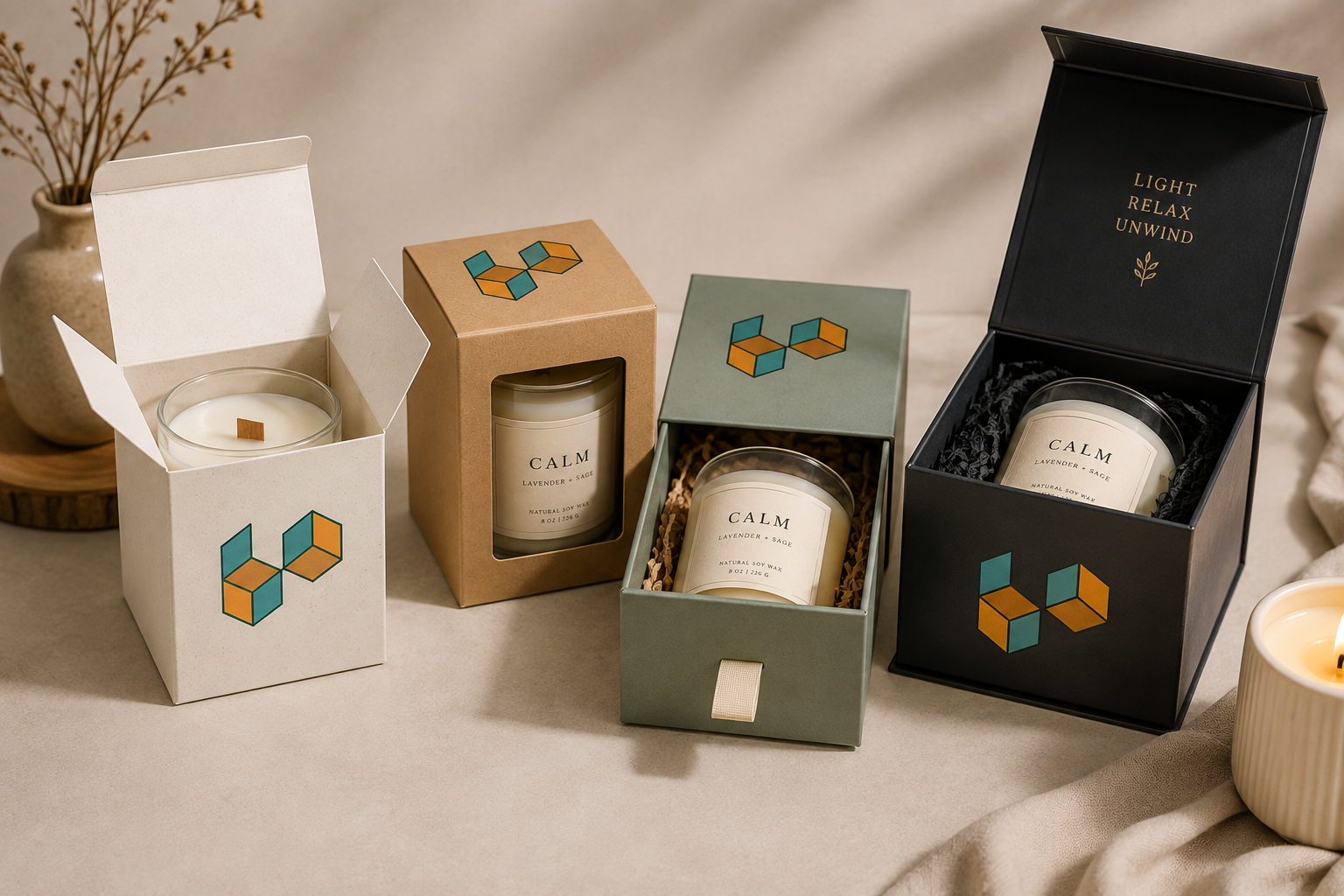
Packaging format and box structure are separate choices. A jar candle may use several different box structures.
Tuck end boxes open through folding flaps. They suit regular retail candles and simple repeat orders.
Window boxes reveal part of the product. They work when jar color or label design supports the sale.
Drawer boxes use a sliding tray and outer sleeve. They suit gift sets and premium collections.
Magnetic rigid boxes use a firm structure and secure closure. They suit luxury candle packaging and special sets.
Custom retail candle packaging should match how customers handle the product. A complex box can feel excessive for a simple item. A weak box can feel poor around a premium candle.
How Packaging Protects Candles From Everyday Damage
A beautiful package fails when the candle arrives damaged. Protection should be planned with the visual design. The structure and internal support must control movement.
Building Protection Around Glass Jar Candles
Glass jars face impact, pressure, vibration, and repeated handling. Loose space can let a jar shift inside its box. Tight space can also create pressure around weak points. Custom jar candle packaging should match the jar height, width, and shape. Strong board can help the package keep its form.
Shipping conditions also matter for ecommerce candle sellers. Outer mailers may need more strength than shelf boxes. The package should support the jar without making opening difficult. A physical sample can show whether the fit feels secure.
Using Inserts to Keep Candles Secure Inside
Candle box inserts keep jars centered inside the package. They can also reduce movement during storage and shipping. Paper-based inserts work well for many product styles. The right candle boxes inserts should hold the base securely without damaging the label or jar finish. A fitted insert can also improve presentation. The candle sits in a planned position after opening. That gives the product a more finished look. It also keeps extra empty space from making the box feel oversized.
How Candle Packaging Design Can Build Your Brand
Packaging should make the candle easy to recognize. Good design connects visuals with the brand and buyer. The goal is a clear identity instead of added decoration.
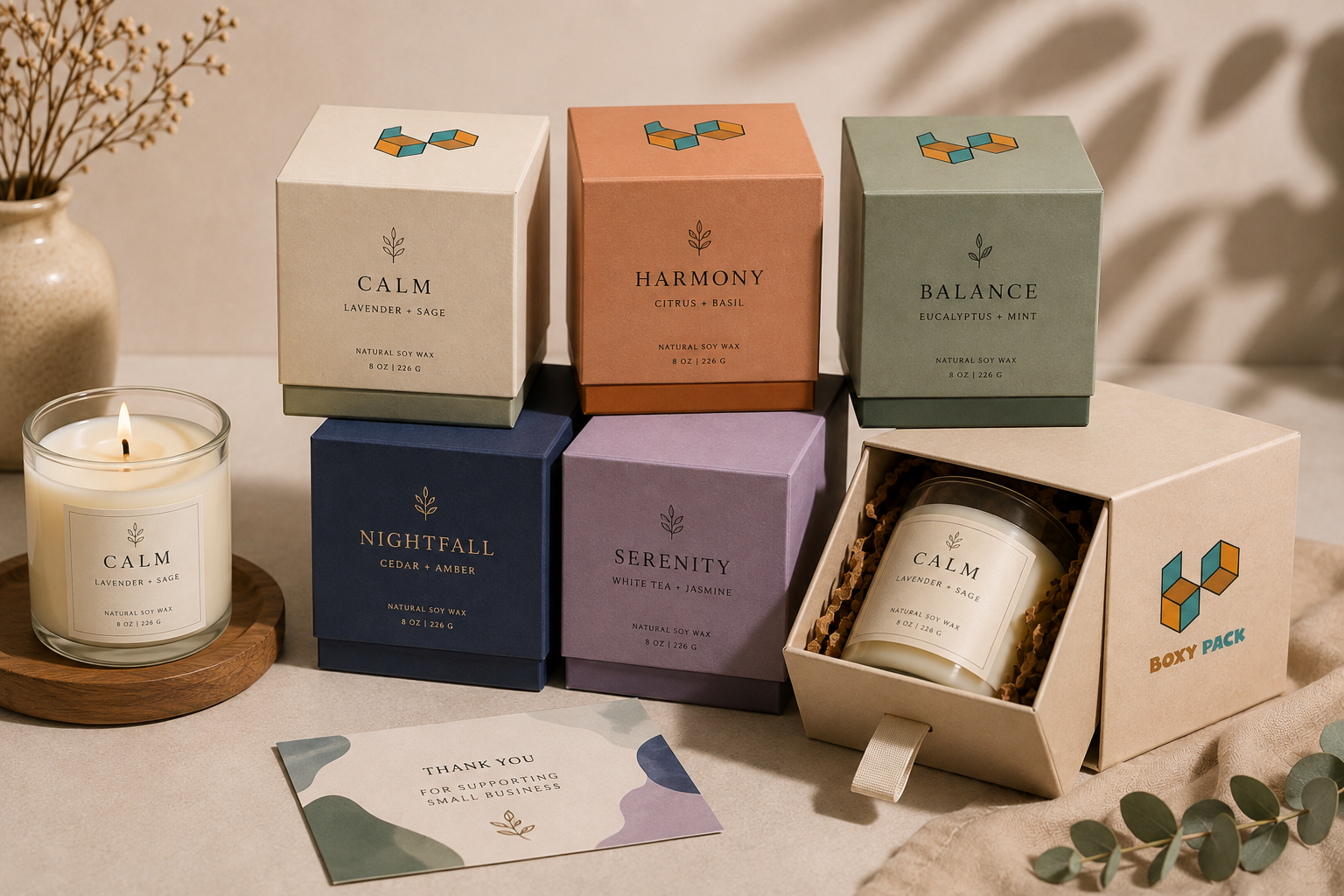
Using Color and Typography to Build Recognition
Color can separate scents and collections without changing the whole package. A set palette also helps customers recognize the brand. Typography should stay readable across boxes, labels, and sleeves. Font size should support quick scanning on shelves and product photos.Visual order matters as much as font choice. The brand name should not compete with every other detail. Scent names and product types need a clear place. Consistent design helps branded candle packaging feel connected across a full range.
Turning Packaging Details Into Brand Experiences
Small details can change how a package feels. Texture, artwork, labels, and opening style can support the brand mood. Custom printed candle packaging can also use restrained finishes for a cleaner result. More print does not always mean more value.Personalized candle packaging may include scent messages, seasonal artwork, or gift notes. These details should still fit the core identity. The best experience feels planned from the first look through the final opening.
Materials That Balance Candle Protection With Style
Kraft board offers a natural surface and simple texture that can work well for candle packaging. However, packaging materials should always be selected according to the product being protected. Materials used for products such as kraft cake boxes may have different structural requirements, so candle brands should assess board strength, size, and protection needs specifically for their products. Recycled paper-based materials can also support many packaging goals. Their appearance and strength can vary by grade. Material choice should match the candle weight and box size. It should also match the print method and desired finish.
Packaging materials affect more than appearance. A soft board may bend around a heavy jar. A very thick board may add cost and storage needs. Strong design starts with the candle itself. Then the material can support fit, protection, and brand position.
Where Candle Labels and Logos Fit Into the Design
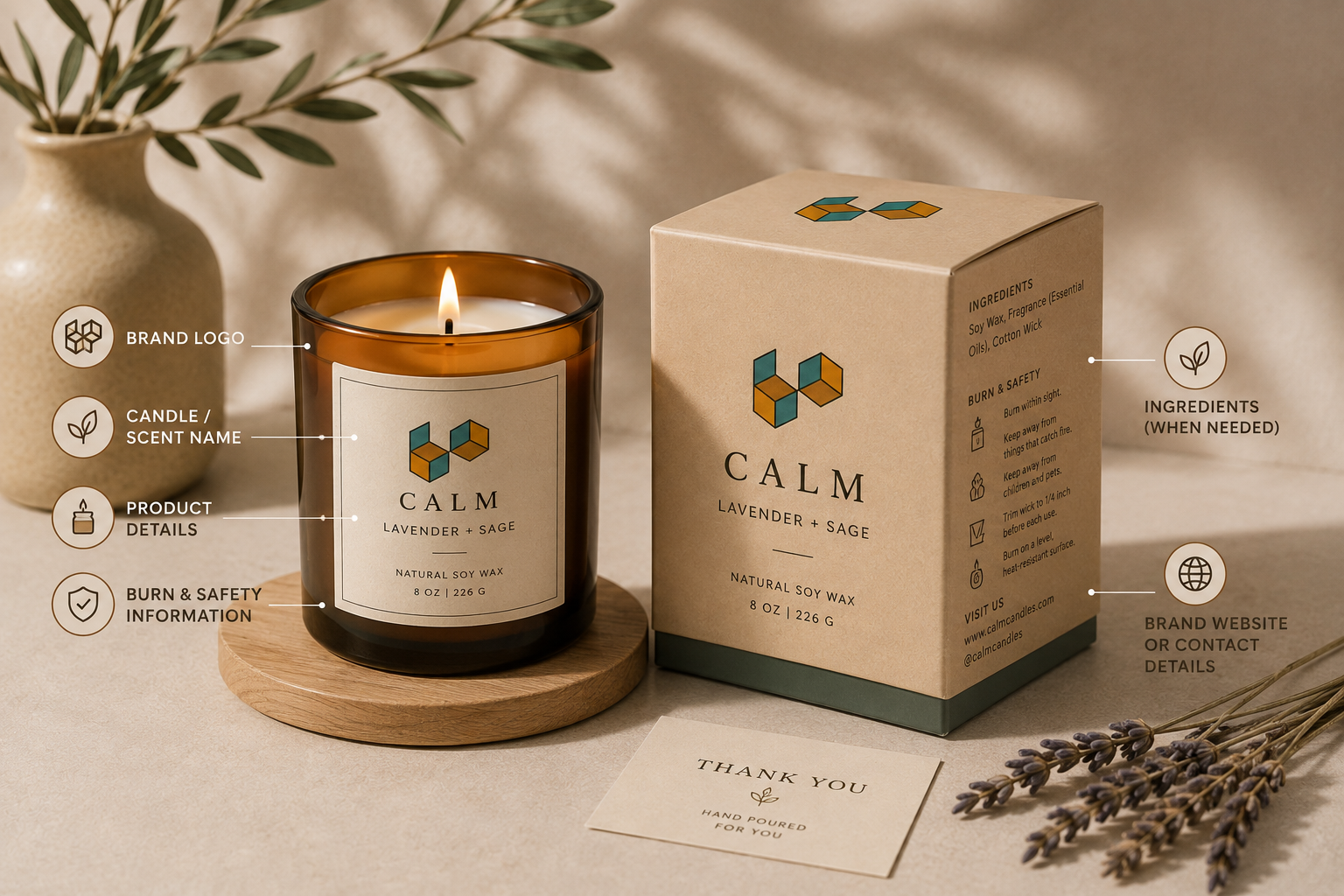
Candle labels and outer packaging should work together. The jar label may carry product details. The box can support brand identity and shelf impact. Candle packaging with logo placement should stay visible without hiding useful product information.
A clear visual order helps buyers read the package quickly. Common label and packaging details include the following.
Brand logo
Candle or scent name
Product details
Ingredients when needed
Burn and safety information
Brand website or useful contact details
Readable information supports trust and product use. Decorative choices should never make safety details hard to see. A strong label system also helps multiple scents feel like one collection.
When Luxury Candle Packaging Creates Real Value
Luxury packaging feels valuable because the details work together. Strong board, clean print, good fit, and controlled finishes create a better result. Foil alone cannot make a weak box feel premium. The structure still needs to feel solid and well planned.
Premium candle products often depend on gifting and presentation. Rigid boxes, drawer boxes, and tactile papers can support that purpose. Custom printed candle packaging can also use texture or metallic details with restraint. The finish should support the product price and target buyer.
Luxury candle packaging also needs consistency. A beautiful box with a loose insert can weaken the experience. The same applies to poor printing or a hard opening. Real value comes from the full package working as one system.
Sustainable Packaging Ideas That Still Look Premium
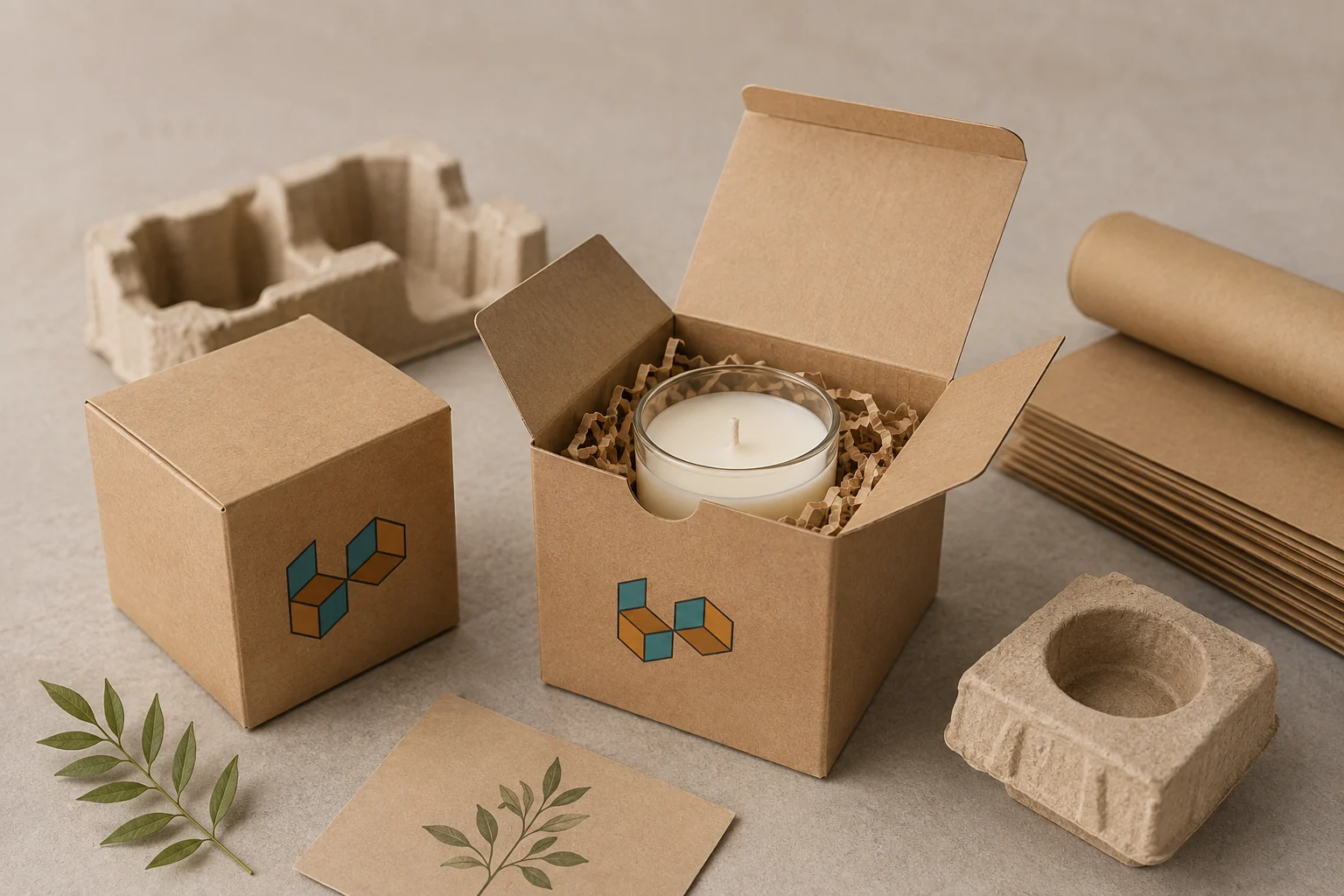
Sustainable packaging works best when brands reduce what they do not need. The goal is less waste without weaker protection. Brands should also avoid broad claims that one material is always better.
Useful options can include the following.
Recycled paperboard for suitable box structures
Kraft materials for simple natural presentation
Paper-based inserts instead of unnecessary plastic parts
Right-sized packaging with less empty space
Fewer decorative layers that add little function
Reusable or recyclable packaging elements
Responsible printing choices with fewer unnecessary finishes
Eco-friendly candle packaging should still protect the product. A damaged candle creates its own waste. Brands should also consider local recycling systems and material availability. Clear disposal notes can help customers understand what to do after opening.
Custom and Stock Packaging Compared for Candle Brands
Factor | Custom Candle Packaging | Stock Candle Packaging |
Brand identity | Highly adaptable | More limited |
Product fit | Designed to size | Uses fixed sizes |
Logo and artwork | Broad design control | Limited options |
Internal inserts | Designed for the product | May need separate fitting |
Protection | Can match product risks | Depends on the format |
Presentation | Built around the brand | More generic |
Production flexibility | High design control | Lower design control |
Best fit | Growing or established brands | Simple early stage needs |
Stock packaging can still work for young brands or small test runs. Custom packaging gives more control when fit and brand consistency matter. Wholesale candle packaging may also make more sense after sales become easier to predict.
The Advantages and Limitations of Custom Packaging
Custom packaging offers clear benefits. It also creates planning needs that brands should consider early.
Advantages
Stronger brand recognition across product lines
Better fit around jars, tins, and sets
More control over artwork and layout
Better support for protective inserts
More consistent retail presentation
A more planned customer experience
Better visual links across scent collections
Limitations
Higher first order costs in many cases
Possible minimum order quantities
More time for design and approvals
Added storage needs for larger orders
Greater need for exact product measurements
Custom candle packaging works best when a brand knows its core products. A small business can still start with fewer custom packaging components. Labels, sleeves, and smaller print runs may support gradual growth. Brands that sell related products can also consider custom wax melt boxes alongside candle packaging to create a consistent visual identity across candles and wax melts.
How to Plan a Wholesale Candle Packaging Order
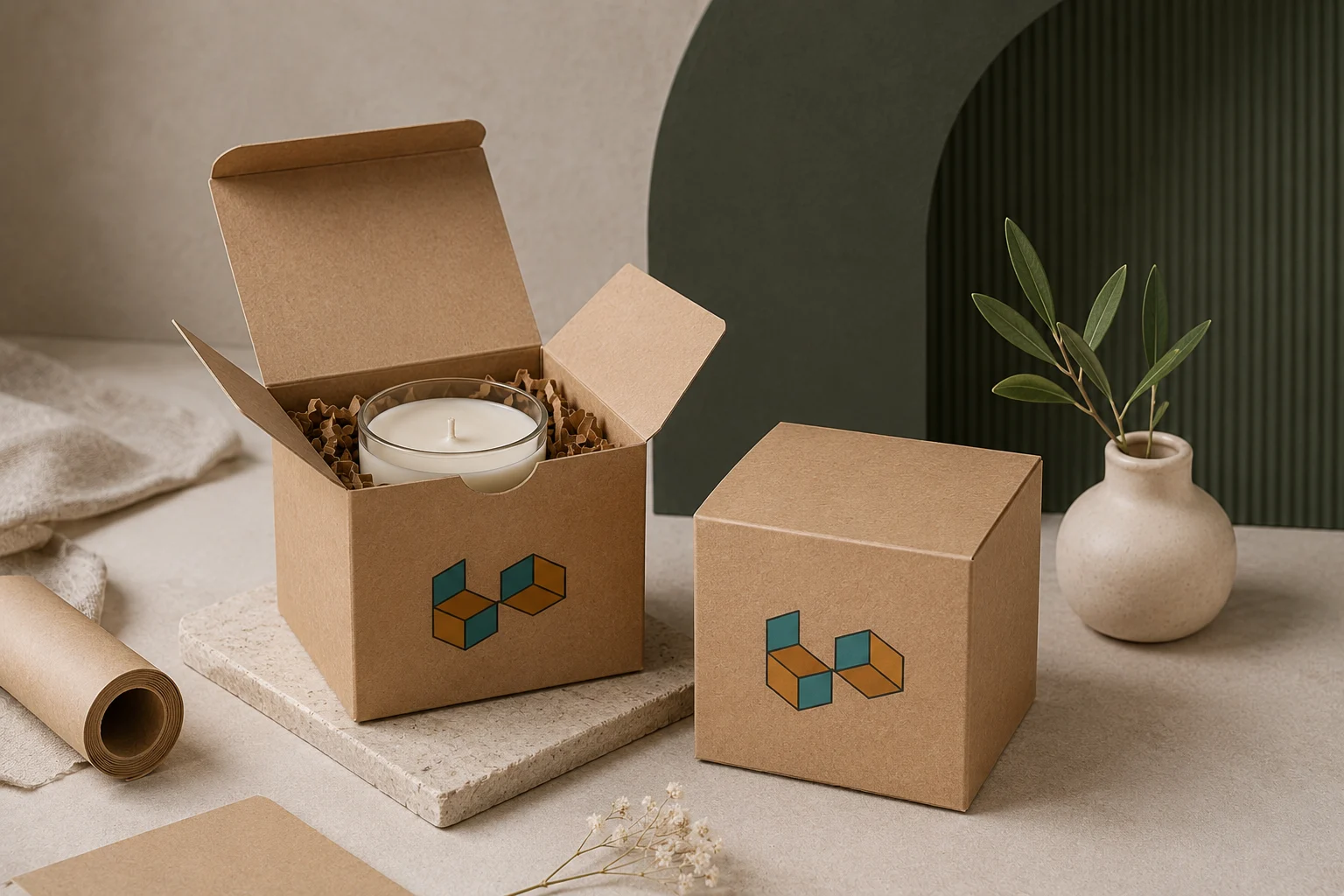
Wholesale buying can support consistent packaging across repeat orders. Large orders can also create storage and cash pressure. Order size should match realistic product demand.
Deciding How Much Packaging Your Business Needs
Start with real sales volume instead of hoped-for demand. Review the number of active candle sizes and scent lines. Seasonal peaks may change the quantity needed. Storage space also matters because packaging can take more room than expected.
Growing brands should also consider planned product changes. A new jar size can make old boxes useless. Wholesale candle packaging works better when core product specs stay stable.
Checking Packaging Specifications Before Production
Review every key detail before full production begins. Confirm box size, board type, artwork print colors, and insert fit. Check the final quantity and packing method. A physical sample can reveal issues that digital files may hide.
Also test the opening and closing process. Review logo position and text size. Make sure the candle sits correctly inside. Small errors become expensive after a large order arrives.
Practical Ways to Improve Candle Packaging Before Printing
Final checks should cover both appearance and structure. A screen proof cannot fully show fit, texture, or opening feel. Physical samples help brands find problems before production.
Review these points before approval.
Check the candle measurements
Test the box fit
Review logo visibility
Confirm label readability
Examine print quality
Check insert placement
Test opening and closing
Consider shipping conditions
Review the final physical sample
These checks support better candle packaging design and fewer avoidable errors. They also help teams compare the package with the actual candle. One small size change can affect inserts, sleeves, and outer mailers.
Final Thoughts on Creating Better Candle Packaging
Better custom candle packaging begins with a clear purpose. It should present the product well and protect it during handling. It should also support a consistent brand identity. The strongest options match the candle size, sales channel, customer, and budget. Materials, box structures, inserts, labels, and printing should support the same packaging plan.
The main finding is simple. Good packaging depends on fit, function, and clear design more than decoration alone. This matters because packaging affects product safety, shelf appeal, gifting, and customer experience. As candle brands grow, these choices can shape wholesale planning, storage, and repeat production. Future packaging decisions should focus on accurate testing, useful materials, and realistic order needs. Brands can apply these principles to new products, seasonal ranges, and wider retail collections.
FAQs About Designing Custom Candle Packaging
1. What type of packaging works best for glass candle jars?
Glass candle jars need snug boxes with strong board and fitted inserts. The package should limit movement while protecting the jar during handling and shipping.
2. How can custom packaging make a candle brand look more premium?
Premium packaging uses quality materials, clean printing, balanced colors, strong structure, and thoughtful details. Consistency matters more than adding excessive foil texture or decorative effects.
3. Which materials are suitable for sustainable candle packaging?
Recycled paperboard, Kraft board paper-based inserts, and right-sized boxes can support sustainable goals. Material choice should still match protection, print, and product needs.
4. Can candle packaging be customized with a company logo?
Yes, candle packaging can include a logo on boxes, sleeves, labels, tubes, and mailers. Placement should stay visible while keeping product details easy to read.
5. Is custom candle packaging practical for small businesses?
Yes, small businesses can use custom candle packaging when quantities, budgets, and storage allow. Starting with labels, sleeves, or smaller runs can reduce early commitment.
6. What should brands consider before ordering packaging wholesale?
Brands should check sales volume, storage space, product sizes, seasonal demand, materials, artwork inserts print details, samples, and minimum quantities before approving a wholesale order.
7. How can candle packaging improve the customer unboxing experience?
Good candle packaging improves unboxing by presenting the product neatly, controlling movement, and creating a clear brand experience through structure materials, labels, and opening style.
Ready to Get Started?
Discover our custom packaging solutions and bring your brand to life with premium boxes.