
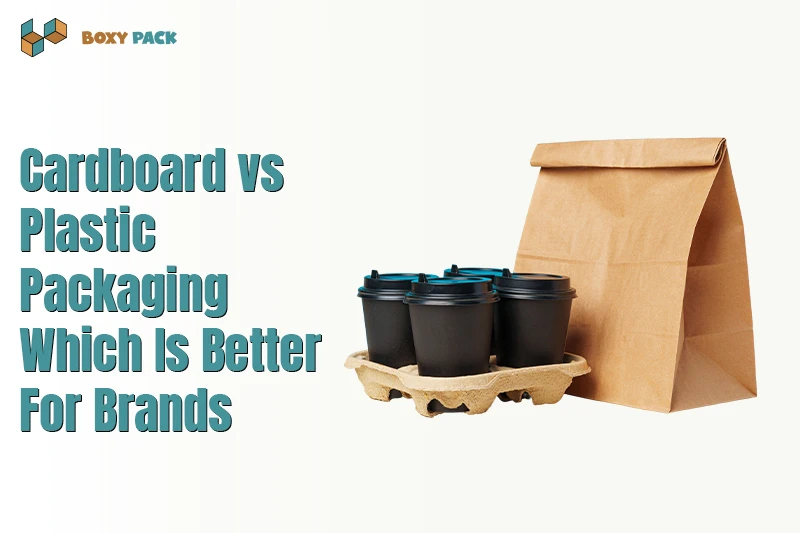
Most online shoppers get three boxes a week. That is a lot of waste. But here is the real question. Does your customer care more about what arrives or how it looks? 87% of consumers say they prefer paper over plastic. Yet many brands still ship in plastic pouches. Why? Because plastic is cheap and strong. That tension creates a hard choice for business owners when following a cardboard and plastic guide.
You need a clear answer for cardboard vs plastic packaging. This guide compares cost, durability, and real customer reaction. We also look at sustainable packaging for businesses that want to grow. You will learn when to pick cardboard and when plastic actually wins. No theory. Just facts from real shipping floors and unboxing tests. Let us break it down.
What Is Cardboard Packaging?
The Classic, Eco-Friendly Brand Choice
Cardboard comes in a few forms. You have corrugated cardboard with that wavy middle layer. Then, paperboard for lighter items like cereal boxes. Corrugated cardboard packaging is what most ecommerce brands use. It is strong and light at the same time.
The big win is recycling. Cardboard breaks down in about two months outside. And 97% of it gets recovered. That is huge. You can also print your logo on custom retail packaging like corrugated boxes. That turns a plain box into a brand moment. Cardboard packaging benefits include low cost and easy disposal for your customer. No guilt. No fancy tools to open it. Just a box that works.
What Is Plastic Packaging?

The Different Types You Will See
Plastic comes in hard bottles or soft pouches. PET is for clear drink bottles. HDPE is for milk jugs and shampoo. Flexible plastic is that crinkly mailer from Amazon. Rigid containers hold yogurt or medicine. Each type serves a different job.
Where Plastic Actually Shines
Plastic is light. That means lower fuel costs for shipping. It also blocks water and heat very well. If you sell soap or lotion, plastic works great. Packaging material for ecommerce often uses plastic for small, cheap items. Packaging shelf life protection is another win. Food stays fresh longer inside plastic.
The Big Problem With Plastic
Here is the hard truth. Only 9% of plastic gets recycled. The rest sits in landfills or oceans. Plastic packaging disadvantages include this low recovery rate. New EU rules will ban most single-use plastic by 2030. That affects your brand directly, including categories like premium cereal boxes. You cannot ignore it anymore. .
Cardboard vs Plastic Sustainability

Cardboard Sustainability
Corrugated cardboard packaging shows strong eco value in real use. Around ninety-seven percent gets recovered for recycling. It breaks down in about two months. Plastic can take hundreds of years. It comes from FSC-managed forests, which supports renewed resources. Production uses more water and energy. Still, recyclability helps reduce long-term waste. It is one of the top eco-friendly packaging solutions for brands.
Plastic Sustainability
Plastic is lighter, which lowers transport fuel use. This reduces the packaging carbon footprint during shipping. PET and HDPE can be recycled when collected properly. New bio-based options like Vivomer and VEGEA are growing. Many countries now ban single-use plastic. Over 170 nations follow new rules. Recyclable packaging materials still depend on strong systems to work well, which is why many brands also shift toward custom shipping boxes.
Cardboard vs Plastic: Cost Comparison
Do not just look at the unit price. That is a trap. Plastic costs less to make. But cardboard pays you back in brand trust. I have seen brands raise prices by 15% after switching to nice boxes. Customers notice quality. They will pay for it.
Cost Comparison Table
Factor | Cardboard | Plastic |
Raw Material Cost | Moderate | Lower |
Bulk Production | Higher per unit | Cheaper per unit |
Transport Cost | Higher | Lower |
Storage | Bulkier but flat packs well | Compact |
Long-term Brand Value | High ROI | Moderate |
Packaging cost comparison is not simple. Custom packaging boxes cost more upfront. But cardboard packaging for brands builds loyalty. Plastic saves you two cents now. Cardboard saves your reputation later. Pick your battle.
Brand Perception & Packaging Design

What Customers Actually Want
Most buyers care about the planet. A 2025 study found 76% pick paper for its biodegradability. Another 67% prefer paper overall. And 38% will pay up to 15% more for it. That is real money. Your brand packaging strategy should follow what buyers already want.
How Cardboard Builds Premium Feel
Cardboard takes fancy finishes well. You can add foil stamping or embossing. Soft-touch coatings feel expensive in hand. Packaging and brand identity link directly to these details. Luxury brands rarely ship in plastic. Retail packaging design for shelves also favors cardboard. It stands taller and looks richer, especially when using rigid packaging boxes.
Why Plastic Loses The Unboxing Game
Plastic is cheap and functional. That is fine for a mop head. Not great for a gift. Unboxing experience packaging on social media is always cardboard. No one films a plastic pouch opening. It crinkles wrong. It feels flimsy. Your brand gets judged in that first moment. Make it count.
Product Protection: Which Wins
When Cardboard Wins
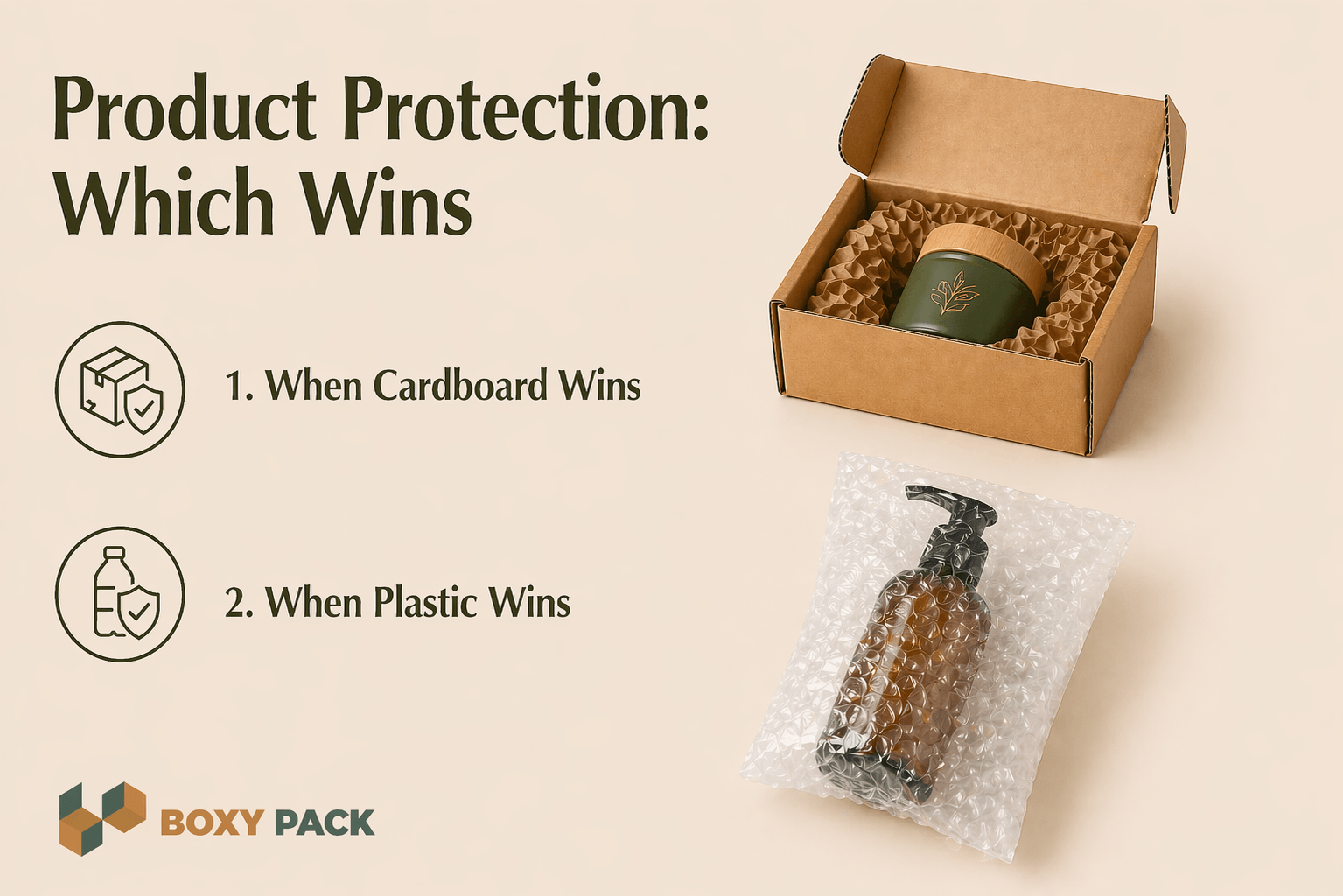
Corrugated cardboard packaging works best for dry goods and retail items. It handles ecommerce shipping well because its layers absorb impact. Many brands use inserts for fragile products. It improves packaging material for ecommerce safety during delivery. The main issue is moisture damage, which can weaken it fast.
When Plastic Wins
Plastic works better for liquids and perishable goods. It keeps a strong structure under heat and humidity. It supports packaging shelf life protection for sensitive items. Pharma and food brands prefer it. It also offers tamper seals and child-safe options. It stays reliable in tough storage and transport conditions, while custom shipping gift boxes are often used for presentation-focused and retail-ready packaging needs.
Eco-Conscious Consumers & Buying Behavior

The Numbers Do Not Lie
Over 53% of brands now rank sustainability as a top priority. Demand for green packaging grows 3.5% each year. That is steady growth. Sustainable packaging trends 2025 show no sign of slowing down. Buyers notice what you ship in. They remember bad choices.
What Big Brands Are Doing?
Pringles switched to cardboard tubes. Sainsbury's cut plastic from store brands. Mars followed too. These are not small eco shops. They are giants. Eco-friendly packaging solutions are becoming a normal business. The EU now wants 30% recycled content in all packaging. Single-use plastic will be gone by 2030, pushing brands toward better retail boxes and packaging choices.
How does this affect your sales?
Plastic-free packaging lifts conversion rates. I have seen beauty brands grow repeat orders by doing this. Packaging environmental impact matters to your customer. They will pay more and stay longer. Ignore this, and you lose to the brand next door, which made the switch.
Industry Use Cases, When to Use Each

Match Your Material to Your Product Type
Not every product needs the same box. I have seen beauty brands lose sales using plastic. I have also seen food brands ruin cardboard with leaky bottles. Match the material to the job.
Comparison Table
Industry | Best Choice | Reason |
eCommerce / DTC | Cardboard | Unboxing and custom branding |
Food & Beverage (liquids) | Plastic | Moisture barrier and seal |
Cosmetics & Beauty | Rigid Cardboard | Premium feel and luxury finish |
Pharmaceuticals | Plastic | Safety and tamper-proof seals |
Retail / FMCG | Cardboard or Hybrid | Shelf appeal plus green choice |
Subscription Boxes | Corrugated Cardboard | Strong for repeated shipping |
Cardboard packaging for ecommerce shipping works for most online stores. Custom corrugated boxes build loyalty. Retail packaging design needs both looks and strength. Pick what fits your product first. Then think about your brand.
Cardboard vs Plastic, Quick Verdict
The Winner Depends on Your Brand Goals
Choosing between cardboard and plastic packaging depends on your product and goals. Cardboard works better for branding trust and eco value. Plastic wins in moisture and low-cost scale use. Which packaging is better for brands depends on how you balance cost protection and image. Sustainable packaging for businesses is shifting toward cardboard worldwide.
Feature | Cardboard Packaging | Plastic Packaging |
Eco Friendliness | Winner biodegradable recyclable | Non-biodegradable long life |
Brand Perception | Winner Premium Trusted | Low-value image |
Cost Per Unit | Higher cost | Cheaper mass scale |
Moisture Protection | Weak when wet | Winner waterproof |
Custom Branding | Winner rich design | Limited options |
Recyclability | High reuse cycles | Low global recycling |
Unboxing Experience | Winner strong appeal | Weak impact |
Regulatory Future | Safe global support | High bans risk |
Common Packaging Mistakes to Avoid
What Hurts Brands Without Them Realizing
Many brands lose value due to small packaging errors. Custom packaging boxes must match the product size and feel. Sustainable packaging for businesses is often ignored, which affects trust. Packaging and brand identity get weak when mistakes repeat, and customers notice a poor experience, especially when it comes to a cardboard display box.
• Choosing plastic only for low cost
• Using oversized cardboard boxes
• Ignoring eco customer demand
• Not using FSC-certified cardboard
• Skipping protective inserts
• Inconsistent box design style
• Poor branding on packaging
• Weak unboxing experience setup
• No focus on recycling needs
• Overlooking shipping efficiency costs
Future of Packaging, Trends to Watch

The End of Single-Use Plastic
New EU rules change everything. Single-use plastic is to be banned by 2030. All packaging must have 30% recycled content. Sustainable packaging trends 2025 point to one direction. Less plastic. More paper. Big brands like Pringles and Mars have already switched.
New Materials Are Coming
You will see strange new boxes soon. Mushroom-based Mylo feels like leather. Grape skin material called VEGEA works for bags. Vivomer is a bioplastic that actually breaks down. Biodegradable packaging options are finally real, and they are shaping the future alongside custom cardboard boxes. Not just marketing talk.
Smarter Greener Requirements
Retailers now ask for carbon-neutral labels. They want a full lifecycle report on your box. Packaging environmental impact is no longer a bonus. It is a requirement. Demand for green packaging grows 3.5% every year. If you wait too long, you will play catch-up. Start testing new materials now. Your future customers will thank you.
Conclusion
Smart Packaging Turns Products into Brands
The aim was to compare cardboard vs plastic packaging in real business use. We looked at cost, strength, branding, and impact. The main finding shows cardboard leads in sustainability brand perception and unboxing value. Plastic still supports key roles in liquids pharma and food safety. Sustainable packaging for businesses now leans toward paper-based systems like those offered by Boxy Pack.
This matters because packaging and brand identity shape customer trust instantly. Hybrid solutions are growing as brands balance function and eco goals. Future packaging will mix biodegradable materials with smart design. cardboard vs plastic packaging choices will keep shifting as consumers demand greener options. Strong packaging decisions will define brand growth and long-term customer loyalty across global markets.
FAQs
Q1: Is cardboard better than plastic for branding?
Yes, cardboard builds stronger brand trust and a premium feel. Custom packaging boxes also allow better design finishes and improve customer perception in retail markets today.
Q2: What is the most eco-friendly packaging material?
FSC-certified corrugated cardboard is widely seen as the best option. It comes from renewable sources and breaks down fast, making it ideal for eco-friendly packaging solutions.
Q3: Is plastic packaging cheaper than cardboard?
Yes, plastic costs less per unit in mass production. But sustainable packaging for businesses often favors cardboard due to stronger long-term brand value and loyalty gains overall.
Q4: Can small brands afford custom cardboard packaging?
Yes, many suppliers now offer low order limits. Small brands can access custom packaging boxes easily and build a stronger shelf presence without a high upfront investment today.
Q5: Which packaging is better for shipping products?
Corrugated cardboard works best for most eCommerce shipping needs. It protects goods well and reduces damage, while plastic suits liquids or special sealed items only.
Q6: Will plastic packaging be banned globally?
Single-use plastic is already restricted in many countries. cardboard vs plastic packaging trends show a strong shift toward paper-based systems as regulations increase worldwide fast.
Author Bio
Packaging and branding specialist with real field work in ecommerce shipping and product packing. Focused on sustainable materials and a custom packaging strategy. Helps brands improve identity through smart, eco-conscious packaging design choices that boost customer trust and product value.
Ready to Get Started?
Discover our custom packaging solutions and bring your brand to life with premium boxes.