
A beautiful candle can lose its appeal fast if the box arrives crushed, the glass is poorly protected, or the packaging does not match the quality of what is inside. Candle packaging boxes have to do two jobs at once: protect the candle and present it in a way that makes customers want to pick it up. Candles are heavy for their size, often sit in glass containers, and carry wax and fragrance that customers expect to arrive intact.
That combination makes thoughtful packaging essential. Choosing the right box involves more than selecting an attractive design. This article covers material selection, box structure, sizing, protection, branding, sustainability, shipping, gifting, retail presentation, and wholesale considerations. Let's begin with what makes candle packaging effective.
What Makes Candle Packaging Boxes Work Better
Effective candle box packaging does more than hold a product. It keeps the candle stable, protects fragile vessels from impact, and gives the brand a place to introduce itself. A box that only looks good but allows the jar to shift will fail the customer, and a box that protects well but looks generic wastes a chance to build recognition.
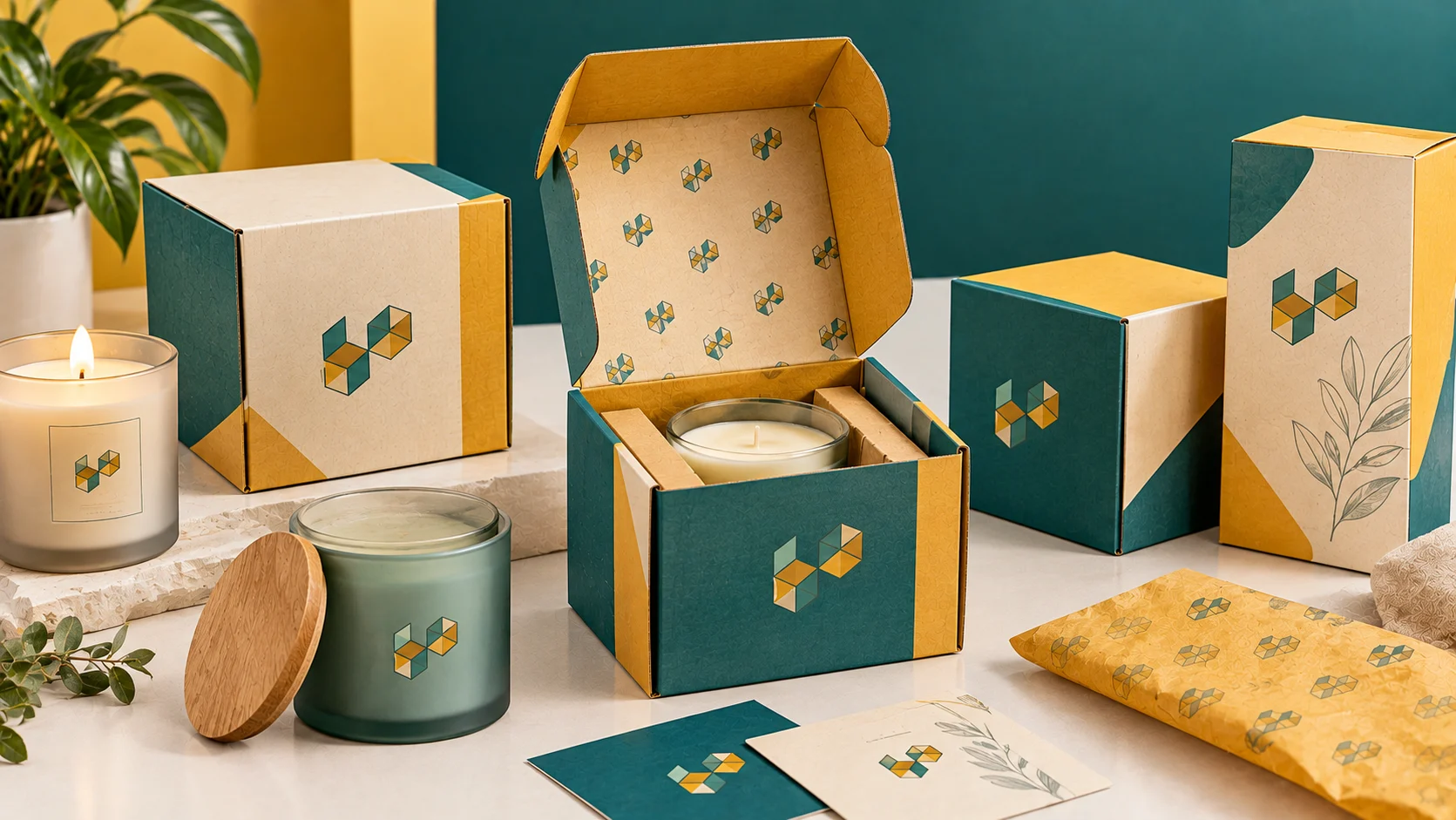
The structure of the box is the starting point. It should fit the candle closely enough to limit movement, support the weight of the vessel, and close securely. The surface then carries the branding, scent information, and any care details. Together, these elements shape the customer's first impression, which is why many brands work with custom candle boxes designed around their specific jar sizes and styles.
Good candle product packaging also supports the way the candle is sold. A box for a retail shelf needs strong visual presentation, while one for online orders needs to survive transit. Gift-oriented packaging adds an emphasis on unboxing and presentation. Understanding which of these jobs your packaging must perform is the first step toward choosing the right structure, and the rest of this article builds on that idea.
How to Plan Candle Packaging Before Production
Planning saves time and prevents expensive corrections later. Before choosing a box style or supplier, define what the candle needs and how it will be sold. Accurate information about the product leads to a better packaging specification. The two steps below cover the foundation of the plan for custom candle packaging boxes.
Start With Candle Size, Shape, and Weight
Record the jar's diameter and height, the vessel shape, the lid size, and the total weight of the finished candle. Also decide whether the box will hold one candle or several, since multi-candle sets need different internal dimensions. Accurate measurements are essential before creating custom packaging, because every structural decision depends on them.
Define Protection and Presentation Requirements
Glass, wax, fragrance, and fragile vessels all influence the packaging structure, as do inserts, retail display, gifting, and shipping needs. A candle sold on a shelf needs strong visual appeal, while one shipped to customers needs added protection. Defining these priorities early helps you choose protective candle boxes that suit the way the product will actually be used.
Materials That Protect Candles Without Overpacking
Material affects how well a box protects the candle, how it looks, and how it holds up over time. Board thickness and rigidity determine how much support the box gives the vessel, while coatings influence appearance, durability, and recyclability. The goal is enough protection for the product without adding material that serves no purpose.
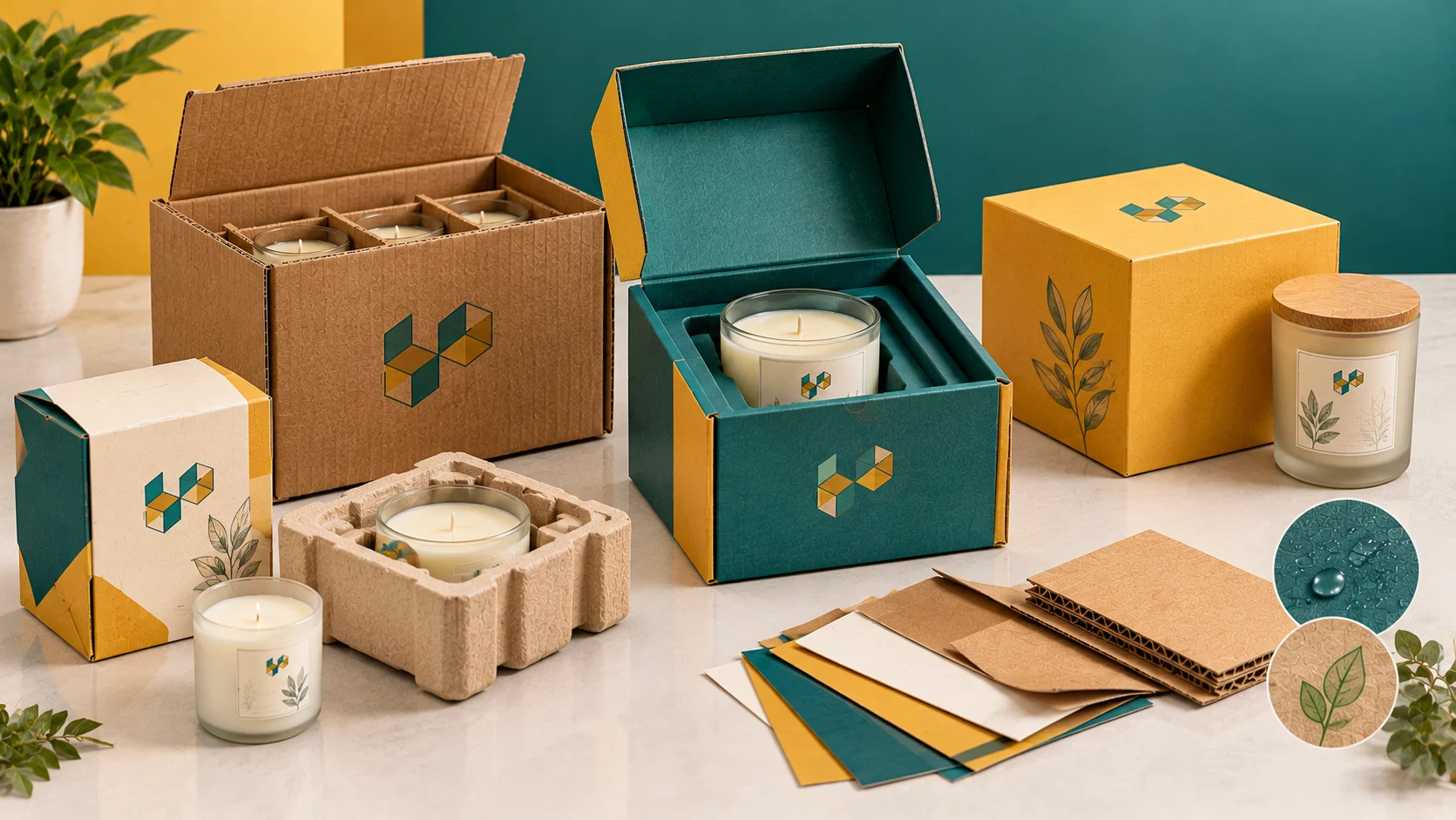
Paperboard folding cartons suit lighter candles and retail display, since they print well and offer flexible design options. For glass candle packaging, a thicker or sturdier board gives the jar more support. Premium and gift-oriented products often use rigid candle boxes, which have a thick, substantial structure that holds its shape and signals quality. Corrugated board is better suited to shipping because its fluted layer cushions the product against impact and compression.
Cushioning and inserts matter as much as the outer material. A well-fitted insert holds the jar in place and absorbs shock, which can allow a thinner outer box to perform better. Coatings and finishes affect both appearance and recycling, so it helps to weigh the look you want against how customers will dispose of the packaging. Choosing materials with these factors in mind keeps eco-friendly candle packaging and strong protection from competing with each other. Thickness, rigidity, cushioning, coatings, and recyclability all deserve attention before a final decision.
Candle Box Styles for Gifting, Retail, and Shipping
Different candle box styles serve different purposes, so the right choice depends on where and how the product will be sold. A retail candle may need strong visual presentation, while an e-commerce order needs protection through transit. The comparison below connects each style with its typical use.
Packaging Style | Best Use | Protection | Presentation | Key Consideration |
Folding carton | Retail candles | Moderate | Strong | Best for visual presentation |
Rigid candle box | Luxury and gifting | Strong | Premium | More substantial structure |
Corrugated shipping box | Ecommerce delivery | Very strong | Functional | Designed around transit protection |
Mailer-style box | Direct-to-consumer orders | Strong | Strong | Combines shipping and presentation |
Gift box | Sets and special occasions | Moderate to strong | Premium | Focuses heavily on presentation |
Folding cartons work well for retail candle packaging because they print clearly and stack neatly on shelves. Rigid boxes suit luxury candle boxes and special editions, where the opening experience is part of the product. Many brands also offer candle gift boxes for sets, seasonal collections, and occasions where presentation matters most. For deliveries, corrugated and mailer-style boxes provide the strength needed for transit, with mailers offering the added benefit of a branded unboxing.
Many brands use more than one style. A folding carton might serve the shelf, while a corrugated shipping box protects online orders. Matching each format to its purpose avoids overspending on features a particular channel does not need.
Designing Candle Boxes That Strengthen Branding
A candle box is a branding surface as well as a container. Thoughtful candle packaging design helps customers recognize the brand, understand the scent, and feel the quality of the product before they open it. The sections below cover the main design decisions. Each one aims to make branded candle packaging clear and memorable without becoming cluttered.
Make the Candle Brand Visible Immediately
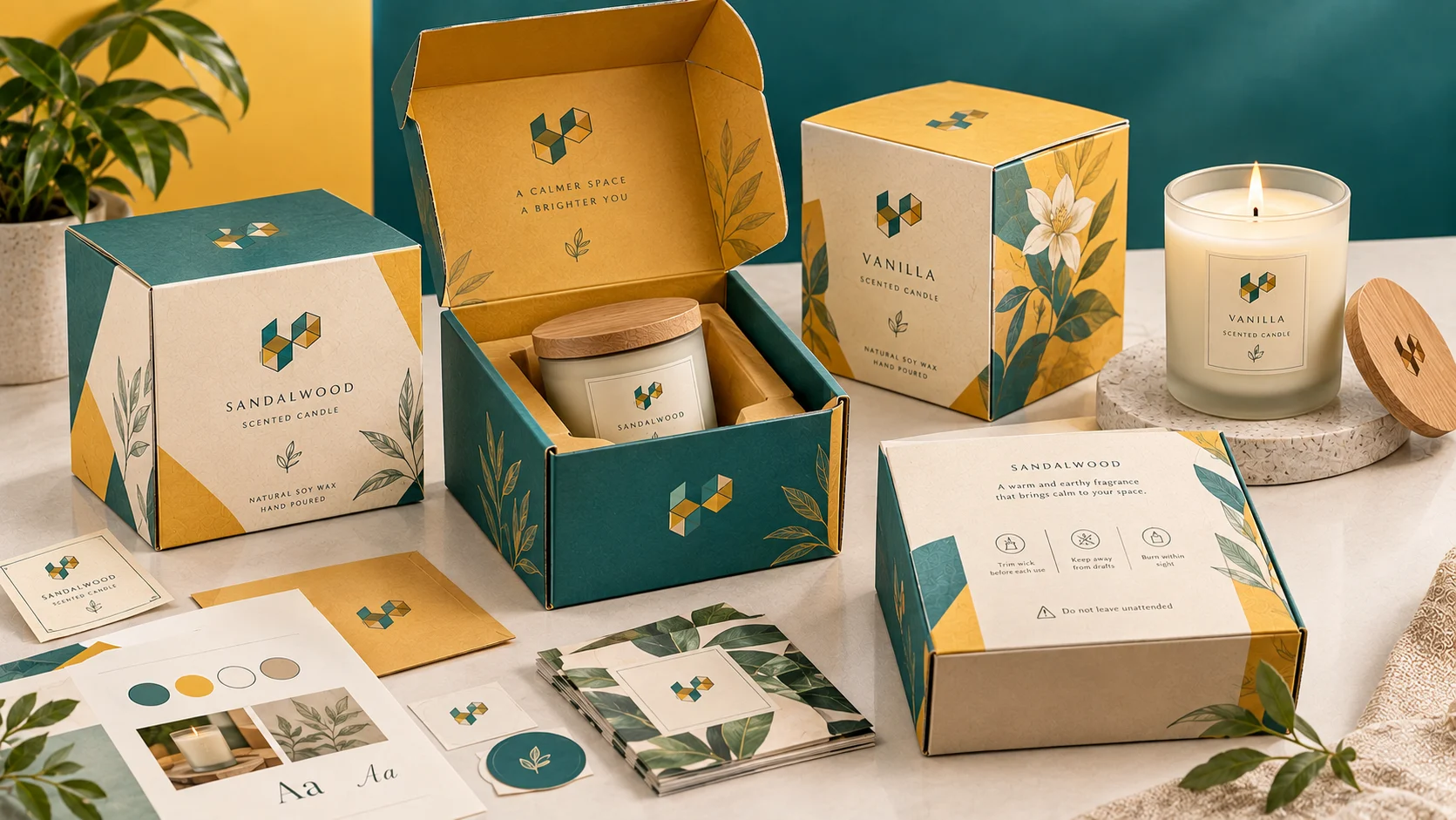
The brand name and logo should be easy to see the moment a customer looks at the box. Clear placement and a strong visual hierarchy establish recognition quickly, whether the box sits on a shelf or arrives at a doorstep. Candle boxes with logo placement planned carefully feel more confident and professional.
Build a Consistent Color and Typography System
Colors and fonts should work together across boxes, labels, inserts, and other brand touchpoints. Consistency makes a product line feel cohesive and helps customers connect each item to the same brand. Choose a small palette and a limited set of typefaces so the design stays clean.
Highlight the Candle Scent Clearly
Scent is a main reason customers choose a candle, so the fragrance name and description should be easy to find. Visual cues such as color or imagery can suggest the scent without crowding the box. Scented candle boxes work best when the scent is communicated quickly, and the rest of the design stays uncluttered.
Use Finishes to Create a Premium Feel
Specialty finishes, tactile coatings, foil effects, and embossing can add a premium quality to printed candle boxes. These treatments are most effective when they support the brand rather than decorate for its own sake. A single well-chosen detail often has more than several competing effects.
Design the Inside for a Better Unboxing
Interior printing, inserts, protective components, and opening details can turn unboxing into part of the brand experience. The inside of the box is also where protection happens, so these features should be both attractive and functional. A neat interior signals care and keeps the candle secure.
Keep Branding Balanced With Product Information
Branding should coexist with product details, care instructions, warnings, and any required information. Customers need to find burn guidance and safety notes easily, so give them a clear place on the box. A balanced layout looks professional and keeps the packaging useful.
Candle Packaging Boxes: Pros and Cons to Know
Customized candle packaging offers real advantages, but it also requires planning. Looking at both sides helps brands decide whether a custom approach suits their products, volumes, and budgets. For many candle businesses, the better fit and stronger presentation justify the effort, while others may start with simpler options and customize later.
Custom candle boxes tend to deliver the most value when a candle's vessel has a distinctive size or shape, or when presentation is central to the brand. Brands that sell in larger quantities may also consider candle packaging boxes wholesale options, which can make ordering more efficient once designs and sizes are settled. The lists below summarize the main points.
Pros
Better fit around the candle vessel.
Stronger protection against movement
More recognizable brand presentation
Greater flexibility in materials and finishes
Better shelf presentation
More opportunities for gifting and premium positioning
Options for custom printing and logo placement
Cons
Requires more design planning than standard boxes
Incorrect dimensions can cause protection problems.
Premium materials or finishes can increase production complexity.
Custom packaging may require minimum order quantities.
Poorly planned packaging can create unnecessary material waste.
Multiple candle sizes may require several box specifications.
How to Choose the Right Candle Box Size
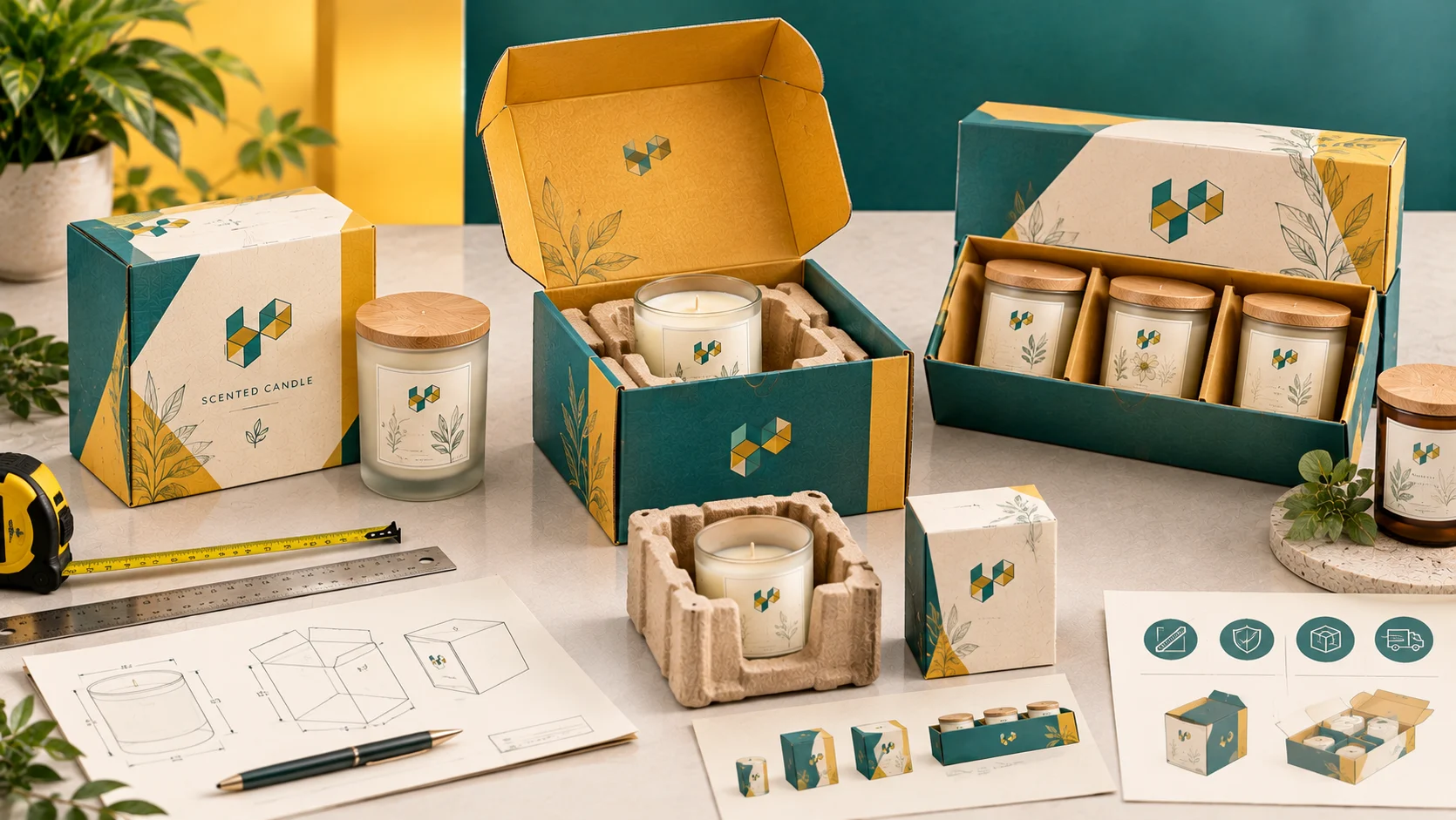
The right box size keeps the candle secure, presents it well, and avoids wasted material. A box that is too loose lets the jar move, while one that is too tight can stress the glass or make the candle hard to remove. The steps below explain how to size candle packaging boxes correctly. They apply to single candles and sets alike.
Measure the Candle Vessel Accurately
Measure the diameter, height, and lid dimensions, along with the overall footprint of the product. Use the widest points as your reference, and note any shape variations such as tapered or curved jars. Reliable measurements are the foundation for the box's internal dimensions.
Account for Glass and Fragile Components
Glass jars and delicate vessels need enough protection to reduce movement and impact risk. The box should hold the jar securely on all sides, with support that helps absorb shock. Planning for the fragile parts of the candle prevents damage at every stage of handling.
Allow Space for Inserts and Cushioning
Protective inserts take up room, so include them when determining the interior dimensions. Forgetting this step can leave the box too tight or force a redesign later. Decide on the insert type early so the final dimensions account for it.
Avoid Excess Empty Space Inside the Box
Too much empty space allows the candle to move during transportation and can make the packaging feel inefficient. A close fit keeps the product stable and reduces the need for extra filler. Right-sized boxes also tend to be easier to store and ship.
Consider Single Candles and Gift Sets
Individual candles, bundles, seasonal collections, and multi-candle sets may each need a different structure. A gift set requires dividers or inserts that keep each candle separate. Plan the sizes you need in advance so your range stays manageable.
Test the Box Before Full Production
A sample confirms fit, closure, stability, protection, and overall presentation. Pack it with a real candle and handle it as a customer or carrier would. Adjusting at this stage is far easier than correcting a full production run.
Creating Eco-Friendly Candle Packaging Without Sacrifice
Environmentally conscious candle brands can build sustainability into their packaging without weakening protection. The key is to treat sustainability as both a material choice and a design choice. A box that is no larger than necessary uses less material and often needs less filler, which supports sustainable packaging concepts while keeping the candle safe.
Material selection is a natural starting point. Recyclable boards and recycled content reduce environmental impact, and natural options such as recyclable kraft boxes offer an earthy look that suits many candle brands. These materials can still be printed with clear branding, so eco-friendly candle packaging does not have to look plain.
Reducing unnecessary components helps as well. Plastic windows, heavy laminations, and mixed-material inserts can complicate recycling, so each element should earn its place. Paper-based inserts are often easier for customers to recycle than mixed materials. Clear disposal guidance on the box helps people recycle correctly, and any environmental claims should stay accurate and specific. A responsibly designed candle box protects the product first, because a package that fails in transit creates more waste than one built to last.
Protecting Glass Candles From Damage During Shipping
Shipping puts candle packaging under real stress. Packages are dropped, stacked, and shaken, and glass vessels are vulnerable to impact and internal movement. Candle shipping boxes should be planned around actual delivery conditions, not ideal ones, with protection at every layer from the inner insert to the outer carton.
Internal movement is a common cause of damage, so a close fit and secure inserts are essential. For direct-to-consumer orders, many brands use candle shipping boxes made from corrugated board, which adds strength and cushioning for transit. Heavier candles need stronger construction, and sealing the box properly keeps it closed through handling. Testing is the best way to confirm that glass candle packaging performs in real conditions.
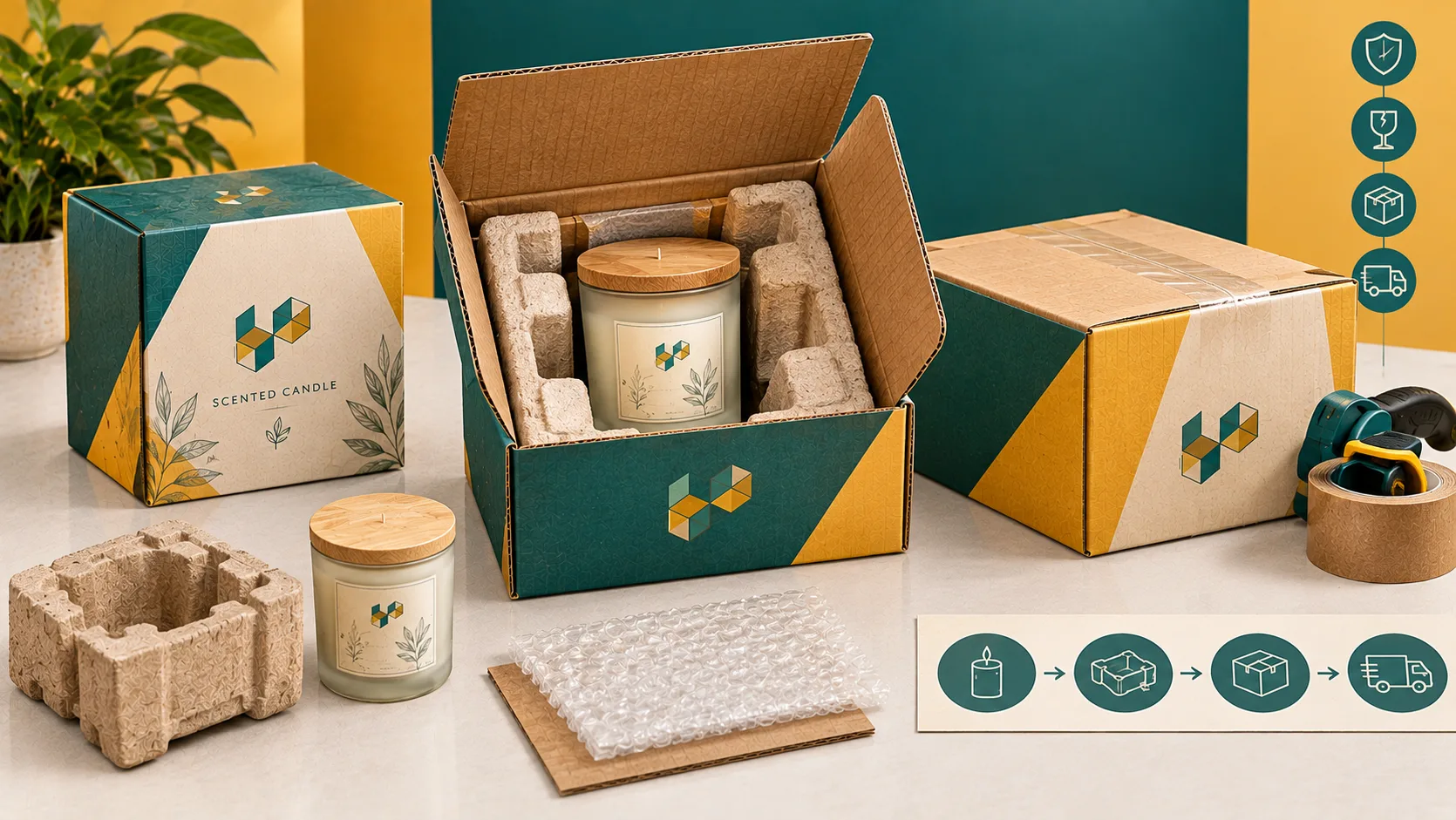
These checks help confirm that a shipping setup protects the candle:
Confirm the candle cannot shift inside the box when gently shaken.
Check that inserts hold the jar firmly and absorb impact.
Match box strength to the candle's weight and the stacking it may face
Make sure the lid and closure stay secure during handling.
Seal the carton properly and check that corners and edges are reinforced.
Run a drop or handling test with a real candle before scaling the order.
How to Order Candle Packaging Boxes With Confidence
Ordering goes smoothly when you know what to prepare and what to confirm. A clear process reduces revisions and helps the finished boxes match your expectations. The stages below cover the path from specifications to approval. They apply whether you are ordering custom candle packaging boxes for a new product or restocking an existing range.
Prepare Candle and Packaging Specifications
Provide the candle dimensions, vessel type, weight, quantity, scent range, and the purpose of the packaging. A supplier uses this information to recommend a structure and prepare an accurate quote. The more precise your details, the fewer changes you will need later.
Select the Box Structure and Material
Decide among folding cartons, rigid boxes, mailer styles, and corrugated options, and consider whether inserts are needed. Describe how the candle will be sold and shipped so the supplier can suggest suitable choices. A clear brief leads to better recommendations and fewer surprises.
Finalize Printing and Brand Artwork
Review logos, colors, scent information, graphics, and finishes before production. Confirm that the artwork fits the box dimensions and leaves space for any required information. Careful proof checking at this stage prevents costly errors on printed candle boxes.
Request Samples Before a Larger Order
Physical samples help verify fit, protection, printing quality, appearance, and usability. Test them with a real candle and handle them as a customer would. A sample is the most reliable way to catch problems before you commit to a larger run.
Confirm Wholesale Quantities and Requirements
For larger orders, confirm quantities, packaging variations, storage needs, and production specifications. If you plan to order candle boxes wholesale, think about how many sizes and designs you need and where you will keep them. Clear agreements on these points keep production on track.
Check Quality Before Approving Production
Before final approval, check dimensions, printing, construction, closure, inserts, protection, and overall presentation. Compare the result against the approved sample and specifications. A last review helps you catch any remaining issues before the boxes are put into use.
Final Thoughts on Candle Packaging Boxes
Effective candle packaging boxes protect the product while supporting the brand experience. Protection, branding, materials, sizing, sustainability, and shipping all work together, so decisions in one area affect the others. A well-fitted structure keeps the jar secure, while clear design and thoughtful finishes help the candle stand out and feel worth the price.
The best results come from planning around the candle's real requirements. Custom candle boxes that match the vessel, suit the sales channel, and reflect the brand give customers a better experience from the shelf or doorstep to the moment the candle is lit. Even luxury candle packaging benefits from restraint, since a clear layout and a good fit usually matter more than extra decoration.
If you are preparing to package a candle line, start by reviewing your product's dimensions, weight, and how it will be sold or shipped. With those requirements in hand, you can explore Boxy Pack packaging that provides both stylish presentation and reliable protection.
FAQs About Candle Packaging Boxes
Candle packaging decisions depend on the candle's size, vessel, fragility, branding, intended use, and shipping requirements. Each product is different, so the right choices vary from one brand to the next. These FAQs offer quick guidance for businesses planning custom or wholesale packaging.
Which candle box style offers the best balance of protection and presentation?
Rigid boxes and mailer-style boxes tend to offer a strong balance of both. Rigid boxes provide a sturdy structure and premium look, while mailers combine protection with a branded unboxing for direct-to-consumer orders. The best choice depends on whether the candle is mainly sold in stores, given as a gift, or shipped.
What material should I choose for a glass candle container?
Choose a sturdy board that supports the jar's weight, paired with an insert that holds it in place. Rigid board suits premium and gift candles, while corrugated board is a better fit for shipping. The right choice depends on the candle's weight and how the package will be handled.
How can I make candle packaging look more luxurious?
Focus on a clean layout, a limited color palette, and one or two quality details such as embossing or foil. A rigid structure and a well-designed interior also add to the premium feel. Restraint usually looks more luxurious than adding many effects.
What should I include when ordering custom candle boxes?
Provide the candle dimensions, vessel type, weight, quantity, and packaging purpose, along with your preferred structure and material. Include your artwork, color expectations, and any scent or product information that should appear on the box. Requesting a sample before a larger order is also a good practice.
Can candle packaging be designed for both retail and shipping?
Yes, though many brands use two layers, such as a presentation box for the shelf and a corrugated carton for delivery. A mailer-style box can also combine both purposes for direct-to-consumer orders. The key is to confirm that the packaging provides enough protection for transit.
What makes candle packaging suitable for gifting?
Gift-ready packaging has an attractive presentation, a secure fit, and a satisfying opening experience. Features such as a rigid structure, interior printing, and inserts make the candle feel special. Space for a short message or scent information can add a personal touch.
When should a candle business consider wholesale packaging?
Wholesale packaging makes sense when you have settled designs and sizes and can predict demand reasonably well. Larger quantities often spread setup work across more boxes, which can reduce the cost per unit. Make sure you have storage space and have tested a sample before ordering in volume.
Ready to Get Started?
Discover our custom packaging solutions and bring your brand to life with premium boxes.