
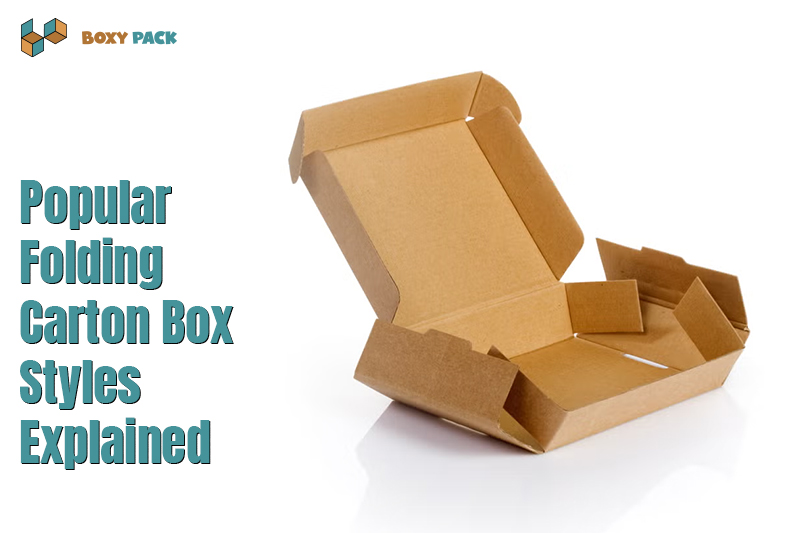
Boxes shape buying choices before shoppers read a single label. Smart brands care about look, cost, and fit. This guide explains folding carton box styles with clear, simple ideas. You will learn why the shape board and fold matter for sales. Design teams use folding carton box styles to match product needs. From shelves to shipping, good cartons reduce waste and packing errors.
Many buyers ask about the types of packaging carton boxes during early planning. Board choice affects the strength, feel, and print results. Small items need neat folds and tight walls. Large packs need strong panels and easy-open paths. Food packs need clean folds and secure closure. You might notice better cartons when you make custom pop box, lower returns, and speed up daily packing work.
What Is a Folding Carton Box?
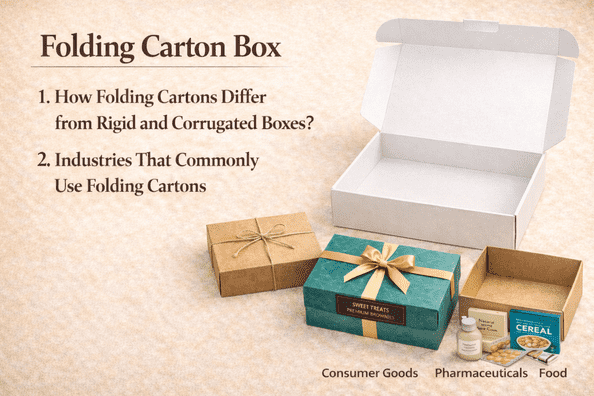
A folding carton box is a paper-based package used for many products. It ships flat and forms a shape during packing. This makes storage easier and saves space. Many brands choose this option for a clean shelf display. Beginners often explore types of packaging carton boxes when planning a product launch. Folding cartons work well for light items. They support branding while keeping costs controlled. Now lets see how this box differs from other options.
How Folding Cartons Differ from Rigid and Corrugated Boxes?
Folding cartons feel light during handling and packing. They use less material than rigid boxes. They arrive flat, which saves storage space. Corrugated boxes focus on shipping strength. Rigid boxes focus on a luxury look. Folding cartons support fast packing and lower cost. Many types of packaging carton boxes serve different goals. This option suits brands needing scale, speed, and clean presentation.
Industries That Commonly Use Folding Cartons
Food brands use folding cartons for snacks and dry items. Beverage brands use them for multipack sleeves. Cosmetic brands rely on neat display and print quality. Pharma brands trust cartons for clear labeling. Retail brands use them for daily shelf products. Across market types, packaging carton boxes help create shipping boxes that support wide product needs. These cartons fit many industries with ease.
Types of Folding Carton Board
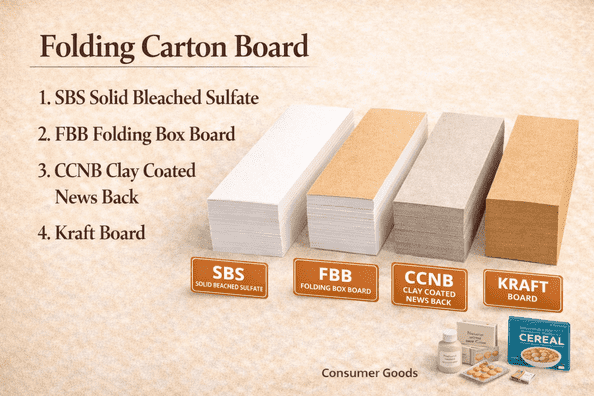
Choosing the right board matters before selecting styles or shapes. The board controls the strength, print quality, and product feel. Many brands first learn about types of folding carton board to avoid issues later. Board choice affects folding ease and shelf life. It also guides cost planning and supply flow. Now lets see the main board options used across packaging work.
SBS Solid Bleached Sulfate
The SBS board offers a smooth, bright white surface for print. It gives a clean, premium look on shelves. Many food brands prefer this board for direct contact use. It supports sharp colors and fine details. Among types of folding carton board, this option fits luxury items and food packs well. It also folds clean during packing steps.
FBB Folding Box Board
The FBB board uses layered fiber for strength with less weight. It feels firm while staying light in hand. This balance helps reduce shipping load. Many brands choose it for daily retail items. Within types of folding carton board, FBB supports good print and a stable structure. It works well for medium-weight products.
CCNB Clay Coated News Back
CCNB board uses recycled fiber for cost control. The coated front supports basic print needs. The back shows a gray tone from recycled content. Many brands pick this board for value packs. Among types of folding carton board, CCNB suits budget-driven projects. It helps lower material spend at scale.
Kraft Board
Kraft board has a natural brown look with strong fiber. It signals eco values and simple branding. Many brands use it for organic themes. Within types of folding carton board, kraft supports strength and visual honesty. It works well for green-focused packaging goals.
Popular Folding Carton Box Styles
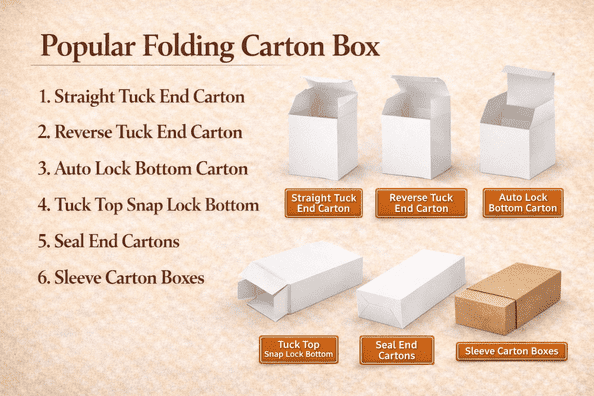
Choosing the right carton style affects packing speed, shelf look, and product safety. Brands compare styles based on use, weight, and display needs. This section explains folding carton box styles used across many markets. Each style serves a clear role during packing and retail display. A good folding carton box design can also help design subscription boxes, reduce damage, and improve buyer trust. Now let's review the most common styles in use today.
Straight Tuck End Carton
Straight tuck end cartons use top and bottom flaps that tuck the same way. This makes assembly quick during packing. They work best for light items like cosmetics or small tools. Print alignment stays clean on shelves. Many folding carton box styles start with this option due to ease. This folding carton box design fits short-run projects well.
Reverse Tuck End Carton
Reverse tuck end cartons, tuck from opposite sides. This helps save board space during die cutting. It lowers the cost per unit at scale. Retail teams like the smooth front panel look. Many brands choose this for daily consumer goods. Among folding carton box styles, this option balances cost and display needs.
Auto Lock Bottom Carton
Auto lock bottom cartons include a base that locks during setup. This supports heavier products with less effort. Packing teams save time during fast runs. It adds strength without extra glue. This folding carton box design works well for jars and bottles. It suits products needing a strong base support.
Tuck Top Snap Lock Bottom
This style combines a tuck top with a snap lock base. It offers extra strength for mid-weight items. The lock bottom holds firm during transport. Brands use it for items needing added safety. Among folding carton box styles, this option gives a balance between ease and strength.
Seal End Cartons
Seal end cartons close with glue for full enclosure. They resist tampering and protect contents. Many food and pharma brands use them. They run well on high-speed lines. This folding carton box design supports safety-focused packaging needs.
Sleeve Carton Boxes
Sleeve cartons slide over inner packs. They offer simple, clean branding. Products stay partly visible to buyers. Many brands use this style for bundles. Among folding carton box styles, sleeves support minimal design goals.
Folding Carton Box Styles by Size
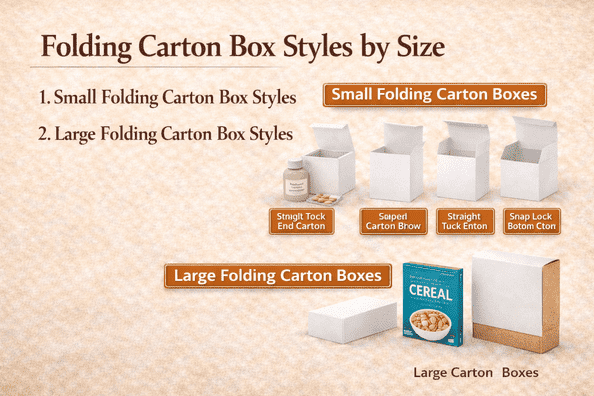
Box size plays a major role in protection, storage, and shelf impact. Brands select sizes based on product weight, shape, and handling needs. This section explains how size affects use cases. Many teams review small folding carton box styles and large folding carton box styles before final design approval. Size choice helps reduce waste and improve packing speed. Now lets review both size groups clearly.
Small Folding Carton Box Styles
Small cartons work best for light, compact products sold in high volume. Cosmetics brands use them for cream tubes and kits. Small food items fit well due to easy stacking and clean folds. Retail accessories like cables or tools also use this size. Small folding carton box styles help control material use and reduce shipping space. They also support neat display and fast shelf restock.
Large Folding Carton Box Styles
Large cartons support heavier items needing more structure. Electronics brands use them for devices and bundled parts. Bulk food products rely on strong panels and secure closure. Household goods need space and base support during transport. Large folding carton box styles help craft custom box solutions that focus on strength and stability. They help protect items during storage and movement. This size range suits products with higher weight and volume needs.
Folding Carton Box Styles for Food Packaging
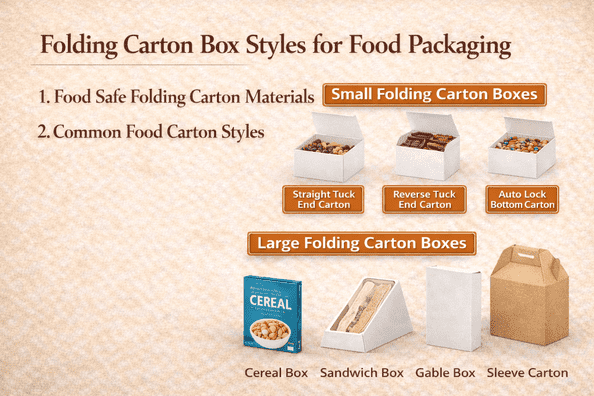
Food packaging needs care, trust, and clean handling at every step. Brands choose cartons that protect taste and meet rules. This section explains folding carton box styles for food used across markets. The right style helps with shelf appeal and packing speed. It also supports storage flow and buyer confidence. Food brands focus on safety first, then look at cost. Now lets review materials and styles used for food packs.
Food Safe Folding Carton Materials
Food cartons use boards approved for direct contact use. FDA-compliant boards are common for many food items. These boards prevent odor transfer and surface risks. Coatings help resist grease and moisture during storage. Laminations add protection for frozen or chilled items. Folding carton box styles for food depend on board quality first. Material choice supports safety and long shelf life.
Common Food Carton Styles
Bakery boxes use simple folds with easy-open tops. They protect shape and support quick serving. Cereal cartons use tall panels for shelf display. They hold inner liners and support stacking. Frozen food cartons need strong panels and a tight closure. These styles protect food during cold storage. Folding carton box styles for food match product needs and handling steps. Each style supports safe and smooth food delivery.
How to Fold a Carton Box?
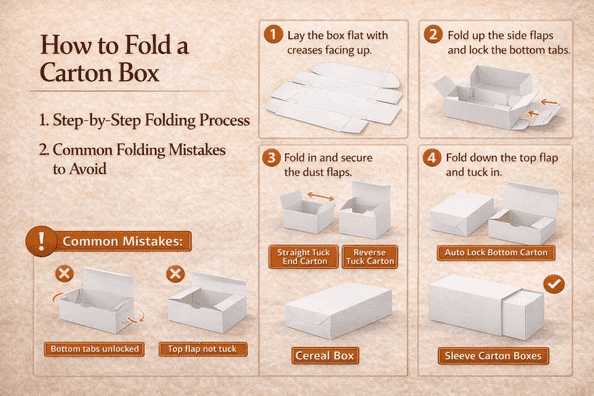
Learning how to fold a carton box correctly helps reduce waste and packing delays. Proper folding keeps products secure during storage and transport. Many issues start from rushed or uneven folding steps. A clean process improves box strength and final appearance. Teams should follow clear steps every time. This section explains simple folding methods used in daily packing work.
Step-by-Step Folding Process
Pre-glued cartons arrive flat and ready for setup. The base locks when pressure is applied. Manual folding suits small batches and test runs. Workers fold panels by hand using clear guides. Machine-assisted folding supports high-volume packing lines. Machines fold, seal, and shape cardboard boxes products at speed. Each method follows the same shape logic. Knowing how to fold a carton box helps teams choose the right process.
Common Folding Mistakes to Avoid
Incorrect tucks cause weak edges and open flaps. This leads to poor shelf look and damage risk. Weak bottom locks fail under product weight. This creates spills and returns. Rushed folding causes uneven panels. Always check folds before filling. Mastering how to fold a carton box prevents these common issues and improves packing results.
Folding Carton Box Design Considerations
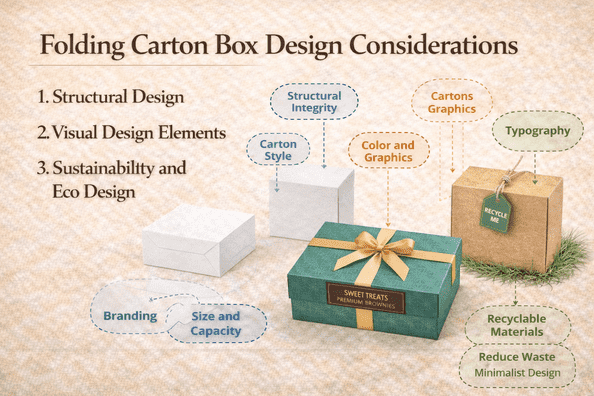
Good packaging starts with smart planning before printing begins. Brands focus on structure, look, and impact. This section explains folding carton box design choices that affect daily use. Strong planning improves safety, shelf appeal, and cost control. Teams that plan early avoid damage, delays, and rework. Now lets review key areas that guide smart folding carton box packaging decisions.
Structural Design
Structural planning protects products during storage and movement. The right shape supports weight and resists pressure. Panels must lock well to avoid collapse. Size and depth affect how items sit inside. Shelf display also depends on structure strength. A stable box stands straight and looks clean. Good folding carton box design balances protection and display needs. This helps brands reduce losses and returns.
Visual Design Elements
Visual design shapes buyer attention on shelves. Printing quality affects color clarity and trust. Clean layouts help buyers read details fast. Finishes add surface appeal and brand feel. Matte gloss foil finishes serve different brand goals. Visual balance supports product value perception. Strong folding carton box packaging design builds brand recall. It also improves shelf presence without extra cost.
Sustainability and Eco Design
Eco planning matters for modern buyers and brands. Recyclable boards reduce waste impact. Simple designs use less material overall. Minimal waste lowers cost and shipping load. Many brands now choose clean, natural looks. Sustainable kraft boxes products support long-term brand trust. They also meet market demand for responsible packaging choices.
Choosing the Right Folding Carton Manufacturer
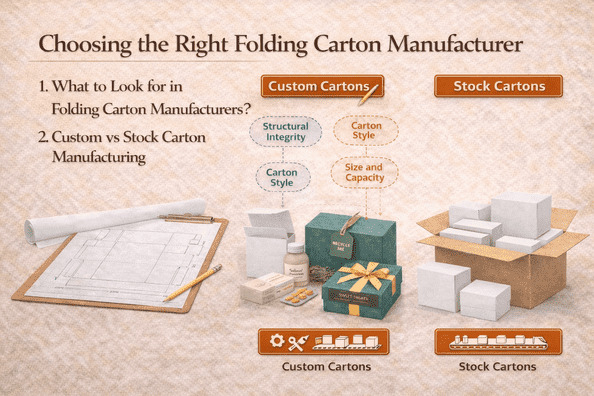
Selecting the right partner affects cost, quality, and long-term supply flow. Brands review experience scale and service before decisions. This section explains how to choose folding carton manufacturers with confidence. A good partner supports growth and avoids delays. Many issues start from poor supplier choice. Smart review helps teams protect products and timelines.
What to Look for in Folding Carton Manufacturers?
Strong material quality ensures boxes hold shape during use. A good board reduces damage and waste. Custom brownie boxes ability matters for size, style, and print needs. Brands often need unique shapes for shelf impact. Valid certifications show safety and process control. These prove compliance with food and retail rules. Reliable folding carton manufacturers offer clear samples and testing support. This helps teams trust the final output.
Custom vs Stock Carton Manufacturing
Custom cartons fit unique products and brand goals. They support exact size, color, and finish needs. This option works well for new launches or premium items. Stock cartons suit fast needs and lower budgets. They ship quicker and cost less at scale. Brands choose based on volume, timeline, and product value. Experienced folding carton manufacturers guide this choice clearly. The right path saves time, cost, and effort.
Conclusion
Choosing the right folding carton box styles helps protect products and support sales goals. Board type affects strength, safety, and shelf feel. Size choice controls storage and shipping flow. Design choices guide buyer trust and brand recall. Smart planning avoids waste and delays. When all parts align, packaging works as a sales tool. Strong cartons support smooth packing and better shelf results.
Good folding carton box packaging matches product needs and brand direction. Every decision should support the use of safety and display value. Brands that plan early avoid costly changes later. Clear choices improve speed, quality, and cost control. If you want packaging that fits your product and brand goals, reach out today. Boxypack can help you choose the right carton solution.
FAQs
What are the most common folding carton box styles?
The most common folding carton box styles include tuck-end boxes, lock bottom boxes, seal-end boxes, and sleeve cartons. Each style supports different weights, display needs, packing speed, and handling goals across retail food and consumer products.
Which folding carton board is best for food packaging?
Food packaging works best with SBS or approved FBB board. These boards support direct contact rules, resist grease, and keep print clean. They help protect taste, safety, shelf life, and brand trust.
Are folding cartons eco-friendly?
Folding cartons use paper-based boards that support recycling. Many brands choose Kraft or recycled boards. Simple structures reduce waste. This helps lower impact and meets buyer demand for greener packaging.
How do I choose the right carton style for my product?
Start with product weight, shape, and use case. Review storage, transport, and shelf needs. Match style to packing speed and budget. Testing samples helps confirm fit before large orders.
Can folding cartons be customized in small quantities?
Yes, many manufacturers offer short runs for testing or launches. Digital print and simple dies support low-volume needs. This helps brands test design fit before scaling production.
Ready to Get Started?
Discover our custom packaging solutions and bring your brand to life with premium boxes.